


Fireproof MGO Magnesium Board For Wall Panel
With comprehensive advantages such as Class A1 non-combustibility, moisture/mold resistance, lightweight high strength, and environmental health, MGO magnesium oxide boards are gradually replacing traditional building materials, becoming an ideal choice in the modern construction industry. Whether for fire-safe public buildings or health-focused home renovations, MGO boards deliver performance beyond expectations.
- Fast Delievery
- Quality Assurance
- 24/7 Customer Service
Product Introduction
Fireproof MGO Magnesium Board for Wall Panel
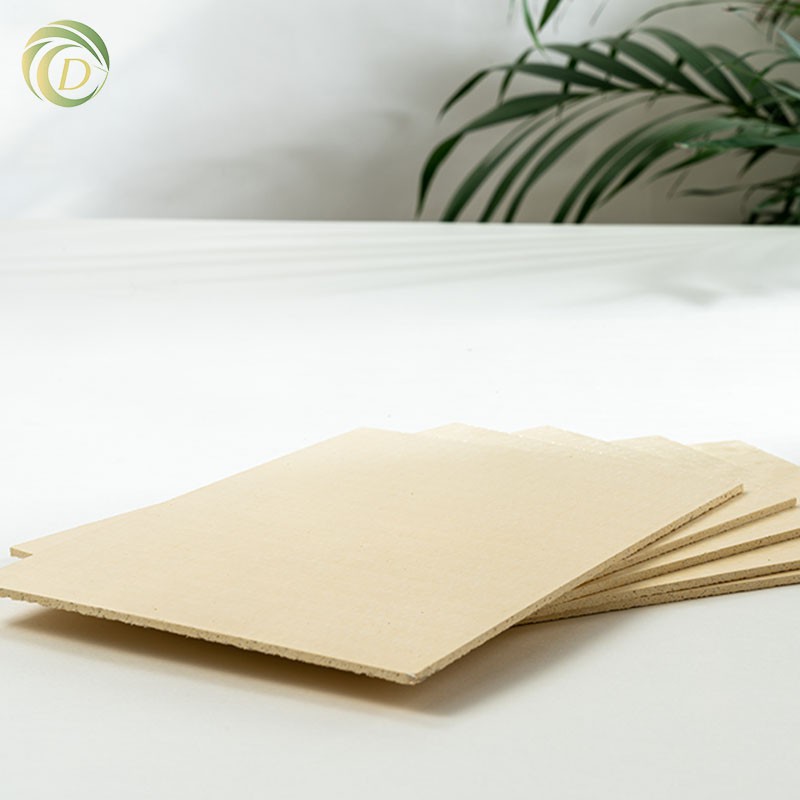
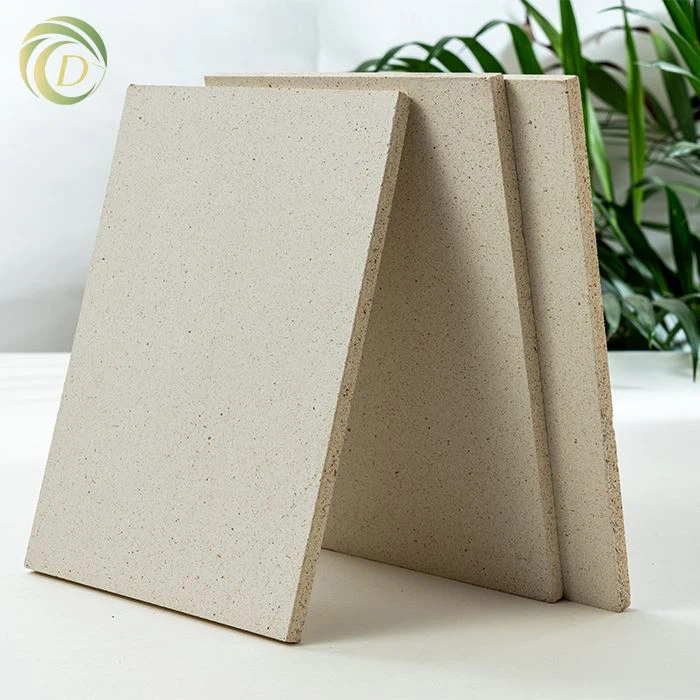
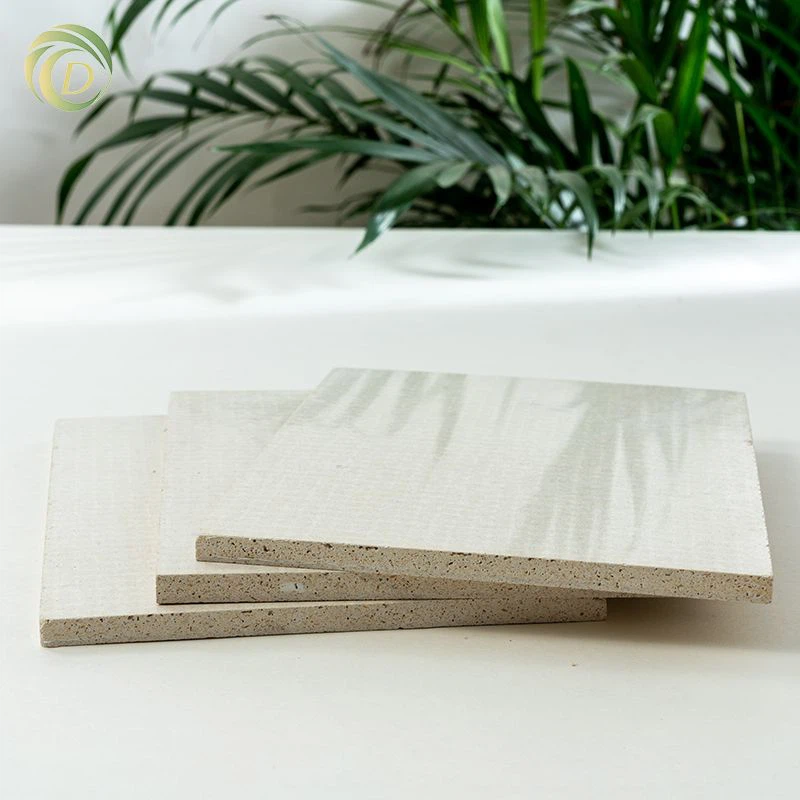
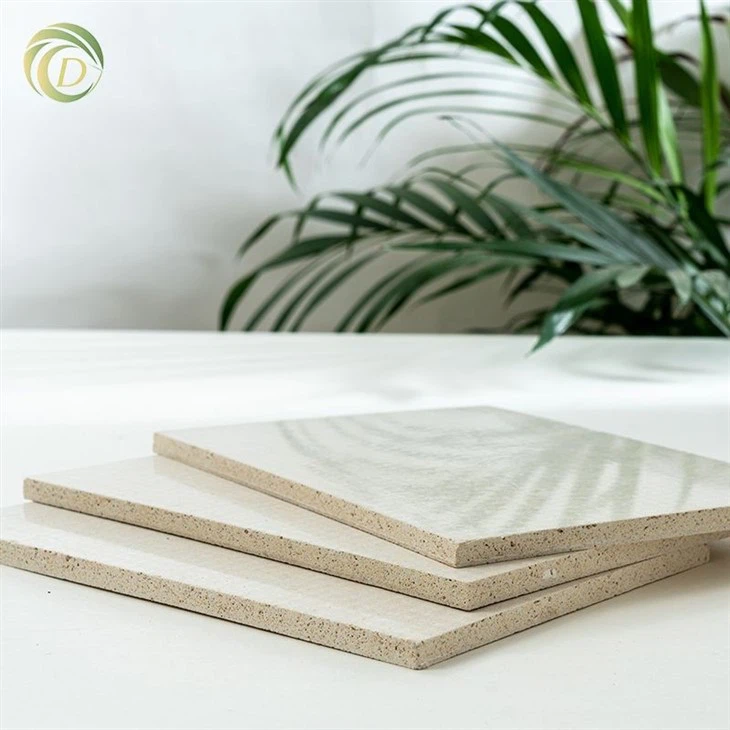
MGO board, short for Magnesium Oxide Board, is a high-performance building panel.It's mainly made from magnesium oxide, mixed with magnesium chloride or magnesium sulfate and water in proper ratios to create magnesium-based cement.We add alkali-resistant fiberglass mesh for reinforcement, plus light-weight fillers to make the finished board.
Advantages of Fireproof MGO Magnesium Board for Wall Panel
01/ Fire Resistance: Fireproof wall boards are made specifically to handle high temperatures and stop fires from spreading. They've got a high fire resistance rating, so compared to regular wall materials, they can block flames for way longer.
02/ Safety: If you use fireproof wall boards, you'll make your building and the people in it safer. These boards don't burn at all, and when they're exposed to fire, they won't let off toxic fumes or smoke. That gives people more time to get out of the building, and it lowers the chance of anyone getting hurt or losing their life.
03/ Insulation: Most fireproof wall boards are pretty good at keeping heat in (or out). They help control the temperature inside the building, so you won't need to use extra heating or cooling as much. That saves energy and cuts down on your utility bills.
04/ Soundproofing: A lot of fireproof wall boards are great at blocking sound. They can reduce the noise that travels between different parts of the building, so the space is quieter and more comfortable to be in.
05/ Durability: Fireproof wall boards are usually made from strong, long-lasting materials like gypsum or cement. They can stand up to wear and tear, bumps and hits, and even moisture-so they're a really durable choice for walls.
06/ Versatility: You can use fireproof wall boards in all kinds of ways-like for interior and exterior walls, ceilings, and room dividers. And you can paint them or decorate them however you want to match the look you're going for.


Why Choose Us
Rich Experience
Our company has many years of production work experience. The concept of customer-oriented and win-win cooperation makes the company more mature and stronger.
Advanced Equipment
A machine, tool or instrument designed with advanced technology and functionality to perform highly specific tasks with greater precision, efficiency and reliability.
High Quality
Our products are manufactured or executed to very high standards, using the finest materials and manufacturing processes.
Competitive Price
We have professional sourcing team and cost accounting team, reduce cost and profit and provide you a good price.
24H Online Service
We try and respond to all concerns within 24 hours and our teams are always at your disposal in case of any emergencies.
One-stop Solution
With rich experience and one-to-one service,we can help you choose products and answer technical questions.
What Are The Main Materials Used In Fireproof MGO Magnesium Board for Wall Panel
The main materials used in fireproof wall boards are:
Core Components:
Magnesium Oxide (MgO): Provides high strength, high temperature resistance and fire performance (melting point up to 2800℃), serving as the primary functional component.
Magnesium Chloride/Magnesium Sulfate: Acts as a cementing agent, reacting with magnesium oxide to form a stable structure.
Reinforcing Material: Alkali-resistant glass fiber mesh to enhance board strength and toughness.
Lightweight Fillers: Perlite, plant fibers, etc., to reduce weight and improve thermal insulation performance.
Modifiers: Improve product performance, enhancing durability and water resistance.
Production Process
1. Raw Material Preparation
Select high-activity magnesium oxide powder (light-burned magnesia), industrial-grade magnesium chloride/magnesium sulfate, and additives.
Mix in precise proportions (MgO:MgCl₂/H₂O ≈ 5:1:8) to form a stable ternary system.
2. Manufacturing Flow
Batching & Mixing: Meter raw materials according to proportions and add to a mixer to form a uniform slurry.
Forming Process:
Lay mesh → Apply slurry → Lay mesh → Roller pressing (ensuring uniform distribution of glass fibers).
Or adopt vacuum forming/molding to improve density and strength.
Curing: Cure in constant temperature and humidity environment for 7-14 days to complete hydration reaction:
plaintext
Main Reactions: MgO + H₂O → Mg(OH)₂ 5Mg(OH)₂ + MgCl₂ + 8H₂O → MgCl₂·6Mg(OH)₂·8H₂O
Cutting & Sanding: Cut into standard sizes (1220×2440mm, etc.) and perform surface treatment.
Application Fields of Fireproof MGO Magnesium Board for Wall Panel
1
Building Interior Decoration
-
Firewalls/Fire-Rated Partition Walls: Key fire protection areas such as commercial buildings, hospitals, and schools, meeting 1-4 hour fire resistance requirements.
-
Ceiling Systems: Replace gypsum boards, moisture-proof and mold-proof, suitable for humid areas like kitchens and bathrooms.
-
Tile Backer Boards: Excellent water resistance, preventing tile detachment, suitable for bathroom and kitchen walls/floors.
-
Indoor Decorative Panels: Smooth surface, can be directly painted or covered with decorative veneers to enhance aesthetics.
2
Building Exterior Walls
Exterior Wall Sheathing: Combined with thermal insulation systems to provide fire protection and structural stability.
Decorative Cladding Panels: Replace stone and metal panels, lightweight and aesthetically pleasing, easy to install, suitable for curtain wall systems.
Balcony & Corridor Enclosures: Resist wind and rain erosion, fire-safe, and long service life.
3
Special Applications
Fire Door Core Material: Provides 1-2 hour fire protection, complying with fire door standards.
Ventilation Duct Cladding: High temperature resistant, preventing fire spread through ventilation systems.
Steel Structure Fire Protection Cladding: Protects steel components from softening and deformation in fires, extending fire resistance time.
Ship & Rail Transit Interior Trim: Lightweight, fire-resistant, moisture-proof, meeting strict safety standards.
Clean Room Wall Panels: Smooth and seamless surface, antibacterial and mold-proof, suitable for medical and food processing industries.
Fireproof MGO Magnesium Board for Wall Panel


1. Outstanding Fire Performance
-
Class A1 Non-Combustible Material: Complies with GB 8624-2012 standard, with furnace temperature rise ≤30℃, mass loss rate ≤50%, no combustion, and no sustained burning time.
-
Fire Resistance Rating: 1-4 hours (depending on thickness and structure), maintaining structural stability at 800℃ high temperature.
-
Low Smoke & Non-Toxic: Produces almost no toxic fumes when burned, with total heat value ≤2.0 MJ/kg (negligible combustible components).
-
Flame Retardant Mechanism: Releases crystal water (about 30 lbs/board) at high temperatures to absorb heat and inhibit flame spread.
2. Physical & Mechanical Properties
|
Parameter |
Value |
Advantage |
|---|---|---|
|
Density |
1.8-2.2 g/cm³ |
Lightweight yet high-strength: 40% lighter than cement boards, 50% stronger than gypsum boards |
|
Compressive Strength |
12-25 MPa |
Equivalent to medium-strength concrete, suitable for load-bearing applications |
|
Flexural Strength |
6-12 MPa |
Not easily broken, suitable for large-span installation |
|
Water Absorption |
<10% |
Excellent moisture resistance, no deformation in long-term humid environments |
|
Thermal Conductivity |
0.15-0.20 W/m·K |
Good thermal insulation, reducing energy consumption |
|
Sound Insulation Performance |
40-50 dB |
Superior to ordinary gypsum boards, reducing noise interference |
|
Service Life |
≥25 years (indoor) |
Anti-aging, mold-proof, insect-proof, reducing maintenance costs |
3. Other Prominent Features
-
Moisture & Mold Resistance: Fully inorganic material, providing no environment for microbial growth; no deformation or decay in humid conditions.
-
Insect & Termite Resistance: Contains no organic nutrients, with natural insect-repellent properties from magnesium oxide.
-
Environmental Friendliness & Health: Formaldehyde-free, asbestos-free, non-toxic; low production energy consumption (60-80% lower than cement); 100% recyclable.
-
Strong Weather Resistance: Resists freeze-thaw cycles, adapting to extreme temperatures (-40℃ to 100℃) for various climate zones.
-
Good Workability: Can be nailed, sawn, bonded, and painted, facilitating construction and later renovation.
Comparison with Traditional Boards
MGO Board vs Gypsum Board
|
Performance Indicator |
MGO Magnesium Oxide Board |
Gypsum Board |
MGO Advantage |
|---|---|---|---|
|
Fire Rating |
Class A1 (Non-Combustible) |
Class B1 (Flame-Retardant) |
Non-combustible, no deformation at high temperatures |
|
Water Resistance |
Excellent (no deformation after long-term immersion) |
Poor (softens when wet) |
Suitable for humid areas like bathrooms |
|
Strength |
High (flexural strength ≥6MPa) |
Low (easily broken) |
Reduces supports, enables larger spans |
|
Durability |
25+ years |
5-10 years |
Reduces replacement frequency, saves costs |
|
Environmental Friendliness |
Inorganic material, formaldehyde-free |
Contains gypsum, some with formaldehyde |
Healthier, suitable for hospitals and schools |
|
Ease of Installation |
Lightweight, large single-sheet area |
Heavier, easily damaged |
Saves labor, improves efficiency |
MGO Board vs Cement Board
-
Weight: MGO board is 40% lighter, easier to install, and reduces building load.
-
Toughness: MGO board has higher flexural strength and is less prone to cracking.
-
Workability: MGO board is easier to cut and drill with less dust.
-
Weather Resistance: MGO board has better freeze-thaw resistance and a wider temperature adaptability range.
What Are The Installation Methods For Fireproof MGO Magnesium Board for Wall Panel
There are several installation methods for fireproof wallboard, depending on the specific product and application. Here are some common installation methods:
Wall Installation
-
Light Steel Keel Fixing:
-
Survey and set out lines, install light steel keels (spacing ≤600mm).
-
Cut MGO boards to required sizes (reserve 3-5mm expansion joints).
-
Fix with self-tapping screws (spacing 150-200mm), with board edges ≥10mm from keel edges.
-
Apply glass fiber mesh at joints and treat with special joint compound for flatness.
-
Direct Bonding:
-
Clean and level the base layer, apply special adhesive.
-
Attach MGO boards to the wall and tap gently with a rubber hammer to fit.
-
Temporarily support edges with fasteners until the adhesive cures.
Ceiling Installation
-
Use light steel or wooden keels for support.
-
Install boards with long edges perpendicular to the keels.
-
Follow the same fixing method as walls, with additional fasteners in the center area to prevent deformation.
Construction Key Points
-
Cutting: Use special tools or electric saws, wear dust masks (dust is harmless but protection is recommended).
-
Drilling: Use electric drills or hole saws for smooth edges to avoid board cracking.
-
Waterproof Treatment: Strengthen waterproofing at joints in humid areas (e.g., apply waterproof glue, attach waterproof tape).
-
External Corner Treatment: Use special corner protectors to enhance impact resistance and aesthetics.
Fire Rating Standards for Fireproof MGO Magnesium Board for Wall Panel
The fire rating of MGO (Magnesium Oxide) boards is primarily classified based on domestic GB standards and internationally recognized standards, with the core rating being Class A1 non-combustible material-a benchmark in fire-rated building materials. Below is a detailed explanation covering four key dimensions: standard systems, rating definitions, test indicators, and application matching, tailored for commercial promotion to highlight compliance and facilitate customer understanding.
Domestic Core Standard: GB 8624 "Classification of Burning Behavior of Building Materials and Products"
1. Core Fire Rating: Class A1 (Non-Combustible Material)
This is the primary fire certification for MGO boards, complying with the highest level of non-combustible materials in GB 8624-2012 (the latest current standard, replacing the old GB 8624-2006) and representing the top requirement for fire-rated building materials in construction projects.
(1) Definition of Class A1
The material itself does not burn and has no flame spread; it has no sustained burning time when ignited, contains almost no combustible components, and maintains structural stability at high temperatures.
Must meet both "non-combustibility test" and "temperature rise/mass loss" indicators, with no combustible additives or organic fillers (MGO boards' inorganic magnesium oxide core naturally meets this requirement).
(2) Key Test Indicators (GB/T 5464-2010 "Test Method for Non-Combustibility of Building Materials")
|
Test Item |
Requirement |
Typical Performance of MGO Boards |
|---|---|---|
|
Furnace Temperature Rise |
≤30℃ (within 10 minutes) |
Usually ≤15℃, far exceeding the standard |
|
Mass Loss Rate |
≤50% |
Usually ≤10%, almost no effective combustible components |
|
Sustained Burning Time |
0 seconds (no sustained combustion) |
Completely non-combustible, no flame |
|
Total Heat Value |
≤2.0 MJ/kg |
Inorganic material property, negligible combustible heat value |
(3) Rating Distinction: Class A1 vs Class A2 (Both Non-Combustible; MGO Boards Default to Class A1)
|
Rating |
Core Difference |
Application Scenarios |
MGO Board Advantage |
|---|---|---|---|
|
Class A1 |
No organic components, fully non-combustible, no toxic fumes |
Firewalls, evacuation routes, high-rise buildings |
Complies directly without additional fire treatment |
|
Class A2 |
Contains a small amount of organic components (≤5%), non-combustible but may produce slight smoke |
Ordinary partition walls, non-core fire protection areas |
MGO boards cover all Class A1 requirements for full-scenario application |
2. Extended Indicator: Fire Resistance Rating (Related to Thickness/Structure)
Fire rating (Class A1) defines whether a material is combustible, while fire resistance rating defines how long a material maintains its function in a fire. The fire resistance rating of MGO boards depends on actual application scenarios:
Standard thickness 6mm: Fire resistance rating ≥1 hour (independent partition walls)
Thickness 8-10mm: Fire resistance rating ≥2 hours (firewalls, ceilings)
Thickness 12-15mm: Fire resistance rating ≥3-4 hours (steel structure cladding, fire door core materials)
Test standard: GB/T 9978-2008 "Test Methods for Fire Resistance of Building Components"
Internationally Recognized Standards (Core Basis for Foreign Trade Promotion)
MGO boards' fire performance is certified by major global standards, meeting export or foreign-invested project requirements:
|
Standard System |
Corresponding Fire Rating |
Core Test Requirements |
Applicable Regions |
|---|---|---|---|
|
EU EN 13501-1 |
Class A1 (Non-Combustible) |
Non-combustibility test (EN ISO 1182) + smoke density ≤75% |
EU, Middle East, Southeast Asia |
|
US ASTM E136 |
Non-combustible |
Vertical furnace test, no sustained combustion, no flame dripping |
US, Canada, South America |
|
UK BS 476 Part 4 |
Class 0 (Highest Fire Rating) |
Flame spread index ≤12, smoke density ≤45 |
Commonwealth countries, Africa |
|
Australia AS 1530.1 |
Type A (Non-Combustible) |
Non-combustibility test, no combustible reaction |
Australia, New Zealand |
|
Japan JIS A 1321 |
Non-Combustible Material (Non-Combustibility Certification) |
Temperature rise ≤50℃, mass loss ≤40% |
Japan, South Korea |
Key Commonality: International Standards Recognize MGO Boards' "Low Smoke & Non-Toxic" Feature
Under all international standards, MGO boards produce no formaldehyde, asbestos, or toxic gases (e.g., CO, cyanide) when burned, with a smoke toxicity rating of "SA2" (lowest toxicity), meeting personnel evacuation safety requirements (e.g., EU EN ISO 10845-7 standard).
Core Advantages of MGO Boards' Fire Rating (Key Points for Commercial Promotion)
Top-Tier & Stable Rating: Natural inorganic composition ensures Class A1 non-combustible properties without flame retardant additives, maintaining performance over long-term use (unlike traditional boards such as gypsum boards that rely on flame-retardant coatings prone to aging).
Full-Scenario Compliance: Meets both domestic GB and multiple international standards, adapting to fire codes for residential buildings, commercial structures, industrial plants, ships, rail transit, and other scenarios.
Low Smoke & Non-Toxic Value-Add: No toxic fumes in fires reduce casualty risks, making it the first choice for crowded places like hospitals, schools, and shopping malls.
Strong Matching with Fire Resistance Rating: A single board achieves 1-4 hour fire resistance without additional fire retardant coatings or fireproof cotton, reducing project costs.
Recommendations for Commercial Promotion Applications (Core Customer Concerns)
Compliance Display: Highlight "GB 8624-2012 Class A1" and "EN 13501-1 Class A1" dual certifications, with test report numbers (e.g., SGS, CNAS certifications).
Scenario-Based Positioning:
High-Rise Buildings: "Class A1 non-combustible + 3-hour fire resistance rating, meeting core requirements of GB 50016-2014 (Code for Fire Protection Design of Buildings)"
Export Projects: "Passed ASTM E136 non-combustible certification, directly compatible with North American fire acceptance"
Comparative Advantage: Contrast with Class B1 flame-retardant materials (e.g., gypsum boards, plywood), emphasizing core differences between "non-combustible vs flame-retardant" and "no toxic fumes vs potential formaldehyde release".
Summary
The core fire rating of MGO magnesium oxide boards is domestic Class A1 (GB 8624-2012) and international Class A1/Non-Combustible, recognized globally as the highest level of fire-rated building materials. Its advantages lie not only in being non-combustible but also in low smoke emission, non-toxicity, high fire resistance rating, and strong standard compatibility. Fully adaptable to fire requirements of commercial buildings, industrial facilities, export projects, and other scenarios, it is a core selling point to enhance product competitiveness.
Our Factory
Jinan Fandeng New Materials Co.Ltd. is a company dedicated to magnesia cement products. Our main products are Magnesium Oxide Boards(MGO Board) for construction and laminated MgO boards with for furniture and renovation. Our mission is to provide the world's construction markets with environmentally friendly, high-performance and sustainable green materials.

FAQ
Q: What is MGO magnesium oxide fire-rated board?
A: An inorganic non-combustible sheet made from magnesium oxide (MgO) as the core material, combined with magnesium chloride/magnesium sulfate cementing agents and reinforced with glass fiber mesh, formed through hydration reaction, featuring fire resistance, moisture resistance and high strength.
Q: What is the fire rating of MGO magnesium oxide fire-rated board?
A: Core rating is GB 8624-2012 Class A1 non-combustible material, corresponding to international EN 13501-1 Class A1/ASTM E136 Non-combustible grade, with a fire resistance rating of 1-4 hours (depending on thickness/structure).
Q: What are its core advantages compared to gypsum boards/cement boards?
A: Higher fire rating (Class A1 vs Class B1 for gypsum boards), moisture-proof, mold-proof and formaldehyde-free, 40% lighter than cement boards, high toughness and crack-resistant, with lower whole-life cycle costs.
Q: What are the main application scenarios?
A: Fireproof wall board works by creating a barrier that slows down the spread of flames and heat. It contains fire-resistant materials that help to prevent the ignition of underlying materials and keep the building structure intact during a fire.
Q: What should be noted during installation?
A: YReserve 3-5mm expansion joints, fix with self-tapping screws (spacing 150-200mm), apply waterproof treatment to joints in humid areas, and wear dust protection during cutting.
Q: What are the key points for selecting high-quality MGO magnesium oxide fire-rated boards?
A: Must have Class A1 fire certification, chloride ion content ≤8%, thickness tolerance ≤±0.5mm, no bubbles/cracks on the surface, and prioritize products with CNAS/SGS test reports.
Q: What about the service life and environmental friendliness of the board?
A: Indoor service life ≥25 years, inorganic composition without formaldehyde/asbestos, 100% recyclable, production energy consumption 60-80% lower than cement boards, complying with green building standards.
Q: Does it meet the acceptance requirements of international projects?
A: Can pass multiple international standard certifications such as EU EN, US ASTM, UK BS, and Australia AS, directly adapting to export projects and fire acceptance of foreign-invested buildings.
Hot Tags: fireproof mgo magnesium board for wall panel, China fireproof mgo magnesium board for wall panel manufacturers, suppliers, factory, durable board, magnesia wall board for fireproof, magnesia wall board for green, small size board, wall board for easy to install using magnesia, wall board for green with magnesium oxide


