Industry Knowledge Summary on Magnesium Oxide Board Export Trade
Jun 29, 2026
I. Product Basics & Core Export Advantages
1. Product Definition & Classification
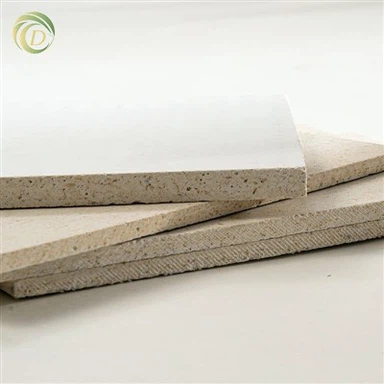
Magnesium oxide boards (magnesium oxysulfide boards / magnesium glass fiber boards) are inorganic fireproof panels manufactured by pressing light-burned magnesium oxide, magnesium sulfate, plant fibers and glass fiber mesh. The standard export specification is 1220×2440mm with thickness ranging from 3mm to 30mm. They are categorized into thin boards (<8mm for ceilings), medium boards (8–15mm for partition walls) and thick boards (>15mm for flooring & fire-resistant structures). Edge options include straight edges, tongue-and-groove and tenon joints.
2. Core Selling Points for Global Market Demand
Class A1 non-combustible fire resistance: 1–4 hours fire endurance, ideal for fire partitions in high-rise buildings, tunnels and equipment rooms.
Moisture & water resistance: No mildew or damp deformation issues common with gypsum boards, suitable for humid coastal regions in Southeast Asia, the Middle East and Australia.
Zero formaldehyde, asbestos-free, low VOC & recyclable: Compliant with global green building and prefabricated construction policies.
Lightweight, sound-insulating and earthquake-resistant; easy to cut and nail. It serves as a substitute for gypsum boards, calcium silicate boards and wood panels, widely used in modular housing and light steel villas for export.
3. Domestic Industrial Chain Foundation
China is the world's largest producer and exporter of magnesium oxide boards, with abundant magnesite mineral resources in Liaoning and Shandong provinces. Domestic production capacity reached around 1.2 billion square meters in 2024, while export volume hit 120 million square meters with an annual growth rate over 10%. Oversupply and vicious price competition among small and medium manufacturers remain prevalent in the industry.
II. Global Export Market Layout: Demand, Tariffs & Access Standards by Region
1. Mature High-Threshold Markets (Europe, America, Australia & Canada)
North America (USA, Canada): Account for 18% of global imports. Commercial buildings enforce strict fire safety standards. Mandatory certifications include ASTM fire resistance and E0 environmental certificates. Ongoing trade barriers against Chinese building materials and fierce competition from local gypsum board manufacturers exist.
EU (Spain, Italy, Netherlands, UK): CE certification and EN fire resistance standards are compulsory. The CBAM Carbon Border Adjustment Mechanism will take full effect in 2026, requiring enterprises to submit full-life-cycle carbon verification reports. High compliance costs correspond to higher profit margins.
Australia & New Zealand: High demand driven by humid climate. AS fire certification is mandatory. Strict market access, stable repeat orders and high unit prices.
2. Emerging High-Growth Markets (Core Export Tracks)
Southeast Asia (Indonesia, Thailand, Malaysia): Tariff reductions under the RCEP Agreement boost infrastructure and light steel housing demand. Vietnam imposes anti-dumping duties of 15.4%–22.8% on Chinese magnesium oxide boards, sharply curbing exports to Vietnam. Indonesia and Cambodia, free of anti-dumping measures, have become alternative hotspots.
Middle East & North Africa (UAE, Saudi Arabia, South Africa): High temperature and humidity with strict fire control regulations; no large-scale local production capacity. Orders are mostly bulk engineering projects.
Latin America, Eastern Europe & Central Asia: Early-stage urbanization drives demand for low-cost panels with low market access barriers, intense competition and thin profit margins.
III. Customs Clearance, Documentation & Export Tax Rebate Rules
1. HS Code (Critical for Customs Declaration; Misdeclaration Prohibited)
General code: 6808000000 Mineral-fiber bonded flat sheets, applicable to most magnesium oxide boards with no mandatory statutory inspection (B) requirement.
Distinction: Refractory magnesia bricks under HS 6902100000 are not for construction magnesium oxide boards; misdeclaration may lead to heavy fines and cargo detention.
Declaration elements: Material (magnesium oxide + plant fiber), dimensions, thickness, fire resistance performance and brand.
2. Full Set of Mandatory Export Documents
Basic customs documents: Commercial Invoice, Packing List, Bill of Lading, Sales Contract.
Tariff preference certificates: CO Certificate of Origin / FORM E (for zero tariffs under RCEP Southeast Asia).
Packaging compliance: IPPC fumigation/heat treatment certificate for wooden pallets, mandatory for customs inspection in Europe, America and Australia.
Overseas clearance supporting documents: Third-party fire test reports, Material Safety Data Sheets (MSDS) and certificate of origin.
Factory records: Factory inspection reports, business license and production filing documents.
3. Export Tax Rebate Policy (Latest 2026 Update)
HS 680800 magnesium oxide boards no longer qualify for export tax rebates, eliminating previous 5% rebate subsidies. This policy change increases cost pressure on manufacturers and intensifies price wars across the industry.
IV. Mandatory Certifications for Target Export Markets
| Export Region | Mandatory Certifications & Standards | Core Requirements |
|---|---|---|
| EU | CE Certification (EN13501 Fire Classification) | Class A1 non-combustibility, formaldehyde emission, carbon footprint reports |
| USA | ASTM E119 Fire Resistance, UL Certification | 1–4 hour fire endurance test, environmental testing |
| Australia | AS/NZS Fire Certification | Moisture resistance, termite resistance, high-humidity aging test |
| Southeast Asia | Voluntary for most countries; third-party fire test reports required for engineering orders | Domestic low-cost test reports acceptable for clearance |
| Middle East | SGS or local municipal fire certification | Stability testing under high-temperature climates |
V. Logistics, Packaging & Container Loading Practices
Transport characteristics: High density means containers hit weight limits before volume capacity is fully utilized. Full-container loads (FCL) are preferred; less-than-container loads (LCL) suffer high damage rates and higher costs and are not recommended for bulk shipments.
Standard export packaging: IPPC heat-treated/fumigated wooden pallets covered with stretch film, reinforced with corner protectors and steel straps, plus extra moisture-proof film to prevent edge collision and damp deformation.
Operational tips: Take full loading photos for filing before shipment; add extra moisture barriers for humid shipping routes to Southeast Asia and the Middle East; use 40HQ high cubes for oversize panels exceeding 3000mm.
Damage risks: Thin boards (3–6mm) are prone to breakage; prioritize regular thicknesses above 8mm for export to reduce after-sales compensation claims.
VI. Core Industry Risks for Export Enterprises
1. Trade Policy Risks
Anti-dumping measures: Vietnam has imposed anti-dumping duties for five years. Europe and the US continue to levy additional tariffs on construction materials, while CBAM carbon tariffs raise compliance costs.
Fluctuating tariffs: RCEP tariff rates are adjusted annually; real-time verification of preferential rates via certificates of origin is required.
Raw material control: Magnesite ore and magnesia sand are classified as resource-based raw materials with tightened mining and export controls, leading to volatile raw material prices.
2. Product Quality & Compliance Risks
Formula irregularities: Low-cost boards suffer excessive chloride ion content, efflorescence and frosting, which cause deformation in high-temperature, high-humidity overseas environments and trigger mass return claims. European and American markets reject panels with efflorescence.
Counterfeit certifications: Fake CE or ASTM certificates result in full cargo destruction, heavy fines and permanent blacklisting by customs authorities.
Environmental trade barriers: EU carbon tariffs, mandatory VOC and radioactivity testing in multiple countries leave small manufacturers without carbon verification capacity locked out of high-end markets.
3. Market Competition Risks
Hundreds of domestic manufacturers engage in homogeneous low-price competition with thin profit margins in emerging markets. High-end European and American markets are dominated by well-established brands, leaving small and medium factories limited to OEM engineering channels.
VII. Industry Development Trends & Export Strategies
1. Long-Term Trends
Sustained growth of green fireproof building materials: Global uptake of prefabricated and modular buildings drives demand for Class A1 non-combustible panels as a replacement for traditional construction materials.
Market segmentation: High-value customized coated panels and integrated fireproof systems for Europe and America; mass-produced low-cost engineering boards for Southeast Asia and the Middle East.
Supply chain relocation: Some enterprises build factories in Southeast Asia to evade anti-dumping tariffs. Domestic suppliers shift from bare panel sales to integrated solutions including partition walls and fire door cores for higher added value.
Stricter compliance requirements: Carbon footprint and full-life-cycle environmental reports will become universal global market access thresholds.
2. Practical Export Strategies for Manufacturers
Market layout: Reduce shipments to high anti-dumping regions such as Vietnam; deepen market penetration in RCEP Thailand, Cambodia, the Middle East and Central Asia.
Product upgrading: Promote low-efflorescence stable magnesium oxysulfide boards with complete fire test documentation, phasing out low-quality cheap panels.
Pre-emptive compliance: Secure target market certifications and carbon verification in advance to avoid clearance delays and tariff penalties.
Business model upgrade: Extend value beyond bare boards via deep processing (lamination, grooving, fire door core supporting parts) to boost profit margins.
Risk control: Clarify compensation clauses for efflorescence and breakage in foreign trade contracts; conduct third-party pre-shipment sampling inspections.
VIII. Overall Industry Conclusion
Magnesium oxide boards are essential green fireproof construction materials for global prefabricated construction and infrastructure projects. China holds a complete industrial chain and export competitive edge, yet the sector faces four major pressures: abolished export tax rebates, anti-dumping duties in multiple countries, EU carbon trade barriers and vicious low-price competition. The core logic of magnesium oxide board export trade lies in matching compliant certifications to target markets, supplying stable low-efflorescence products, standardized full-container logistics, and avoiding trade friction regions. In the long run, enterprises must transition from simple raw panel exports to high-end customization, integrated system solutions and low-carbon compliant production to escape low-margin price competition.