

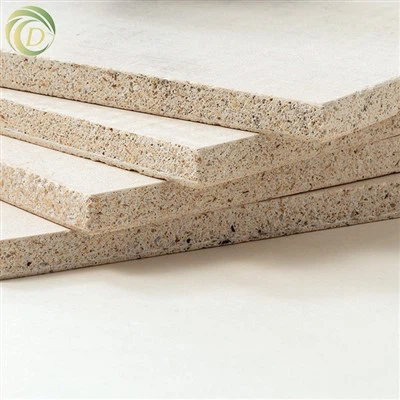
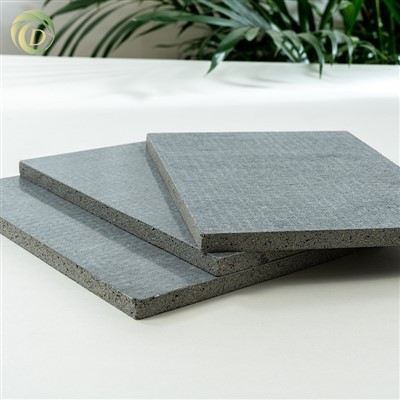
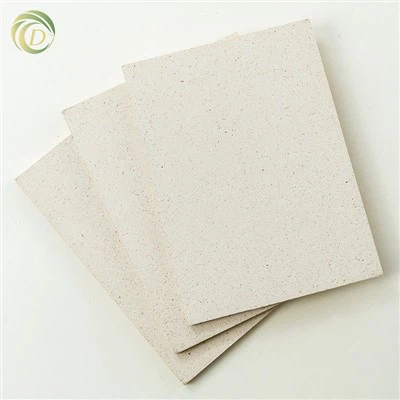
Magnesium oxide (MgO) roof sheathing is a cementitious panel made of inorganic materials and glass fiber mesh that's used for roof decking and other construction applications. MgO sheathing is also known as magnesia sheeting or magnesia board.
Why Choose US
Our Factory
We are a company dedicated to magnesia cement products. Our main products are Magnesium Oxide Boards(MGO Board) for construction and laminated MgO boards with for furniture and renovation. Our mission is to provide the world's construction markets with environmentally friendly, high-performance and sustainable green materials.
Hot Product
Our primary products are Magnesium Oxide Boards(MGO Board) for construction and laminated MGO boards for furniture and decoration.
Quality Control
We have strict quality control over our products. We test each batch of products in the laboratory and check each panel before packing, which completely eliminates product defects.
Customer Service
We prioritize open communication to address our clients' specific requirements and deliver personalized solutions.
-
![Roof Sheathing MGO Board]() Add to Inquiry
Add to Inquiry -
![Roof Decking MGO Board]() Add to Inquiry
Add to Inquiry -
![Magnesium Oxide Roof Sheathing Board]()
Magnesium Oxide Roof Sheathing Board
Add to Inquiry -
![Magnesium Oxide Roof Decking]() Add to Inquiry
Add to Inquiry -
![Eco-Friendly Magnesium Oxide Roof Panel]()
Eco-Friendly Magnesium Oxide Roof Panel
Add to Inquiry -
![MGO Board Fireproof Magnesium Oxide Board Panel Roof Sheeting Underlayment]()
-
![Building Material Fireproof Waterproof MGO Roof Board]()
Building Material Fireproof Waterproof MGO Roof Board
Add to Inquiry -
![Lightweight Fire Proof Class A Magnesium Oxide Board For Roof Sheathing]()
-
![Magnesium Oxide MGO Fireproof Board For Roof Sheathing]()
Magnesium Oxide MGO Fireproof Board For Roof Sheathing
Add to Inquiry -
![Lightweight MgO Construction Roofing Board]()
Lightweight MgO Construction Roofing Board
Add to Inquiry -
![Fireproof Insulation Magnesium Oxide Roof Sheathing]()
Fireproof Insulation Magnesium Oxide Roof Sheathing
Add to Inquiry -
![Fireproof Lightweight Interior Building Materials Magnesium Oxide Sheathing Panel]()





Advantages of Mgo Roof Sheathing
Additional Durability: Many fire-resistant treatments act as a preservative for roofing materials, helping them last longer.
Reduced Pest Presence: Some chemicals can make your roof unappealing for small pests, such as woodpeckers, that could otherwise plague your shingles.
Fire Prevention: Fire-resistant roofing systems can significantly slow the spread of fire, providing first responders more time to reach the scene.
Increased Roofing Options: Popular roofing materials that create unique looks, like wood or synthetic thatch, can receive a fire-resistant treatment that makes them perfect for protecting your home while making it stand out.
MgO Board Be Used For?
In the ever-evolving landscape of construction materials, Magnesium Oxide (MgO) has emerged as a game-changer, offering a multitude of applications that span the entire spectrum of the building process. From sheathing to interior walls and roof sheathing, MgO proves to be a versatile and reliable choice for builders and architects. Let's explore the diverse applications of MgO in construction and beyond.
MgO Sheathing
MgO sheathing is a standout application for this versatile material. It serves as a robust and durable substitute for traditional sheathing materials like plywood or gypsum board. MgO sheathing provides an excellent base for exterior walls, ensuring structural integrity while offering resistance to moisture, mold, and fire.
MgO Backer Board
In wet areas such as bathrooms and kitchens, MgO shines as a backer board material. Its moisture-resistant properties make it an ideal substrate for tile and stone installations. MgO backer boards not only provide stability but also contribute to the longevity of tile applications in spaces prone to high humidity.
Floor Underlayment Subfloor/Subflooring
MgO's high compressive strength and stability make it an excellent choice for floor underlayment subflooring. It provides a solid foundation for various flooring types, including hardwood, laminate, and tile. MgO's dimensional stability prevents warping and ensures the longevity of the floor, making it a reliable choice for both residential and commercial spaces.
Floor Underlayment
Beyond subflooring, MgO serves as an effective floor underlayment material. Its resilience and stability contribute to a smooth and durable surface for different floor coverings. MgO's fire resistance also enhances the safety of the overall flooring system.
Interior Walls
MgO extends its versatility to interior walls, providing a stable and durable surface for finishes. Its resistance to mold and mildew makes it an excellent choice for interior spaces where maintaining air quality is crucial. MgO interior walls contribute to creating healthy and resilient living and working environments.
Exterior Sheathing
When it comes to protecting structures from the elements, MgO excels as an exterior sheathing material. It offers enhanced weather resistance, ensuring the longevity of the building envelope. MgO's durability and stability make it a reliable choice for exterior applications in various climates.
Roof Sheathing
MgO's robust qualities make it suitable for roof sheathing. Its resistance to fire and moisture ensures the structural integrity of the roof, providing a secure and durable foundation for roofing materials. MgO roof sheathing contributes to the overall resilience of the building against environmental challenges.
Additional Applications
Beyond the highlighted applications, MgO finds utility in various other construction aspects, including fire-rated wall panels, modular construction, and as a component in magnesium cement. Its adaptability continues to make waves in the construction industry, proving to be a forward-thinking material with diverse applications.

Mgo Roof Sheathing - Magnesia Cement Types
There are three types of magnesia-based cements that are used to form MgO panels:
Magnesium oxychloride (MOC), also known as the original Sorel cement, is the most widely evaluated, tested, and used type of magnesia cement panel product in the U.S. It is known for its mechanical strength for fastening attachment, flexural strength, dimensional stability, overall durability, and high fire resistance. MOC panels combine the best attributes of wood, gypsum, and Portland cement panels while surpassing them in key areas that matter on construction sites, such as dimensional stability and abrasion resistance. MOC panels are easy to work with as they cut like wood using traditional tools and methods. Most MOC cement panels are used in commercial and multifamily construction. Innovation MgO uses this type of magnesia cement.
Magnesium oxysulfate (MOS) offers comparable fire resistance properties to MOC. Similar to MOC, MOS panels will degrade in the extended and continuous presence of moisture or water, which is easily avoided in normal construction conditions when following manufacturer instructions. MOS panels are less strong and less durable than MOC panels when comparing their strength in mechanical attachment and dimensional stability (e.g. how well they maintain their shape and form when in contact with moisture and water), which has been observed to be less than fiber cement, plywood, and OSB panels. Most MOS panels are used in single family residential and SIPs construction.
Magnesium phosphate cement (MPC) is not currently used in panel form as its makeup provides a very rapid set time that is not conducive for panel manufacturing. Further research is needed to determine if MPC panels can offer the best attributes of MOC and MOS panels without the downsides.
Sheathing boards are used in floor, walls, and roof assemblies to provide a sturdy nailing base onto with various building materials that can be fastened. They are used to strengthen the wall system by protecting it from external elements, thereby providing structural fitness.
Exterior structural sheathing boards tie the framing studs together, providing the walls with twisting and bending resistance. This includes protecting the structure from surface wear, abrasions, dents and penetrations into the wall cavities.
Structural sheathing even plays a crucial role in withstanding wind loads and taking them to the backup wall framings and building's foundation. They act as a substrate for air, water, and vapor barriers.
Common sheathing materials include OSB, glass-faced gypsum panels and plywood, but there's one material that tops the chart as it integrates both weather barriers and insulation: Magnesium Oxide sheathing boards.
Our MagSF Sheathing Boards are the new innovative building materials in the market that are feathered as A1 Non-combustible, with a high fire-rating. Apart from their unparalleled fire performance, these sheathing boards offer excellent impact resistance as well as score-and-snap workability. MgO sheathing boards can be used behind rain screen cladding, cedar cladding, and insulated facades.
What's more, these sheathing boards can withstand high wind pressures that up to 350 miles an hour (even stronger than a tornado!).
Sheathing boards and panels require good load capacity and racking strength; our panels have 4 layers of high tensile fiberglass that provide 38Mpa of impact strength, along with bending strength of over 22Mpa. This fully prevents the structure from abrasions and scruff, providing a durable construction compared to traditional drywall sheathing materials.
Non-Combustible MgO vs. Fire-Resistant MgO
Magnesium oxide, commonly referred to as MgO, is a versatile building material that has been used for various construction applications for decades. It is renowned for its exceptional fire resistance and durability. This mineral-based material has been employed in multiple forms, including MgO boards, sheets, panels, and more.
Non-combustible MgO, such as MAXTERRA is a classification that signifies the material's inherent ability to resist ignition and combustion. MgO itself does not burn or support combustion. It is essentially a fireproof material that can withstand extremely high temperatures without catching fire or releasing harmful gases.
High Melting Point: MgO has an exceptionally high melting point, making it extremely resistant to heat and flames. Even when exposed to direct flame contact, it will not ignite.
Zero Flame Spread: Non-combustible MgO boards do not propagate flames. They act as a barrier, preventing the spread of fire within a structure.
Minimal Smoke Emission: When subjected to high temperatures, MgO does not emit toxic smoke, ensuring the safety of occupants and minimizing the risk of smoke inhalation.
No Off-Gassing: Unlike some other building materials, non-combustible MgO does not release harmful gases when exposed to fire.
Non-combustible MgO is widely used in fire-resistant wall assemblies, ceilings, flooring, and structural components. It is an excellent choice for critical areas such as fire exits, stairwells, and electrical rooms, where fire safety is of utmost importance.
While non-combustible MgO is an excellent fireproof material, the term "fire-resistant MgO" refers to MgO products that have been engineered to enhance their fire resistance properties further. Fire-resistant MgO boards typically include additives and treatments to provide superior fire performance.
Enhanced Fire Ratings: Fire-resistant MgO boards often have higher fire ratings compared to non-combustible MgO, making them suitable for more demanding fire protection applications.
Improved Thermal Insulation: Some fire-resistant MgO products may have enhanced thermal insulation properties, providing better protection against heat transfer during a fire.
Customizable Fire Performance: Fire-resistant MgO can be customized to meet specific fire safety requirements, making it a versatile choice for different building applications.
Fire-resistant MgO is commonly used in areas where fire safety regulations are stringent, or where a higher level of fire protection is needed. This includes fire-rated walls, fire-resistant enclosures, and critical infrastructure components in commercial, industrial, and residential buildings.
Are MgO Boards Safe?
Let's move to the main question: Is the MgO board safe? Well, the answer is Yes, and many reasons exist to acclaim this. Let's explore those reasons one by one.
Made of Non-toxic Material
MgO boards comprise magnesium oxide, magnesium chloride, and other reinforcing fibers. This composition is non-toxic. MgO boards are made of natural materials that can be recycled. Magnesium does not emit VOCs into the Environment. This makes MgO boards excellent for improving indoor air quality.
Scroll down to understand the composition of MgO boards and how it adds to material safety:
|
Components |
Description |
Benefits |
|
Magnesium Oxide |
It’s a naturally occurring mineral that forms a primary component of MgO boards. |
Fire-resistantMold-resistant |
|
Magnesium Chloride |
Used as a bonding agent to enhance structural integrity. |
Increases strength and durability. |
|
Reinforcing Fibers |
Often includes fiberglass or other materials to add tensile strength. |
Improve impact resistance. |
|
Perlite OR Vermiculite |
Lightweight aggregates may be added to improve insulation and reduce weight. |
Enhance thermal insulationReduce overall weight. |
|
Additives |
Various other components are included to enhance; flexibilitywater resistanceHeat resistance |
Increased water resistance Flexibility |
Relatively Low Health Impact
MgO boards are a healthier choice for building homes. Traditional materials like plywood and drywall are made of harmful chemicals. These include;
Formaldehyde
Asbestos
Ammonia
Gradually, these materials emit VOCs into the air, leading to health problems over time. These chemicals can trigger allergies, asthma, and even cancer.
MgO boards can create comfortable and safe living spaces and improve indoor quality. This is especially good for homes, schools, and hospitals.
Our Factory
About Shandong Fandeng Trading Co.,Ltd.
We are a company dedicated to magnesia cement products. Our main products are Magnesium Oxide Boards (MGO Board) for construction and laminated MgO boards with for furniture and renovation. Our mission is to provide the world's construction markets with environmentally friendly, high-performance and sustainable green materials.

FAQ
We're well-known as one of the leading mgo roof sheathing manufacturers and suppliers in China. Please feel free to buy high-grade mgo roof sheathing for sale here from our factory. For price consultation, contact us.
mgo roof flat sheathing, mgo roof rigid sheathing, mgo roof basement roof sheathing