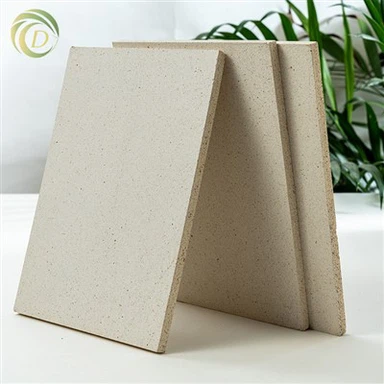
Development History Of Composite Wall Panels
Jun 27, 2022
China has a tradition of digging the ground to burn bricks since ancient times. With the spirit of national energy conservation and emission reduction, in order to realize the "Eleventh Five-Year" goal of the development of new wall materials, adjust the industry structure, save land resources and energy, and protect the environment. At the end of 2005, the target country of the sustainable development strategy fully realized the ban on solid clay bricks, which marks that the reform of wall materials in my country has entered a new stage. Therefore, new wall materials came into being. In the early stage of development after the reform, various kinds of partition wall materials emerged, such as: aerated brick, hollow board, gypsum board, magnesite board, cement brick and other representative materials. Although each type of product has its own characteristics, it has its own space in the market. However, the market demand requires a new partition wall material that can integrate the respective performance characteristics of the above various materials. In this environment, lightweight composite functional wall panels were born. [2]
According to statistics, the use of lightweight wallboard materials can save about 30% of the total cost of construction, and the board wall can improve the construction efficiency by at least three times more than the block and brick wall. The proportion of wall panels in the world's advanced countries and regions is: 72% in Japan, 69% in Europe and the United States, 60% in Hong Kong, and 46% in the Middle East and Southeast Asian countries. In China, the use of new wall panels only accounts for about 10%. The huge demand for building materials in China and the widespread use of new panels in Europe and the United States indicate that the development potential of new wall materials in China is huge.
In the development of lightweight wall panels for many years, various manufacturers have different understandings of the future market development trend. There are many types of lightweight wall panels in the market. The product research and development efforts have gradually widened the gap between the quality of various types of products of various manufacturers. The mainstream technology is mature, fireproof, time-saving and labor-saving, impermeability, sound insulation, practical adaptability and other high-quality lightweight walls, lightweight composite wallboard (industry code FPB) as the industry's preferred product. Over the years, FPB has been continuously updated with many well-known domestic colleges and universities as subject research and test formulations, and at the same time drawing on the combination of technologies in other fields at home and abroad, so that the product quality has matured in terms of impermeability, light weight, and fire resistance. This kind of performance also takes into account the superior performance of sound insulation and impact resistance. With the development over the years, the supporting industries and facilities for composite wall panels have gradually improved, and composite wall panels have gradually expanded from the original high-end market to the mid-end market, and there is a broader space for development and in-depth development and application.