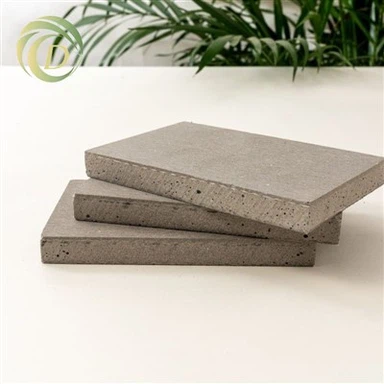
Core Characteristics of Magnesium Oxide sulphate (MgSO₄) MGO Board
Jan 22, 2026
Core Conclusion: Magnesium Oxysulphate (MgSO₄) MGO board is an upgraded inorganic mineral-based building material with magnesium sulfate as the core binder. Its defining characteristics are zero halogen return/moisture sweating, no steel structure corrosion, A1 non-combustible fire resistance, permanent termite/mold resistance, superior weatherability, and lightweight high strength-solving the fatal flaws of traditional MgCl₂ MGO boards and making it the optimal choice for high-demand construction scenarios.
1. Formulation Core Characteristic: MgSO₄ Binder (Root of Superior Performance)
Core Feature: Uses magnesium sulfate (MgSO₄) as the primary binder (instead of magnesium chloride, MgCl₂), reacting with high-purity MgO to form magnesium oxysulphate cement; reinforced with multi-layer fiberglass mesh and lightweight inorganic aggregates.
Key Value: Eliminates chloride ions (the root cause of steel corrosion) and extreme hygroscopicity (the root cause of "sweating/halogen return"), laying the foundation for all subsequent high-performance advantages.
2. Fire Safety Characteristic: A1 Non-Combustible with Long Fire Resistance
Core Feature: Meets ASTM E136 / GB 8624 A1 non-combustible standard; does not ignite, produce flaming droplets, or release toxic fumes at 1800℃ high temperatures; 12–20mm thickness provides 1–3 hours of fire resistance (18–20mm up to 3 hours).
Key Value: Ensures structural integrity under fire, prevents fire spread, and complies with strict fire codes for high-rises, data centers, hospitals, and schools.
3. Biological Resistance Characteristic: Permanent Termite & Mold Proof
Core Feature: 100% inorganic mineral composition, containing no cellulose, wood fibers, or other organic matter that termites/mold feed on; certified to ASTM D3345 (termite resistance).
Key Value: No performance degradation over time; eliminates the need for toxic chemical anti-termite/anti-mold treatments, ensuring long-term structural safety and indoor air hygiene.
4. Water & Weather Resistance Characteristic: Adaptable to Extreme Environments
Core Feature:
Water absorption rate ≤12%, no swelling/delamination/softening after 72h water immersion;
Passes 50+ freeze-thaw cycle tests (ASTM C666);
Resists salt spray and UV radiation, no surface chalking/cracking in coastal/high-sunlight areas.
Key Value: Suitable for basements, bathrooms, coastal roofs, cold regions, and other damp/harsh environments-no moisture-induced damage or performance decay.
5. Structural Mechanical Characteristic: Lightweight High Strength & Wind Uplift Resistance
Core Feature: Density 0.9–1.1 g/cm³ (30–50% lighter than cement boards of the same thickness); flexural strength ≥12–16 MPa (12–20mm); wind uplift resistance ≥2.5 kPa (ASTM E330); supports 400–800mm joist/purlin spacing (varies by thickness).
Key Value: Reduces building dead load (ideal for high-rises/renovations); eases installation labor; resists typhoon/hurricane loads for roof sheathing applications.
6. Eco-Friendly & Economic Characteristic: Low TCO & Green Compliance
Core Feature: Formaldehyde-free, asbestos-free, VOC-free (meets CARB Phase 2 / CE / LEED standards); 100% recyclable; service life ≥50 years (far exceeding MgCl₂ boards/OSB/plywood).
Key Value: Safe for human health and the environment; zero later maintenance (no anti-corrosion/anti-termite/renovation treatments); lower total life cycle cost (TCO) despite slightly higher upfront material cost.