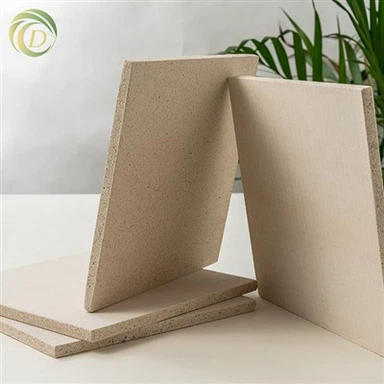
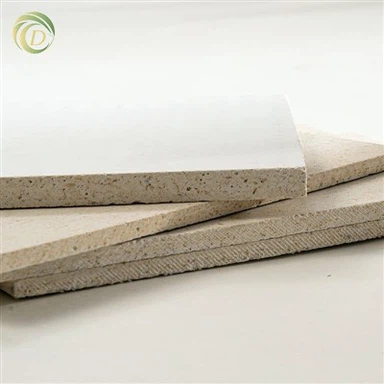
Magnesium Oxide Board For MGO Flooring Boards
Magnesium oxychloride board fireproof underlayment = a robust "fire armor" + a stable "load-bearing base" + a healthy "moisture barrier."
- Fast Delievery
- Quality Assurance
- 24/7 Customer Service
Product Introduction
What Is Magnesium Oxide Board for MGO Flooring Boards
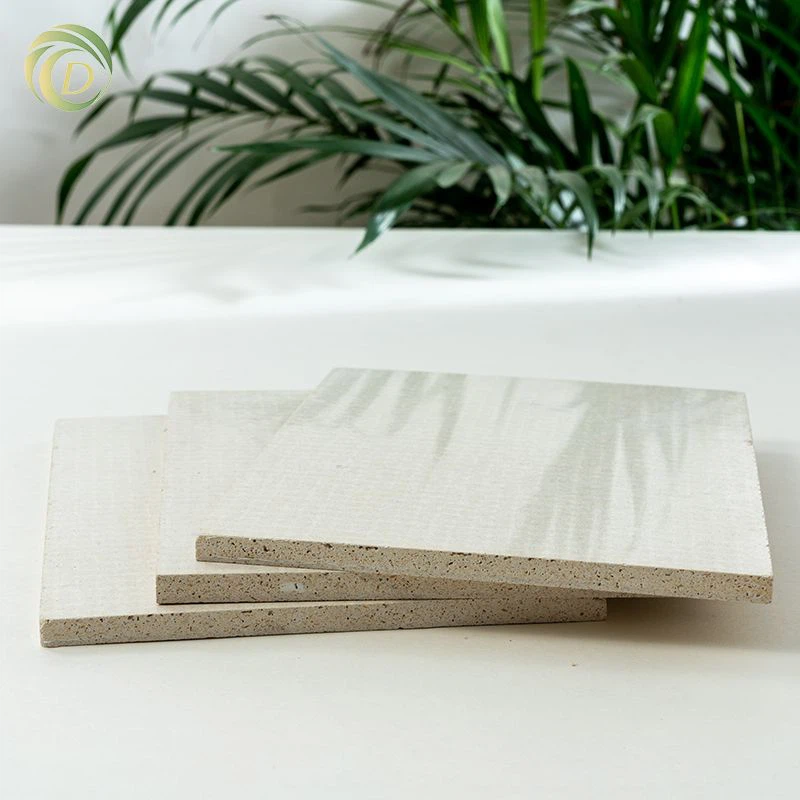
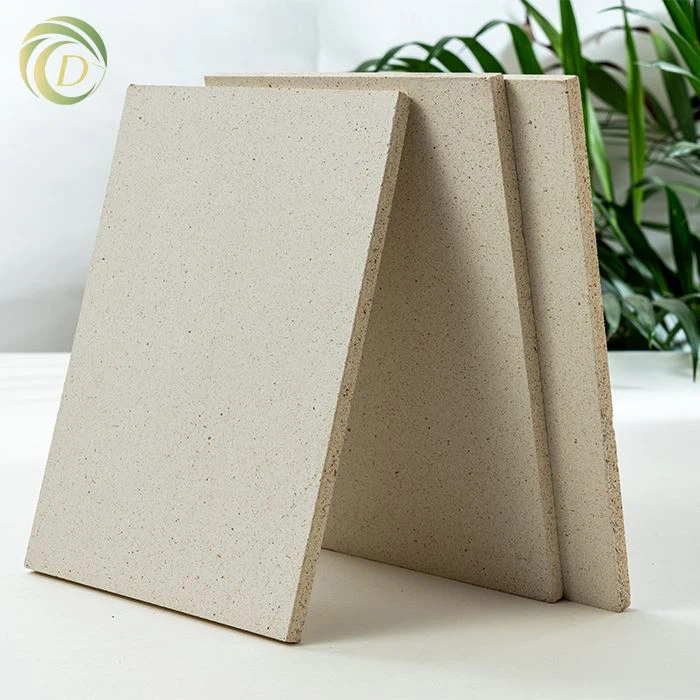
A specialized inorganic high-performance flooring substrate/underlayment board made of magnesium oxide as the core raw material, designed exclusively for floor systems. It replaces traditional floor base materials (cement mortar leveling layer, gypsum board, density board, calcium silicate board) and solves the pain points of traditional flooring substrates such as poor water resistance, flammability, easy deformation, formaldehyde release, and heavy weight. It is widely used in civil, commercial, and prefabricated building floor systems, especially for scenarios with high requirements for fire safety, waterproofing, and environmental protection.
Advantages of Magnesium Oxide Board for MGO Flooring Boards
1. High Bearing & Impact Resistance (Core for Flooring)
- Bearing Capacity: Compressive strength ≥1.5MPa, flexural strength ≥15MPa (far higher than gypsum board's 5–8MPa), can withstand long-term load of heavy furniture (sofas, cabinets, beds) without sagging or cracking;
- Impact Resistance: Impact strength ≥3.0kJ/m², resists daily pedestrian impact and accidental heavy object collision, suitable for high-traffic commercial floors (shopping malls, offices);
- Anti-Cracking: Multi-layer fiber reinforcement and anti-cracking modifiers, no cracking under temperature/humidity changes or ground slight settlement.
2. Super Waterproof & Moisture-Proof (Solves Floor Water Damage Pain Points)
- Low Water Absorption: Water absorption rate ≤8% (ordinary MGO board ≤10%, gypsum board ≥30%), no expansion, softening, or deformation after water absorption;
- Anti-Halogen Return & Anti-Mildew: Modified gelling agent formula eliminates surface efflorescence (halogen return), inorganic components do not provide nutrients for mold/bacteria, no mildew, rot, or corrosion in long-term humid environments (bathrooms, basements, coastal areas);
- Ground Moisture Barrier: Bottom waterproof layer blocks ground capillary water, no need for additional waterproof membrane in non-wet areas (saves construction cost).
3. Class A Fireproof (Fire Safety for Flooring Systems)
- Non-Combustible: Complies with GB 8624-2012 Class A non-combustible standard (ASTM E84 Class A for international markets), inorganic mineral composition with no flammable components, will not ignite or support combustion when exposed to open fire;
- Fire Resistance for Floors: 12–15mm thick MGO flooring board can achieve a fire resistance limit of 1–1.5h when used as a floor base, suitable for fire partition floors in hospitals, schools, and high-rise buildings;
- Low Smoke & Non-Toxic: Flue gas toxicity reaches AQ1 level, no toxic smoke release in fire, ensuring safe evacuation of personnel.
4. Eco-Friendly & Healthy (Indoor Floor Environmental Protection)
- Zero Toxic Substances: 100% free of formaldehyde, asbestos, VOCs, benzene, and heavy metals (lead, mercury, cadmium), complies with GB 18580-2017 E0 grade formaldehyde emission standard and China Environmental Labeling (十环) Certification;
- Food-Contact Safe: Inorganic mineral raw materials are non-toxic and tasteless, suitable for floor systems in kindergartens, nursing homes, hospitals, and food processing plants;
- Low Carbon & Recyclable: Production process has low energy consumption, boards can be recycled as construction filler after disposal, no secondary pollution.
5. Excellent Dimensional Stability (Floor Flatness Guarantee)
- Low Expansion Coefficient: Linear expansion coefficient ≤0.015%, no warping, curling, or gap expansion under temperature (-20℃ to 60℃) and humidity (30–90%) changes;
- High Flatness: Surface flatness error ≤2mm/2m, no need for secondary cement leveling after laying, directly compatible with various floor decorative layers;
- Moisture Resistance: Dimensional change rate ≤0.3% after water absorption, ensuring long-term flatness of the floor system.
6. Light Weight & Easy Construction (Reduces Floor Load & Shortens Period)
- Light Weight: Density 1.1–1.3g/cm³, 12mm thick MGO flooring board weighs only ~16kg/㎡ (cement mortar leveling layer of the same thickness weighs ~240kg/㎡), reduces building floor load by 90%+, suitable for high-rise buildings and prefabricated structures;
- Processability: Can be sawed, drilled, nailed, and cut with ordinary woodworking tools, customized to special sizes (arc, L-shaped) for complex floor layouts;
- Fast Installation: Dry construction (no wet cement operation), laying speed is 3–5 times faster than cement leveling, shortens the construction period by 60%+.




Why Choose Us
Rich Experience
Our company has many years of production work experience. The concept of customer-oriented and win-win cooperation makes the company more mature and stronger.
Advanced Equipment
A machine, tool or instrument designed with advanced technology and functionality to perform highly specific tasks with greater precision, efficiency and reliability.
High Quality
Our products are manufactured or executed to very high standards, using the finest materials and manufacturing processes.
Competitive Price
We have professional sourcing team and cost accounting team, stive to reduce cost and profit and provide you a good price.
24H Online Service
We try and respond to all concerns within 24 hours and our teams are always at your disposal in case of any emergencies.
One-Stop Solution
With rich experience and one-to-one service,we can help you choose products and answer technical questions.
Magnesium Oxide Board for MGO Flooring Boards
Product Specifications & Classification (Flooring-Specific Series)
1. Standard Specifications
| Parameter | Standard Value | Customizable Range |
|---|---|---|
| Thickness | 8mm, 10mm, 12mm, 15mm, 18mm | 5–25mm (special thickness for heavy-duty floors) |
| Standard Size | 1220×2440mm (4×8ft) | 1200×2400mm, 610×1220mm, or custom cut |
| Density | 1.1–1.3g/cm³ | 1.0–1.5g/cm³ (adjustable for strength/weight) |
| Water Absorption Rate | ≤8% | ≤5% (super waterproof type for wet areas) |
| Compressive Strength | ≥1.5MPa | ≥2.0MPa (heavy-duty commercial type) |
2. Product Classification (By Application Scenario)
| Series | Core Features | Suitable Scenarios |
|---|---|---|
| Standard MGO Flooring Board | Basic bearing, waterproof, fireproof | Residential living rooms, bedrooms, offices (dry areas) |
| Waterproof Enhanced Type | Water absorption rate ≤5%, anti-halogen return | Bathrooms, kitchens, basements, balconies, coastal areas |
| (Underfloor Heating Special) | High thermal conductivity (≥0.8W/m·K), heat resistance | Floor systems with water/electric underfloor heating |
| Heavy-Duty Commercial Type | Compressive strength ≥2.0MPa, high impact resistance | Shopping malls, supermarkets, hospitals, schools (high-traffic) |
| Prefabricated Building Type | Light weight, high strength, quick installation | Container houses, light steel villas, prefabricated house floors |
| Outdoor Floor Base Type | Weather-resistant, anti-UV, salt spray resistance | Balconies, terraces, outdoor corridors (covered) |
Magnesium Oxide Board for MGO Flooring Boards
Core Composition & Structural Design (Flooring-Specific Optimization)
MGO flooring boards are not ordinary MGO decorative boards-their formula and structure are tailored for floor bearing, impact resistance, and flatness requirements, with key optimizations in raw materials and structural layers:
1. Core Raw Materials (High-Strength & Waterproof Formula)
- Main Cementitious Material: High-purity active magnesium oxide (MgO, purity ≥90%) – higher purity than ordinary MGO boards, ensuring denser crystal structure and stronger bearing capacity after hydration reaction.
- Gelling Agent: Modified magnesium sulfate solution (priority) or low-halogen magnesium chloride solution – anti-halogen return technology is the core, avoiding surface halogenation (efflorescence) caused by moisture, which is critical for floor surface flatness and decorative layer adhesion.
- Reinforcement System: Multi-layer alkali-resistant glass fiber mesh cloth (3–5 layers embedded) + polypropylene fiber (short fiber doping) – dual reinforcement to improve flexural strength, impact resistance, and crack resistance, preventing fracture under long-term floor load.
- Flooring-Specific Fillers: Quartz sand (high hardness), talc powder (improves flatness), fly ash (reduces weight), and waterproof modifiers/anti-cracking agents – optimize water absorption rate, dimensional stability, and surface wear resistance.
- Surface Treatment Layer: Dense inorganic waterproof coating (bottom layer) + sanding finish (top layer) – enhances adhesion with floor adhesives and decorative layers (wood flooring, tiles, PVC).


2. Structural Design (Flooring-Dedicated Layered Structure)
Unlike single-layer ordinary MGO boards, MGO flooring boards adopt a three-layer composite structure to balance strength, weight, and flatness:
- Bottom Waterproof Layer: Dense inorganic modified layer, water absorption rate ≤8%, prevents ground moisture from penetrating the board;
- Middle Core Bearing Layer: High-density MgO crystal layer with fiber reinforcement, bearing capacity ≥1.5MPa, withstands furniture load and pedestrian impact;
- Top Flat Finish Layer: Sanded and coated surface, flatness error ≤2mm/2m, ensuring seamless laying of floor decorative layers.
3. Production Process (Precision Molding for Flooring)
- Formula Batching: Flooring-specific ratio (MgO: gelling agent: filler = 1:0.6–0.8:1.2–1.5) with strict control of moisture content (10–12%);
- High-Pressure Forming: Continuous press molding (pressure ≥15MPa) to eliminate internal pores, ensuring board density uniformity;
- Constant Temperature Curing: 48–72h constant temperature (35–45℃) and humidity (60–70%) curing to complete hydration reaction, avoiding post-curing deformation;
- Precision Cutting & Sanding: CNC cutting to standard sizes, double-sided sanding to ensure flatness, and surface waterproof coating treatment;
- Quality Inspection: Focus on testing bearing strength, water absorption rate, flatness, and anti-halogen return performance before delivery.

Magnesium Oxide Board for MGO Flooring Boards
Core Application Scenarios (Wide Adaptability for Floor Systems)
MGO flooring boards are versatile and can be used as floor base layer (sub-flooring), floor underlayment, or direct floor surface layer (with surface treatment), covering almost all floor scenarios:
Civil Residential Floors
Dry Areas: Living rooms, bedrooms, studies – replace cement leveling layer, light weight, fast construction, no formaldehyde;
Wet Areas: Bathrooms, kitchens, balconies – waterproof and anti-mildew, directly used as tile backing base (no additional waterproofing needed);
Special Spaces: Basements, attics – moisture-proof, no mildew, solves the problem of traditional floor
Commercial & Public Building Floors
High-Traffic Spaces: Shopping malls, supermarkets, office buildings, hotels – high bearing and impact resistance, long service life, fireproof meets public safety standards;
High-Safety Spaces: Hospitals, schools, kindergartens, nursing homes – zero formaldehyde, non-toxic, Class A fireproof, ensures indoor environmental health and fire safety;
Special Commercial Spaces: Food processing plants, pharmaceutical workshops – waterproof, anti-mildew, easy to clean, meets food hygiene standards.

Prefabricated & Temporary Building Floors
Container Houses: Light weight (reduces transportation load), high strength, quick installation, suitable for mobile housing floor systems;
Light Steel Villas: Reduces building dead load, compatible with light steel structure floors, fireproof and waterproof, meets prefabricated building standards;
Construction Site Temporary Offices: Fast laying, reusable, fireproof and moisture-proof, suitable for temporary floor systems.
Special Floor Scenarios
Floor Renovation: Directly laid on old cement floors/wood floors, no need to dismantle the original floor, shortens renovation period;
Sloped Floors: Customizable thickness and shape, suitable for sloped floors in attics, basements, and ramps;
Moisture-Prone Areas: Coastal cities, southern humid regions – anti-salt spray, anti-mildew, no deformation, long service life.
Magnesium Oxide Board for MGO Flooring Boards
Installation & Construction Guidelines (Flooring-Specific Steps)
MGO flooring boards support dry construction (mainstream) and wet construction (for heavy-duty floors), with simple steps and high efficiency. Below is the standard dry construction process (most widely used):
1. Pre-Construction Preparation
- Base Treatment: Clean the original ground (cement floor, wood floor, light steel keel), remove dust, oil, and debris; fill ground cracks >2mm with cement mortar; ensure ground flatness error ≤3mm/2m;
- Material Preparation: MGO flooring boards (matching thickness), galvanized self-tapping screws (3.5×25mm), MGO special floor adhesive, alkali-resistant glass fiber mesh tape, inorganic floor joint compound;
- Tool Preparation: Woodworking saw, electric drill, level ruler, rubber mallet, tape measure.
2. Core Construction Steps
Step 1: Board Layout & Cutting
Layout according to the floor area, stagger joints (staggered by ≥300mm, like brick laying) to avoid cross joints;
Cut boards to size with a woodworking saw, reserve 2–3mm expansion joints between boards and between boards and walls (for thermal expansion and contraction).
Step 2: Base Laying (Two Methods)
Method 1: Direct Laying (On Flat Cement Ground)
Apply MGO special floor adhesive on the ground (spread evenly with a notched trowel, coating thickness 2–3mm);
Lay MGO flooring boards, press firmly with a rubber mallet, ensure no hollowing;
Fix with self-tapping screws (screw spacing 200–250mm, screw head recessed 0.5–1mm into the board surface).
Method 2: Keel Laying (On Uneven Ground/Light Steel Structure)
Install light steel keels (spacing 300–400mm) or wooden keels (anti-corrosion treated) on the ground;
Lay MGO flooring boards on the keels, fix with self-tapping screws (screw spacing 150–200mm, fix at keel positions);
Fill gaps between keels with sound insulation cotton (optional, for sound insulation).
Step 3: Joint Treatment
Fill board joints with inorganic floor joint compound, smooth with a scraper;
Paste alkali-resistant glass fiber mesh tape on the joints (width 50mm), press firmly to avoid bubbling;
Apply a second layer of joint compound after the first layer dries, sand flat with sandpaper.
Step 4: Surface Decoration Layer Laying
After the joint compound is completely dry (24–48h), lay various floor decorative layers directly:
Wood Flooring/Composite Flooring: Lay underlayment (optional) + glue/nail the flooring;
Ceramic Tiles/Marble: Apply tile adhesive on the MGO board surface, lay tiles (no need for cement mortar);
PVC Flooring/Linoleum: Clean the MGO board surface, apply PVC special adhesive, lay the flooring;
Carpet: Lay carpet underlayment + fix the carpet.
3. Key Construction Precautions
- Avoid Long-Term Soaking: Although waterproof, do not immerse the board in water for a long time (e.g., floor accumulated water for >24h);
- Expansion Joints: Must reserve 2–3mm expansion joints between boards and walls, and 10–15mm expansion joints at floor corners (to prevent thermal expansion cracking);
- Fastener Requirements: Use galvanized/stainless steel self-tapping screws to prevent rust; screw heads must be recessed to avoid damaging the decorative layer;
- Underfloor Heating Special: For underfloor heating systems, use MGO flooring board, and lay the decorative layer after the board is completely cured (72h);
- Storage: Store boards in a dry, ventilated place, stack flat (≤10 layers), avoid direct sunlight and rain.
Comparison with Traditional Flooring Substrates (Core Competitive Advantages)
| Flooring Substrate | MGO Flooring Board | Cement Mortar Leveling Layer | Gypsum Board | Density Board | Calcium Silicate Board |
|---|---|---|---|---|---|
| Fire Rating | Class A Non-Combustible | Non-Combustible | B1/B2 (Combustible) | B2 (Flammable) | Class A Non-Combustible |
| Water Resistance | Excellent (≤8% water absorption) | Good (but heavy) | Poor (≥30% water absorption, easy to collapse) | Very Poor (swells when wet) | Good (but brittle) |
| Bearing Capacity | High (≥1.5MPa) | High (but heavy) | Low (5–8MPa) | Medium (10–12MPa) | Medium (12–14MPa) |
| Weight (12mm) | ~16kg/㎡ | ~240kg/㎡ | ~12kg/㎡ | ~14kg/㎡ | ~18kg/㎡ |
| Environmental Protection | Zero Formaldehyde, Non-Toxic | Non-Toxic | Zero Formaldehyde | Contains Formaldehyde | Zero Formaldehyde |
| Construction Speed | Fast (Dry Construction) | Slow (Wet Construction, 7–14d Curing) | Fast | Fast | Fast |
| Service Life | 15–20 Years | 10–15 Years | 5–8 Years | 3–5 Years | 10–12 Years |
| Cost-Effectiveness | High (Long Life, Low Maintenance) | Medium (High Labor Cost) | Low (Short Life) | Low (Short Life, Easy to Mildew) | Medium (Brittle, Poor Impact Resistance) |
Our Factory
We are a company dedicated to magnesia cement products. Our main products are Magnesium Oxide Boards(MGO Board) for construction and laminated MgO boards with for furniture and renovation. Our mission is to provide the world's construction markets with environmentally friendly, high-performance and sustainable green materials.

FAQ
Q: Is MGO flooring board really Class A non-combustible? What's its fire resistance limit for floor systems?
Q: Can MGO flooring boards be used in wet areas like bathrooms, basements and coastal regions? Will they get efflorescence (halogen return) or mildew?
Absolutely. It has super waterproof & anti-mildew performance:
Water absorption rate ≤8% (waterproof enhanced type ≤5%), far lower than gypsum board (≥30%), no expansion or deformation after water absorption;
Modified anti-halogen return formula eliminates surface efflorescence, and inorganic components do not provide nutrients for mold/bacteria, so no mildew, rot or corrosion in long-term humid environments;
It can be directly used as tile backing base in wet areas without additional waterproof membrane, saving construction cost.
Q: What's the bearing capacity of MGO flooring boards? Can they withstand heavy furniture and high pedestrian traffic?
MGO flooring boards are specially optimized for floor load-bearing:
Standard type: Compressive strength ≥1.5MPa, flexural strength ≥15MPa, can withstand long-term load of heavy furniture (sofas, cabinets, beds) without sagging;
Heavy-duty commercial type: Compressive strength ≥2.0MPa, impact strength ≥3.0kJ/m², suitable for high-traffic floors (shopping malls, supermarkets, hospitals);
Multi-layer fiber reinforcement and anti-cracking modifiers ensure no cracking under daily impact or slight ground settlement.
Q:Is the construction of MGO flooring boards the same as traditional cement leveling or gypsum board? What are the key construction precautions?
MGO flooring boards support dry construction (mainstream) and wet construction, with obvious advantages over traditional methods:
Construction speed: Dry construction is 3–5 times faster than cement leveling (no wet operation, no 7–14d curing period), shortening the construction period by 60%+;
Key precautions: 1) Reserve 2–3mm expansion joints between boards and 10–15mm at wall corners to prevent thermal expansion cracking; 2) Use galvanized/stainless steel self-tapping screws (screw spacing 200–250mm for direct laying, 150–200mm for keel laying); 3) Use light steel keels in humid areas (avoid wooden keel mildew); 4) No long-term immersion in accumulated water.
Q: Is MGO flooring board eco-friendly and non-toxic? Can it be used in kindergartens, hospitals and other high-safety scenarios?
Q: What's the service life of MGO flooring boards? Can they be used for underfloor heating systems?
Service life: Under normal use and proper installation, it can reach 15–20 years (indoor dry environments can be longer), with almost no regular maintenance (no need for painting, anti-corrosion or anti-mildew treatment);
Underfloor heating compatibility: We have a special underfloor heating type with high thermal conductivity (≥0.8W/m·K) and heat resistance, no deformation under long-term heating (40–60℃), fully compatible with water/electric underfloor heating systems, ensuring uniform heat dissipation.
Q: How does fireproof Mgo wallboard compare to other fire-resistant building materials?
Q: Can fireproof Mgo wallboard be painted or decorated?
Q: Is fireproof Mgo wallboard eco-friendly?
Q: How does fireproof Mgo wallboard contribute to energy efficiency?
Q: Can fireproof Mgo wallboard be used for soundproofing purposes?
Q: How does fireproof Mgo wallboard perform in terms of impact resistance?
Q: Is fireproof Mgo wallboard resistant to termites or other pests?
Q: Can fireproof Mgo wallboard be used as a structural element?
Q: What is fireproof Mgo wallboard?
Q: Can fireproof Mgo wallboard be used in high-temperature environments?
Q: What sizes and thicknesses are available for fireproof Mgo wallboard?
Q: Is fireproof Mgo wallboard resistant to UV radiation?
Q: Can fireproof Mgo wallboard be installed on curved surfaces?
Q: How does the cost of fireproof Mgo wallboard compare to other building materials?
Hot Tags: magnesium oxide board for mgo flooring boards, China magnesium oxide board for mgo flooring boards manufacturers, suppliers, factory, alloy flooring, flooring standard, lead flooring, sheet flooring, stage flooring, textured flooring