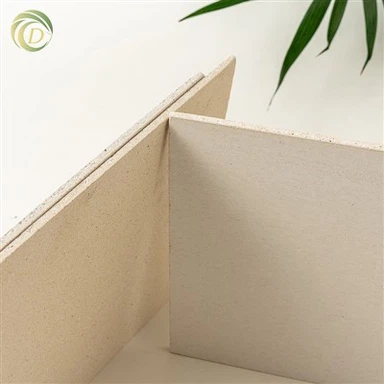
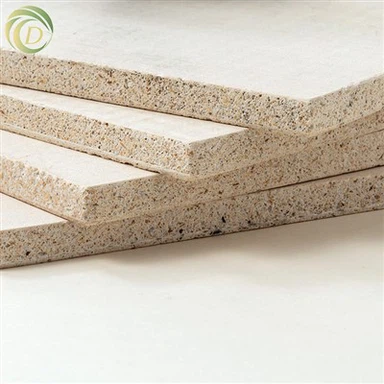
Core Characteristics Analysis of Magnesium Oxide (MgO) Board: Five Core Advantages Establish Its Status as a High-performance Building Material
Jan 15, 2026
As an inorganic composite material based on light-burned magnesium oxide as the core raw material, MgO board boasts five core characteristics-fire resistance and flame retardancy, moisture and water resistance, dimensional stability, environmental safety, and strong adaptability-thanks to the scientific design of its raw material formula and production process. It is a high-performance building material alternative to traditional gypsum boards, cement boards, and wood-based panels.
1. Grade A Fire Resistance & Flame Retardancy, Outstanding Safety PerformanceThe core component of MgO board is magnesium oxide, an inorganic mineral that is a non-combustible material. It meets the national Grade A fire resistance standard and the Euroclass A1 fire rating. In high-temperature environments, the board will not burn or emit toxic smoke, and can maintain structural integrity for more than 4 hours, effectively preventing the spread of fire. This characteristic makes it suitable for places with strict fire protection requirements, such as high-rise buildings, shopping malls, hospitals, and underground parking garages.
2. Moisture & Water Resistance + Mold & Insect Resistance, Adaptable to Humid EnvironmentsMgO board has low water absorption (≤10%), and its dense inorganic structure can resist moisture erosion. Even in plum rain seasons and coastal high-humidity areas, it is not easy to soften or warp. Meanwhile, the board contains no organic substances such as wood fiber, which cannot provide a nutrient source for mold, termites, and other pests. Its weakly alkaline material properties can further inhibit mold growth, fundamentally solving the problems of mold and insect infestation that plague traditional boards. It is applicable to humid scenarios such as kitchens, bathrooms, basements, and exterior walls.
3. High Dimensional Stability, Resistant to Deformation and CrackingThrough precise raw material ratio (the molar ratio of magnesium oxide to modifier is 6–8:1) and standardized curing, MgO board features extremely low thermal expansion coefficient and moisture expansion and shrinkage rate (moisture movement rate is only 0.1%–0.12%). In environments with drastic temperature and humidity changes, the board can maintain good flatness without cracking or deformation, which is far superior to wood-based panels that are prone to moisture-induced deformation and cement boards that are easy to crack.
4. Formaldehyde-free, Green and HealthyNo asbestos, formaldehyde, benzene, or other toxic substances are added during the production of MgO board, making it a green building material with zero formaldehyde emission that complies with the E0 formaldehyde emission standard. The raw materials of the board are mostly natural inorganic minerals, and some auxiliary materials are recyclable, with low production energy consumption. It not only meets the health requirements of interior decoration, but also helps construction projects obtain green building certifications.
5. Lightweight yet High-strength + Wide Adaptability, Flexible Construction and ApplicationWith a density of 1000–1200 kg/m³, MgO board is 30%–40% lighter than traditional cement boards, facilitating transportation and installation. It has a built-in alkali-resistant fiberglass mesh reinforcement layer, which provides excellent flexural and impact resistance, as well as good screw-holding capacity. It is compatible with various wall framing systems such as steel, wood, and concrete. At the same time, the surface of the board can be directly painted, or covered with finishing materials such as ceramic tiles, stone, and wallpaper, meeting various construction needs including interior wall partitions, exterior wall hanging panels, and ceiling substrates.