


Fireproof Flooring Material MGO Magnesium Oxide Board Floor
MGO magnesium oxide board floor is a mineral-based, A1-class non-combustible flooring material with excellent fire resistance, moisture resistance, and durability, widely used as subfloor sheathing and finished flooring in commercial, residential, and public buildings, especially in fire - sensitive and humid areas.
- Fast Delievery
- Quality Assurance
- 24/7 Customer Service
Product Introduction
Fireproof Flooring Material MGO Magnesium Oxide Board Floor?
MGO magnesium oxide board floor, also known as MgO floor board, is a factory - produced building panel for flooring systems, made from magnesium oxide (MgO) as the main cementitious material, mixed with magnesium sulfate (MgSO₄, non - corrosive formula preferred) or magnesium chloride (MgCl₂), plus reinforcing materials like fiberglass mesh, non - woven fabric, perlite, wood chips, etc., through proportioning, pressing, and curing. It is asbestos - free, formaldehyde - free, and non - toxic, which is an eco - friendly green building material.
Advantages of Fireproof Flooring Material MGO Magnesium Oxide Board Floor
|
Performance |
Details |
Value for Flooring |
|---|---|---|
|
Fire Resistance |
A1 - class non - combustible (GB 8624, EN 13501 - 1), can withstand up to 800℃, minimal smoke/toxic gases, fire - resistance duration up to 2 - 4h (varies by thickness) |
Meets strict fire codes; buys time for evacuation and rescue in fires |
|
Moisture & Mold Resistance |
Low water absorption, no warping/swelling/delamination when exposed to moisture; inhibits mold/mildew/rot; suitable for coastal/humid areas |
Maintains dimensional stability in kitchens, basements, and high - humidity regions |
|
Strength & Durability |
Good flexural/tensile/impact strength; density 0.9-1.2g/cm³, lightweight yet rigid; resistant to insects/termites/chemicals |
Handles high foot traffic, furniture loads, and reduces transport/installation costs |
|
Eco - Friendliness |
Natural mineral - based, no asbestos/formaldehyde/heavy metals; recyclable; low - energy production |
Safe for hospitals, schools, and other sensitive spaces |
|
Thermal & Acoustic Insulation |
Perlite/fibers enhance thermal resistance and sound reduction |
Improves energy efficiency and reduces floor - impact noise |
|
Workability |
Can be cut, drilled, and installed with standard tools; available in square edge, shiplap, tongue - and - groove (T&G) joints for tight seams |
Quick installation, reduces on - site labor time |

Magnesium Oxide Wall Board offers unmatched performance with its fire resistance, lightweight and high-strength structure, moisture and mold protection, and superior durability-making it a better choice than traditional materials like gypsum, cement, and wood-based boards.

Fire Retardant Board is a mineral matrix engineered board designed to contain a fire within a compartment of a building by acting as a barrier to stop the spread of heat, smoke, fire and gases. It can be used for steel protection, walls, ceilings, ducts, concrete protection and sealing penetrations and voids.
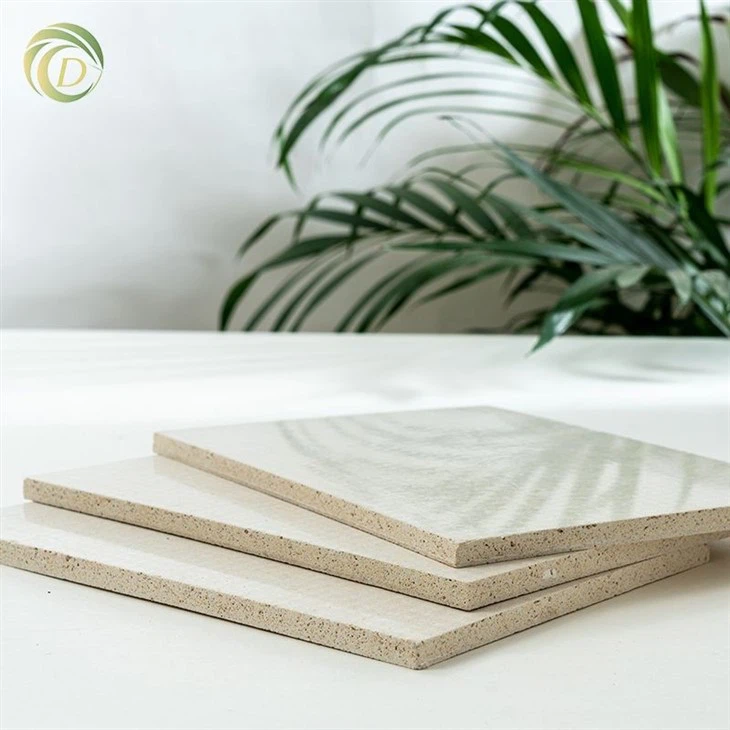
Fireproof wall board, also known as fire-resistant wall board or fire-rated wall board, is a type of building material designed to resist the spread of fire and provide some level of protection in case of a fire. It is commonly used in construction to create fire-resistant partitions, walls, and ceilings.

Magnesia boards are used in place of traditional gypsum drywall as wall and ceiling covering material and sheathing.

The non-combustible property of magnesium oxide board comes from its inorganic mineral components and stable structure.

Decorative panels, with magnesium oxide board as the base material, are widely used in interior decoration industry. These panels are extensively used in high-end residential, commercial and industrial projects for interior decoration.

As a sheathing board, magnesium oxide board has core competitiveness in non-combustibility, water and corrosion resistance, and structural stability, while also being convenient for construction and environmentally friendly.

Magnesium oxide board demonstrates good mildew-proof characteristics due to its unique advantages. Its alkaline nature resulting from the main raw materials is not conducive to the growth of mold.

As the new generation of inorganic eco-friendly building materials, MGO Exterior Deck boards have become the preferred material for outdoor walkways, scenic platforms, and other outdoor construction projects due to their lightweight strength, fire resistance, moisture protection, and weather resistance.
Jinan Fandeng New Material Co.,Ltd.
We are a trusted provider of high-performance, sustainable building materials, focused on magnesium oxide (MGO)-based solutions.
Our core product - MGO Boards - offers fire resistance, lightweight with high strength, moisture and mold resistance, and lasting durability, making it ideal for a wide range of architectural and decorative applications.
We collaborate with leading industry associations, including the China Magnesium & Materials Association (CMMA), where we serve as the Chair of the International Exchange Committee, as well as the Magnesium Oxide Building Products Association (MgOBPA) and the Magnesium Oxide Cement Association (MOCA).
Guided by our commitment to innovation and sustainability, we provide high-performance materials that support the future of green construction.
Why Choose US
1. Product Quality: Stable and Reliable, Adaptable to Diverse Scenarios
We always adhere to high standards in controlling product quality. From raw material selection to production processes, every detail is strictly refined to ensure that our magnesium oxide boards possess excellent core properties such as moisture resistance, fire resistance, and weather resistance. Whether it is for humid basements, exposed exterior walls, or places with high environmental protection requirements like hospitals and schools, our products can stably adapt, providing solid material support for various projects. This allows customers to avoid worries about performance issues during use.
2. Supply Capacity: Flexible and Efficient, Meeting Diverse Needs
We have a mature production system and sufficient capacity reserves. We can not only efficiently undertake bulk orders for large-scale projects to ensure continuous and stable supply but also quickly respond to small-batch, multi-specification customization needs, including adjustments to details such as board thickness, size, and surface treatment, flexibly matching the design requirements of different projects. Meanwhile, through scientific inventory management, we shorten the delivery cycle, helping customers avoid delays in construction periods due to material supply issues.
3. Service Support: Professional and Considerate, Providing Full-Process Escort
We have a team of experienced technicians and service staff. From the initial communication, we provide targeted product selection suggestions based on the characteristics of the customer's project (such as usage environment, construction conditions, etc.). During the construction process, we can offer detailed technical guidance to help solve installation problems. The after-sales link also responds efficiently; if any issues arise, we will follow up and handle them promptly, ensuring that customers feel professional support at every stage of cooperation.
4. Cooperation Value: Cost-Effective, Pursuing Long-Term Win-Win
We insist on providing high-quality products at reasonable prices. By optimizing the supply chain and production efficiency, we help customers control procurement costs while ensuring quality. At the same time, we value long-term cooperation with customers, offering flexible preferential schemes based on the scale and duration of cooperation. We also take the initiative to share industry experience and assist in optimizing procurement plans, helping customers reduce overall costs and achieve a win-win situation for both parties.
Fireproof Flooring Material MGO Magnesium Oxide Board Floor


Specifications & Common Types
Dimensions: Standard size is 1220×2440mm or 1200×2400mm; customized sizes are available.
Thickness: For subfloors, 12-20mm is common; for finished flooring, 6-15mm is used (can be combined with wear - layers like LVT/melamine).
Structural Edges:
Tongue - and - groove (T&G): Easy to interlock, good for subfloors and finished floors.
Shiplap: Better for moisture - prone areas with overlapping seams.
Square edge: Suitable for direct bonding or underlayment applications.
Formulas:
MgSO₄ (sulfate) type: No corrosion to steel, no sweating, ideal for steel - framed structures and humid environments.
MgCl₂ (chloride) type: Cost - effective but may corrode steel; avoid use with metal components.
Installation & Application Scenarios
Installation Steps:
-
Prepare a flat, clean substrate (concrete slab, steel joists, or wood framing).
-
Use T&G/MgSO₄ - type boards for subfloors; leave 2-3mm expansion gaps around the perimeter.
-
Fasten with corrosion - resistant screws/nails (spacing 200-300mm along edges/joists); avoid over - tightening.
-
Finish with waterproofing membranes (if needed) and floor coverings (LVT, vinyl, tile, etc.).
Typical Applications:
-
Subfloor sheathing: For commercial/residential buildings, high - rise structures (e.g., Taipei 101).
-
Finished flooring: Hospitals, schools, data centers, tunnels, and fire - critical spaces.
-
Wet areas: Bathrooms, kitchens, and coastal buildings.
-
Industrial sites: Factories, warehouses, and areas with heavy equipment loads.
What are the advantages of Fireproof Flooring Material MGO Magnesium Oxide Board Floor compared to other flooring materials?
MGO magnesium oxide board floor stands out with comprehensive performance advantages compared to traditional and mainstream flooring materials (e.g., gypsum board, cement board, plywood, LVT, ceramic tile). Below is a detailed comparative analysis, focusing on core pain points of flooring applications (fire safety, moisture resistance, durability, etc.) for clear value perception:
1. Unmatched Fire Resistance (A1-Class Non-Combustible)
|
Compared Material |
MGO Floor Advantage |
|---|---|
|
Gypsum board (B1-class flame-retardant) |
MGO is certified A1-class non-combustible (GB 8624/EN 13501-1), withstands 800-1000℃ high temperatures, and releases almost no toxic smoke. Fire resistance duration reaches 2-4 hours (varies by thickness). Gypsum board decomposes and collapses in 30-60 minutes under fire, emitting harmful fumes. |
|
Plywood/OSB (B3-class combustible) |
MGO does not burn, char, or spread flames-critical for fire-sensitive spaces (data centers, tunnels, hospitals). Plywood ignites easily and releases flammable gases, increasing fire risks. |
|
LVT/Vinyl flooring (flame-retardant but combustible) |
MGO acts as a fire barrier (ideal for subfloors under LVT/vinyl), preventing fire from spreading to the structure. LVT itself melts and emits toxic smoke when burned. |
💡 Value: Meets strict global fire codes (e.g., ASTM E119, EN 13501), eliminating fire safety liabilities for commercial/residential buildings.
2. Superior Moisture & Mold Resistance (No Warping/Delamination)
|
Compared Material |
MGO Floor Advantage |
|---|---|
|
Gypsum board |
Gypsum absorbs moisture easily, leading to swelling, delamination, and mold growth (unusable in basements/bathrooms). MGO has low water absorption (<15%), maintains dimensional stability in 90% humidity, and inhibits mold/rot. |
|
Plywood/Particleboard |
Plywood warps, rots, or is infested by termites in humid environments (e.g., coastal areas). MGO is insect/termite-proof and moisture-resistant without chemical treatments. |
|
Cement board |
Cement board is moisture-resistant but heavy (density 1.8-2.0g/cm³) and prone to cracking if not installed properly. MGO is lighter (0.9-1.2g/cm³) with better flexural strength, avoiding moisture-induced damage. |
💡 Value: Suitable for wet areas (bathrooms, kitchens, coastal buildings) and high-humidity regions, reducing maintenance and replacement costs.
3. Balanced Strength & Durability (Lightweight Yet Rigid)
|
Compared Material |
MGO Floor Advantage |
|---|---|
|
Plywood |
MGO has higher flexural strength (≥8MPa) and impact resistance, supporting heavy foot traffic and furniture loads. Plywood weakens over time (especially in moisture) and is prone to splitting. |
|
Cement board |
MGO is 30-40% lighter than cement board, reducing transportation and installation labor costs. It maintains rigidity without brittleness, avoiding cracking during handling. |
|
LVT/Vinyl (soft core) |
MGO acts as a stable underlayment for LVT/vinyl, preventing indentation from heavy objects. LVT alone may deform under pressure. |
💡 Value: Durable for long-term use (service life ≥20 years) with low maintenance, suitable for high-traffic commercial spaces (malls, schools) and industrial warehouses.
4. Eco-Friendly & Healthy (No Toxic Emissions)
|
Compared Material |
MGO Floor Advantage |
|---|---|
|
Plywood/Particleboard |
MGO is made of natural minerals (MgO) + fiberglass mesh, with zero formaldehyde (meets ENF-grade standards) and no asbestos/heavy metals. Plywood often contains urea-formaldehyde resin, emitting harmful VOCs. |
|
PVC flooring |
MGO is recyclable and low-carbon (energy-saving production process). PVC flooring releases plasticizers and VOCs, posing health risks in enclosed spaces. |
|
Ceramic tile |
MGO's production consumes less energy and water than ceramic tile (which requires high-temperature firing). It is non-toxic and safe for sensitive spaces (hospitals, nurseries). |
💡 Value: Complies with global environmental standards (ISO 14001, CE), meeting the growing demand for green buildings and healthy living.
5. Easy Installation & Workability (Saves Time & Costs)
|
Compared Material |
MGO Floor Advantage |
|---|---|
|
Cement board |
MGO can be cut, drilled, and nailed with standard tools (no special equipment needed). Cement board is heavy and brittle, requiring professional cutting and increasing installation time. |
|
Ceramic tile |
MGO's tongue-and-groove (T&G) design enables quick interlocking installation, reducing on-site labor by 30-50%. Ceramic tile requires time-consuming grouting and leveling. |
|
Gypsum board |
MGO is lightweight and easy to handle, reducing transportation and lifting costs. Gypsum board is fragile and prone to breakage during installation. |
💡 Value: Shortens construction cycles, lowers labor costs, and is suitable for both new builds and renovations.
6. Versatile Adaptability (Multi-Scene Application)
|
Compared Material |
MGO Floor Advantage |
|---|---|
|
Specialized fire-resistant flooring |
MGO integrates fire resistance, moisture resistance, and strength-no need for additional waterproofing or fireproofing layers (unlike gypsum board + waterproof membrane). |
|
Outdoor flooring (wood/plastic) |
MGO is weather-resistant (UV-stable, no fading/warping) and suitable for outdoor decks/patios. Wood flooring rots easily outdoors, while plastic flooring degrades under UV light. |
|
Steel-framed structures |
MgSO₄-type MGO (non-corrosive formula) does not rust steel joists, unlike MgCl₂-type cement boards or wet wood. |
💡 Value: Eliminates the need for multiple material combinations, reducing material and construction costs while adapting to diverse scenarios (residential, commercial, industrial, outdoor).
7. Cost-Effective (Long-Term Total Value)
|
Compared Material |
MGO Floor Advantage |
|---|---|
|
Ceramic tile |
MGO's mid-range cost (lower than ceramic tile and high-end fireproof flooring) combined with low installation/maintenance costs results in higher long-term ROI. |
|
Plywood |
MGO's durability reduces replacement frequency (plywood needs replacement every 5-8 years in humid areas), saving long-term costs. |
|
Cement board |
MGO's lightweight design lowers transportation and labor costs, offsetting any slight price difference with cement board. |
💡 Value: Balances upfront cost and long-term benefits, making it a cost-effective choice for both budget-sensitive projects and high-end demand.
Summary of Core Advantages
MGO magnesium oxide board floor outperforms other materials in fire safety, moisture resistance, durability, and eco-friendliness-addressing key pain points of flooring applications. Its lightweight, easy installation, and versatility further enhance its competitiveness, making it a preferred choice for global customers seeking "safe, durable, and cost-effective" flooring solutions. Whether for fire-critical spaces, humid environments, or green buildings, MGO floor delivers unmatched comprehensive value.
FAQ
Hot Tags: fireproof flooring material mgo magnesium oxide board floor, China fireproof flooring material mgo magnesium oxide board floor manufacturers, suppliers, factory, budget flooring, flooring promotion, heat resistant flooring, magnesium based flooring, reliable flooring, tongue and groove flooring


