


Light Weight MGO/Magnesium Oxide Board Sound Heat Insulation
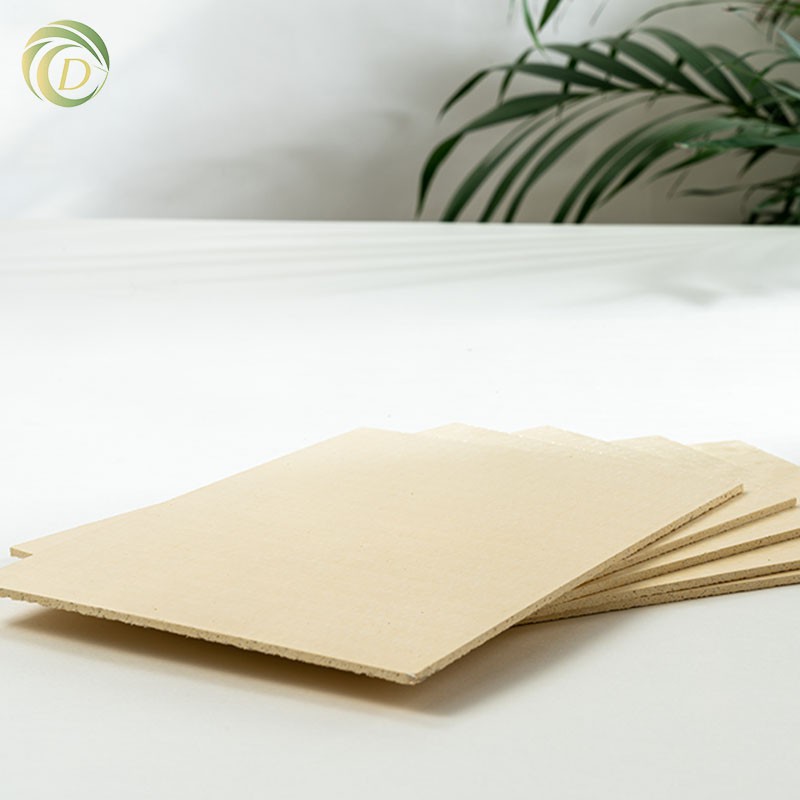
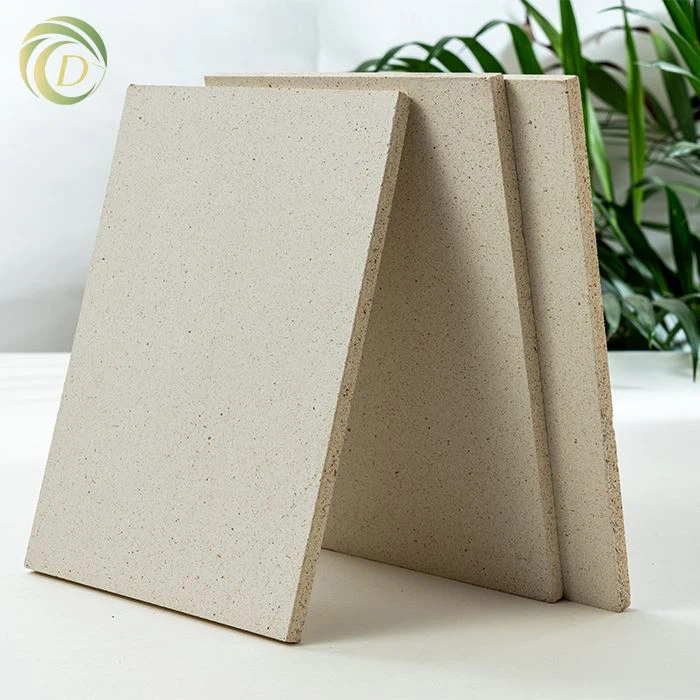
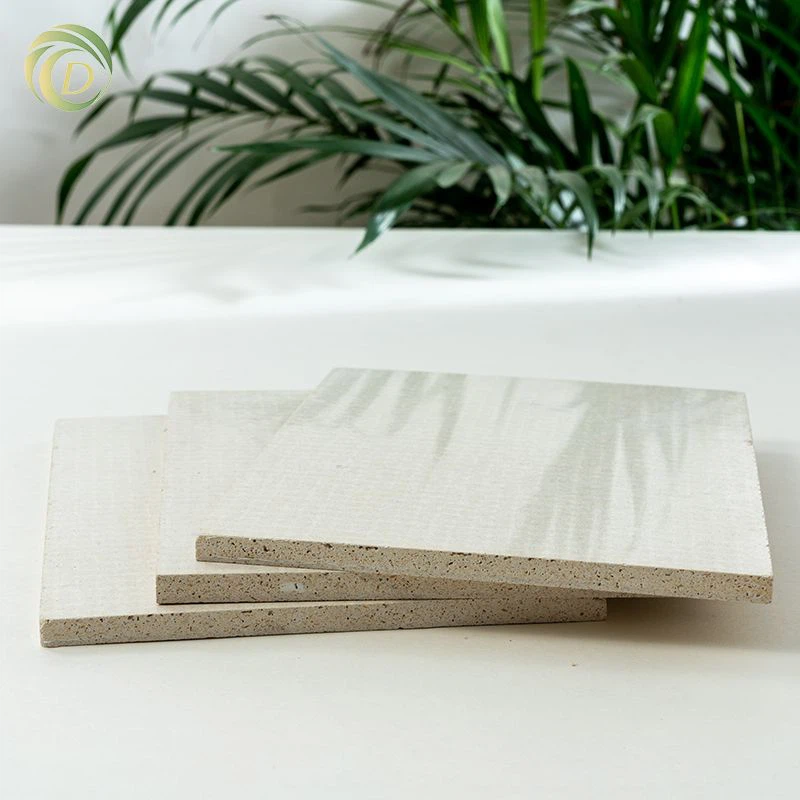
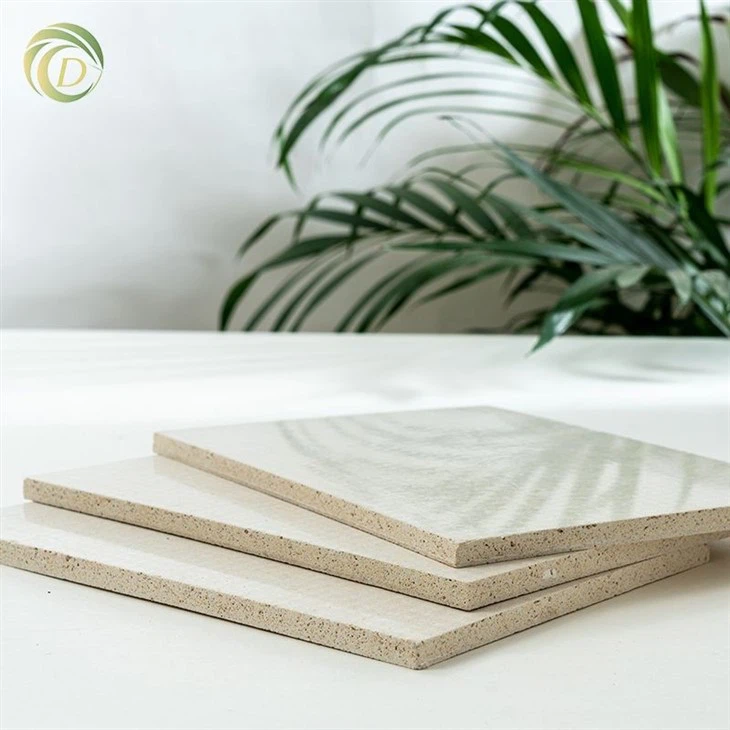
Lightweight, soundproof and thermal insulating MGO board is a Class A1 non-combustible panel with magnesium oxide as the core raw material. It integrates light weight, sound insulation and noise reduction, as well as thermal insulation functions, making it an ideal material for balancing safety and comfort in modern buildings.
- Fast Delievery
- Quality Assurance
- 24/7 Customer Service
Product Introduction
Light Weight MGO/Magnesium Oxide Board Sound Heat Insulation
Lightweight, soundproof and thermal insulating MGO board is a functional panel made through composite molding technology. It uses magnesium oxide (MgO), magnesium chloride (or magnesium sulfate) and water as the cementitious system, supplemented by lightweight filling materials (perlite, foaming agent, etc.) and reinforced with alkali-resistant glass fiber cloth.
Advantages of Light Weight MGO/Magnesium Oxide Board Sound Heat Insulation
01 Light Weight
Density is only 0.8-1.2g/cm³, 20%-30% lighter than ordinary MGO boards, and much lower than brick walls (1.8-2.0g/cm³).
A single 1220mm×2440mm×10mm panel weighs only 15-20kg, making transportation and installation labor-saving and significantly reducing building load.
Lightweight without compromising strength, flexural strength ≥10MPa, can be nailed and sawn, suitable for various construction scenarios.
02 Efficient Sound Insulation
The sound insulation of a single 12mm panel reaches 35-40dB, and that of hollow or sandwich models (such as composite rock wool) is ≥45dB.
The porous internal structure of the panel and filling materials form a sound wave barrier layer, weakening air-borne sound and structure-borne sound.
Combined with light steel keels, it can meet the strict sound insulation requirements of offices, bedrooms and other spaces (noise environment ≤40dB).
03 Thermal Insulation
Thermal conductivity is as low as 0.08-0.12W/(m·K), 1/3-1/2 of ordinary cement boards, and thermal insulation effect is far superior to brick walls.
The porous structure of the panel itself and lightweight filling materials form an insulation layer, reducing heat transfer between indoor and outdoor.
It reduces air conditioning energy consumption in summer and retains indoor temperature in winter, achieving remarkable energy-saving effects (reducing building energy consumption by 15%-20%).
04 Dimensional Stability:
1. Small thermal expansion and contraction coefficient: The linear expansion coefficient is approximately 1.5×10⁻⁵/℃, close to that of steel and much lower than that of wood (10×10⁻⁵/℃);
2. Low dry-wet deformation rate: When the moisture content changes by 5%, the deformation rate is ≤0.1%, with no warping or cracking;
3. No shrinkage during long-term use: The hydration reaction is complete, and there is no "dry shrinkage" issue in the later stage (traditional cement boards are prone to shrinkage and cracking due to water evaporation).
05 Environmental Protection & Health:
1. No release of volatile organic compounds (VOCs) such as formaldehyde and benzene, complying with GB/T 18883-2022 Indoor Air Quality Standard;
2. No radioactivity: The base material is a natural mineral, and the radionuclide limit meets the requirements for Class A decorative materials (suitable for residences, hospitals, schools);
3. Recyclability: After disposal, it can be crushed and reused as inorganic filler without environmental pollution.
06 Fire resistance: Class A1 non-combustible, non-combustible at 800℃, fire resistance rating of 1.5-3 hours, no toxic smoke.
Environmental safety: Formaldehyde-free and non-radioactive, formaldehyde emission ≤0.025mg/m³ (ENF Class), can be directly used indoors.
Moisture-proof and corrosion-resistant: Water absorption rate ≤10%, no mildew or moisture regain in humid environments, suitable for basements, bathrooms and other scenarios.
Durable and stable: Inorganic material, no aging or insect infestation, service life of 15-25 years.


Why Choose Us
1. Strict raw material control & Class A1 quality guarantee: Select high-purity magnesium oxide and environmental magnesium salts; all finished products meet Class A1 fire resistance and ENF/E0 environmental standards, certified by CMA/CNAS authoritative tests.
2. Full-series production capacity & on-demand adaptation: Cover all types including ordinary, lightweight soundproof/thermal insulating, magnesium sulfate boards; thickness 6-25mm customizable to meet multi-scenario construction needs.
3. Core technology to solve industry pain points: Adopt modification process to eliminate efflorescence and deformation; double-layer glass fiber reinforcement design enhances panel strength and stability, extending service life by 30%.
4. Full-chain compliance & worry-free acceptance: Provide complete test reports, qualification certificates and certification documents; comply with GB, EU EN, US CARB and other international standards, ensuring smooth project acceptance.Team of 10+ senior engineers, providing installation guidelines and scenario-based solutions, with regular technical training.
5. Efficient delivery & flexible customization: Own large-scale production base with daily output over 10,000 sheets; regular models in stock, special specifications delivered in 7-15 days.
6. Full-process service & worry-free cooperation: Provide technical consultation, installation guidance and after-sales support; one-on-one customer manager docking to promptly respond to order and after-sales needs.
What Are The Main Materials Used In Light Weight MGO/Magnesium Oxide Board Sound Heat Insulation
Upgraded Core Composition (focusing on light weight/sound insulation/thermal insulation):
-
Cementitious base material: High-purity magnesium oxide + environmentally friendly magnesium salt (reduces efflorescence and improves stability).
-
Lightweight filling: Micron-grade perlite and foaming agent (reduces density and enhances thermal insulation).
-
Reinforced structure: Double-layer/multi-layer glass fiber mesh (balances strength and crack resistance).
-
Sound insulation optimization: Some models adopt hollow structure or sandwich design (enhances sound wave barrier effect).
Key Technical Parameters
|
Item |
Index (Premium Grade) |
|---|---|
|
Density |
0.8-1.2g/cm³ |
|
Flexural Strength |
≥10MPa |
|
Sound Insulation (Single 12mm Panel) |
≥35dB |
|
Thermal Conductivity |
0.08-0.12W/(m·K) |
|
Fire Rating |
Class A1 Non-Combustible |
|
Water Absorption Rate |
≤10% |
|
Formaldehyde Emission |
≤0.025mg/m³ (ENF Class) |
|
Common Thickness |
8mm (ceiling), 10-12mm (partition wall), 15mm (humid/high-demand scenarios) |
|
Standard Size |
1220mm×2440mm (customizable) |
Environmental Classification of Lightweight, Soundproof and Thermal Insulating MGO (Magnesium Oxide) Board
The environmental classification of lightweight, soundproof and thermal insulating MGO boards is mainly based on formaldehyde emission, while also meeting auxiliary indicators such as radioactivity and heavy metals. It mainly follows three authoritative standards: Chinese national standards, EU standards and US standards, with clear grades suitable for different scenario needs.
1. Core Environmental Classification (Divided by Formaldehyde Emission)
1. Chinese National Standards (GB/T 33544-2017, GB/T 18587-2017)
This is the most commonly used classification basis in China, focusing on formaldehyde emission limits:
ENF Class (Most Environmental Friendly): Formaldehyde emission ≤0.025mg/m³, formaldehyde-free addition grade.Suitable for scenarios with extremely high environmental requirements such as children's rooms, hospitals and kindergartens. Due to the inorganic base material, most high-quality MGO boards can reach this grade.
E0 Class: Formaldehyde emission ≤0.050mg/m³, mainstream environmental grade.Applicable to most indoor scenarios such as residences, office buildings and hotels, and is the conventional compliance grade for MGO boards.
E1 Class: Formaldehyde emission ≤0.124mg/m³, the minimum environmental requirement of national standards.Suitable for non-residential scenarios with low environmental requirements such as industrial workshops and warehouses; low-quality MGO boards must meet this standard at least.
2. EU Standards (EN 717-1)
E0 Class: Formaldehyde emission ≤0.03mg/m³ (slightly stricter than Chinese ENF Class).
E1 Class: Formaldehyde emission ≤0.124mg/m³ (consistent with Chinese E1 Class).Suitable for projects exported to the EU; additional certification requirements for "formaldehyde-free addition" (such as EMICODE EC1+) should be noted.
3. US Standards (CARB, TSCA Title VI)
CARB P2 Class: Formaldehyde emission ≤0.09mg/m³, mandatory standard in California, USA.
TSCA Title VI Class: Formaldehyde emission ≤0.09mg/m³, US federal standard.Suitable for construction projects exported to the US; MGO boards need to be certified by third-party testing institutions to meet the standard.
2. Other Key Environmental Indicators (Auxiliary Judgment)
In addition to formaldehyde, the environmental performance of MGO boards must also meet the following mandatory requirements:
Radioactivity: Must comply with the Class A requirements of GB 6566 "Limits of Radionuclides in Building Materials" (internal exposure index IRA ≤1.0, external exposure index Iγ ≤1.3), no radioactive hazards.
Heavy Metals and Harmful Substances: The content of lead, cadmium, mercury and other heavy metals must comply with GB/T 30984-2014 standard, with no additional release of volatile organic compounds (VOC) (due to no organic additives in inorganic materials).
Odorless: Finished panels have no pungent odor, meeting the "odorless" requirement of GB 50325 "Code for Indoor Environmental Pollution Control of Civil Building Engineering".
Light Weight MGO/Magnesium Oxide Board Sound Heat Insulation


1. Residential Buildings
Residences: Partition walls for bedrooms, studies and bathrooms (sound insulation + moisture proof), ceilings (light weight + thermal insulation).
Apartments/Office Buildings: Office partitions, sound insulation walls for meeting rooms (meeting private communication needs).
Villas: Thermal insulation partitions for internal and external walls, moisture-proof and thermal insulation panels for attics/basements.
2. Commercial and Public Buildings
Hotels: Guest room partitions (sound insulation + light weight, no impact on floor load-bearing), corridor ceilings (thermal insulation + fire resistance).
Schools/Hospitals: Partitions for classrooms and wards (environmental protection + sound insulation, creating a quiet environment).
Shopping Malls/Cinemas: Store partitions, sound insulation walls for auditoriums (high-efficiency sound insulation + fire compartments).
3. Industrial and Special Scenarios
Clean Workshops: Partitions for electronics factories and food factories (light weight + dust-proof + easy to clean).
Equipment Rooms/Machine Rooms: Partitions for server rooms and air-conditioned rooms (thermal insulation + sound insulation, protecting equipment + reducing noise).
Mobile Buildings: Prefabricated houses, container renovations (light weight + thermal insulation, easy to transport and install).
Renovation of Old Buildings: Replace thick brick walls, achieve lightweight upgrading while improving sound and thermal insulation effects.
Our Factory
We are a company dedicated to magnesia cement products. Our main products are Magnesium Oxide Boards(MGO Board) for construction and laminated MgO boards for furniture and renovation. Our mission is to provide the world's construction markets with environmentally friendly, high-performance and sustainable green materials.

FAQ
Q: What are the core components of MGO boards?
A: It uses magnesium oxide (MgO), magnesium salts (magnesium chloride/magnesium sulfate) and water as the cementitious system, reinforced with alkali-resistant glass fiber cloth, and mixed with lightweight filling materials such as perlite.
Q: What is the fire rating of MGO boards?
A: It is a Class A1 non-combustible material, non-combustible at 800℃ and flame-free at 1200℃. When combined with light steel keels, the fire resistance rating can reach 1.5-4 hours.
Q: How are the environmental grades of MGO boards classified?
A: It is a Class A1 non-combustible material, non-combustible at 800℃ and flame-free at 1200℃. When combined with light steel keels, the fire resistance rating can reach 1.5-4 hours.
Q: What are the key performance parameters of lightweight, soundproof and thermal insulating MGO boards?
A: Density: 0.6-0.9g/cm³, sound insulation: ≥35dB (single 12mm panel), thermal conductivity: 0.08-0.12W/(m·K), flexural strength: ≥10MPa.
Q: What are the main application scenarios of MGO boards?
A: It covers residences, office buildings, hotels, hospitals, schools, clean workshops, basements, transportation hubs, etc., and can be used for partitions, ceilings, and fire compartments.
Q: What are the key precautions for MGO board installation?
A: Vertical keel spacing ≤600mm, staggered arrangement of panels, screws 10-16mm away from panel edges, 3-5mm gaps reserved at joints and filled with sealant.
Q: How to avoid pitfalls when purchasing MGO boards?
A: Check third-party test reports (CMA/CNAS certified), verify density, fire resistance/environmental indicators, prioritize magnesium sulfate boards for humid environments, and avoid low-cost inferior products.
Q: How to maintain MGO boards daily?
A: Clean with a damp cloth, avoid strong acids and alkalis; regularly inspect joint sealant; repair small-area damage with special mortar, and replace the entire panel for large-area damage.
Hot Tags: light weight mgo/magnesium oxide board sound heat insulation, China light weight mgo/magnesium oxide board sound heat insulation manufacturers, suppliers, factory


