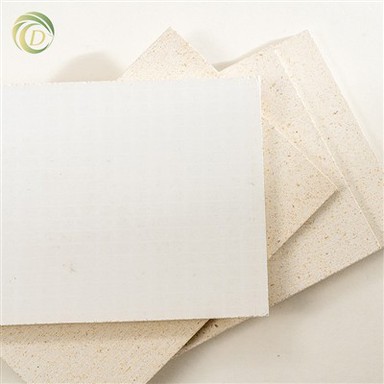
Core Differences Between Magnesium Oxide (MGO) Board and Other Common Building Panels
Jan 16, 2026
Magnesium oxide (MGO) board (represented by magnesium sulfate-type MGO board, i.e., MGSO₄ MGO board) is an inorganic fireproof panel made from magnesium oxide and magnesium sulfate as gelling materials, combined with reinforcing fibers and lightweight fillers. Its core advantages lie in four dimensions: fire resistance, moisture resistance, corrosion resistance, and environmental friendliness. It has significant performance differences from traditional building panels such as plywood, OSB board, gypsum board, and calcium silicate board. The specific distinctions are as follows:
1.Differences from Wood-based Panels (Plywood, OSB Board)
Wood-based panels are commonly used structural and decorative panels in traditional construction. The core differences between them and MGO boards are reflected in fire resistance, moisture resistance, and durability.
| Performance Dimension | MGO Board | Plywood/OSB Board |
|---|---|---|
| Fire Rating | Class A1 non-combustible material; does not burn or produce toxic smoke when exposed to fire; can withstand high temperatures up to 1200°C and maintain structural integrity | Class B/C combustible material; easy to ignite when exposed to fire, releases a large amount of toxic flue gas; carbonizes quickly and loses strength under high temperature |
| Moisture & Mildew Resistance | Inorganic material with water absorption rate ≤ 15%; no swelling or deformation in humid environments, preventing mold growth; suitable for high-humidity areas | Organic wood fiber material with high water absorption rate; prone to swelling, warping and decay when damp; mold easily adheres and grows |
| Corrosion Resistance | Magnesium sulfate-type MGO board contains no chloride ions and will not corrode metal components (e.g., steel keels, screws) | Wood itself does not corrode metals, but dampness easily leads to mold growth, which indirectly accelerates the corrosion of metal connectors |
| Environmental Friendliness | Formaldehyde-free, asbestos-free, VOC-free; classified as green building material | Urea-formaldehyde resin and other adhesives are required in the production process, which tend to release formaldehyde; some low-quality panels exceed formaldehyde standards |
| Service Life | High stability of inorganic material; service life can reach more than 50 years | Susceptible to moth-eaten, mold and dampness; service life is usually 15-25 years |
2. Differences from Gypsum Board
Gypsum board is a common panel for partition walls and suspended ceilings. Both belong to inorganic panels, but there are obvious differences in moisture resistance, strength, and application scenarios.
| Performance Dimension | MGO Board | Gypsum Board |
|---|---|---|
| Moisture Resistance | Low water absorption rate, moisture-proof and water-resistant; can be directly used in kitchens, bathrooms, basements, coastal humid areas | Gypsum components are prone to softening and disintegration when exposed to water; ordinary gypsum boards are strictly prohibited for use in humid environments; waterproof gypsum boards can only be moisture-proof for a short time and cannot be soaked in water for a long time |
| Mechanical Strength | Flexural strength ≥ 12 MPa, high impact resistance; can be used as structural panel (e.g., floor slab, exterior wall hanging board) | Low flexural strength, poor impact resistance; only suitable for non-load-bearing partition walls and suspended ceilings; cannot be used as structural load-bearing panel |
| Fire Resistance | Class A1 non-combustible; no shrinkage or shedding in fire, can effectively block the spread of fire | Class A non-combustible, but gypsum will dehydrate and shrink in volume when exposed to fire, strength drops rapidly, and cracking and shedding are prone to occur |
| Weather Resistance | Adapt to a wide temperature range of -20°C ~ 80°C; dimensional stability at high and low temperatures | Poor weather resistance; prone to pulverization in high temperature and high humidity environments, and brittle cracking in low temperature environments |
3. Differences from Calcium Silicate Board
Calcium silicate board and MGO board both belong to inorganic fireproof panels with similar performance, but there are differences in raw material composition, weight, and constructability.
| Performance Dimension | MGO Board | Calcium Silicate Board |
|---|---|---|
| Raw Material Composition | Magnesium oxide and magnesium sulfate gelling system + reinforcing fibers + lightweight fillers; belongs to magnesium-based gelling material | Siliceous materials (quartz sand), calcareous materials (lime) + reinforcing fibers; made by autoclaving; belongs to calcium silicate gelling material |
| Panel Weight | Density 1.2-1.5g/cm³, relatively lightweight, easy to carry and install | Density 1.6-1.8g/cm³, heavier weight, increasing construction load and installation difficulty |
| Processability | Uniform texture, sawable, nailable, planable; no dust pollution during cutting, convenient processing | Brittle texture, easy to produce dust during cutting, and edges and corners are prone to chipping; high requirements for processing tools |
| Cost & Cost-Effectiveness | Easy access to raw materials, simple production process, higher cost-effectiveness, suitable for large-scale promotion and application | Requires autoclaving equipment for production, complex process, relatively high cost, mostly used in high-end projects or specific fireproof scenarios |
| Corrosion Resistance | Magnesium sulfate-type contains no chloride ions, completely non-corrosive to steel, suitable for steel frame buildings | No chloride ions, non-corrosive to steel, but moisture resistance is slightly inferior to magnesium sulfate-type MGO board |
4. Summary of Core Differences
- Fire Resistance: MGO board is a Class A1 non-combustible panel, with fire resistance far superior to wood-based panels. It has equivalent fire rating to gypsum board and calcium silicate board, but better structural stability at high temperatures.
- Moisture & Corrosion Resistance: Magnesium sulfate-type MGO board is chloride-free, moisture-proof and non-corrosive to steel, making it the preferred panel for humid environments and steel frame buildings, with obvious advantages over wood-based panels and gypsum board.
- Structural Applicability: It has both load-bearing capacity and decorative function, and can be used as floor slab, exterior wall hanging board and partition wall board, with wider application scenarios than gypsum board and wood-based panels.
- Environmental Friendliness & Cost-Effectiveness: It is formaldehyde-free and asbestos-free with high environmental protection level, and has higher cost-effectiveness than calcium silicate board, making it an ideal building panel balancing performance and cost.