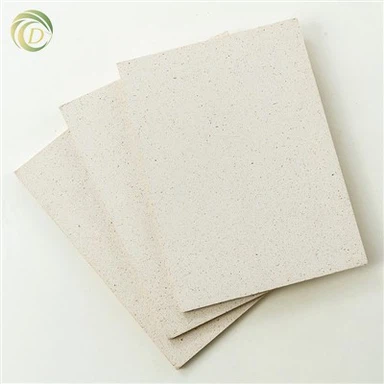
Differences Between Magnesium Oxide Board & Magnesium Oxysulfate Board
May 29, 2026
1. Basic Definition & Raw Materials
Magnesium Oxide Board (MGO Board / Magnesium Oxychloride Board)Main raw materials: magnesium oxide and magnesium chloride, combined with glass fiber, fillers and additives. It belongs to the magnesium oxychloride system.
Magnesium Oxysulfate BoardMain raw materials: magnesium oxide and magnesium sulfate (replaces magnesium chloride). It is an upgraded version of magnesium oxide board.
2. Key Performance Differences
Efflorescence & Moisture Regain (Core Distinction)
Magnesium Oxide Board: Contains chloride ions. Prone to moisture regain and efflorescence in humid areas, causing surface whitening, water droplets and salt precipitation. It corrodes metal fittings and light steel keels.
Magnesium Oxysulfate Board: Chloride-free. No efflorescence or moisture regain, excellent humidity resistance and no corrosion to metals.
Water & Moisture Resistance
Magnesium Oxide Board: Fair short-term water resistance; strength drops obviously under long-term water immersion or high humidity.
Magnesium Oxysulfate Board: Superior water and moisture resistance, ideal for kitchens, bathrooms, basements and coastal areas.
Strength & Toughness
Magnesium Oxide Board: High hardness, good compressive and flexural strength, but relatively brittle with poor impact resistance.
Magnesium Oxysulfate Board: Slightly lower overall strength, yet better toughness. Not easy to crack or chip during processing.
Fire Resistance
Both are Class A1 non-combustible materials. Their fireproof performance, smoke density and fire resistance limit are nearly identical.
Dimensional Stability
Magnesium Oxide Board: Prone to warping and deformation under drastic temperature & humidity changes.
Magnesium Oxysulfate Board: Low thermal expansion coefficient, stable dimension and less deformation during long-term use.
Environmental Performance & Corrosiveness
Magnesium Oxide Board: Chloride ions cause corrosion to steel frames, screws and hardware. Low-quality products may produce peculiar smell.
Magnesium Oxysulfate Board: Non-corrosive, low odor and eco-friendly, compatible with all kinds of metal structures.
3. Processing & Construction
Magnesium Oxide Board: High hardness, hard to cut and drill; edges tend to chip.
Magnesium Oxysulfate Board: Moderate texture, easy for cutting, drilling and grooving for convenient construction.
4. Application Scenarios
Magnesium Oxide Board
Suitable for dry indoor environments: common partition walls, ceilings, duct cladding, fire door cores and temporary wall panels.Not recommended for high-humidity areas or places with dense metal accessories.
Magnesium Oxysulfate Board
Ideal for humid areas, coastal regions, kitchens, bathrooms, basements, machine rooms and steel structure projects. Also widely used for high-end fireproof decoration and export projects.
5. Cost & Price
For the same specification: Magnesium oxysulfate board is slightly more expensive than conventional magnesium oxide board.
6. Quick Selection Guide
Conventional dry projects → Choose Magnesium Oxide Board (cost-effective & high hardness)
Humid/coastal areas, projects with metal keels or export orders → Choose Magnesium Oxysulfate Board (efflorescence-free, anti-corrosion & stable)