


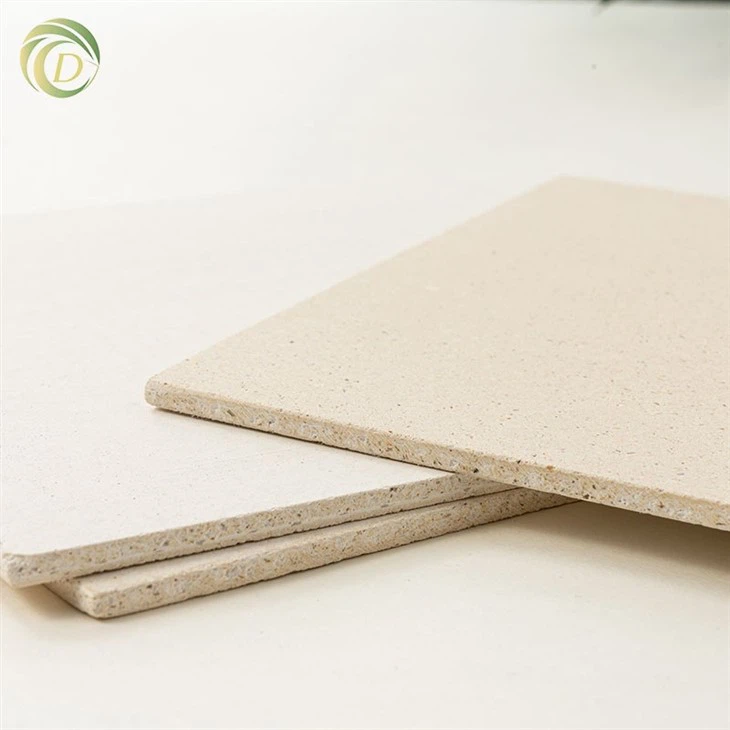

Fireproof Lightweight Magnesium Oxide Board Sulphate MGO Panels
Magnesium oxide boards demonstrate environmental performance throughout their entire life cycle of production, use and disposal, with low energy consumption and no pollution in production, no harmful volatiles during use, and recyclability or degradability after disposal, making them green and environmentally friendly building materials.
- Fast Delievery
- Quality Assurance
- 24/7 Customer Service
Product Introduction
Fireproof Lightweight Magnesium Oxide Board Sulphate MGO Panels
The sulfate-based MGO board is basically an upgraded, improved version of the traditional magnesium chloride MGO board. It's a high-performance inorganic cement composite material-we use magnesium oxide (MgO) as the base, magnesium sulfate (MgSO₄) as the binding agent, and mix it with lightweight fillers, alkali-resistant glass fiber mesh, and some special modifiers.
We mix all these ingredients in the right proportions, let them go through a hydration reaction, and use vacuum lightweight molding to make it. It keeps all the key perks of MGO boards-like being Class A1 fire-resistant and inorganic, so it's eco-friendly. But the sulfate system fixes the big problems that the old magnesium chloride boards had, things like easy efflorescence (you know, that white powdery stuff that comes out) and corrosion to metal.
On top of that, it's also been upgraded to be lighter. That's why it's the go-to material for high-end buildings, damp environments, and export projects.
Advantages of Fireproof Lightweight Magnesium Oxide Board Sulphate MGO Panels
01/
Top-Tier Fire Resistance (Uncompromised Class A1)
Fire Rating: GB 8624-2012 Class A1 non-combustible, EN 13501-1 Class A1; releases no toxic smoke when burned (smoke toxicity Class SA2) and no flame spread;
Fire Resistance Duration: ≥1 hour (6mm thick), ≥2 hours (8-10mm thick), ≥3 hours (12mm thick) - 0.5-1 hour longer than magnesium chloride MGO boards of the same thickness;
Fire Retardant Mechanism: Releases crystal water (about 25-30kg/㎡) at high temperatures to absorb heat and cool down; the inorganic magnesium oxide framework remains intact at high temperatures, blocking flame propagation.
02/
Lightweight and High Strength (Core Advantage for Building Load Reduction)
Density: 1.5-1.8 g/cm³ (20-30% lighter than magnesium chloride MGO boards, 50% lighter than cement boards); a single 1220×2440×8mm board weighs only about 45kg;
Mechanical Properties: Compressive strength ≥10MPa, flexural strength ≥5MPa; can be nailed, sawn, and is not easily broken; maximum support spacing up to 800mm (20% larger than traditional boards);
Advantages: Reduces building dead weight (especially for high-rise/super high-rise buildings), reduces keel usage and installation labor, and improves construction efficiency by 30%.
03/
Low Efflorescence and Water Resistance (Solving Core Industry Pain Points)
-
Efflorescence Risk: Chloride ion content ≤3% (far lower than the 8% of magnesium chloride boards), no "sweating" or whitening phenomenon, keeping walls clean for a long time;
-
Water Resistance: Water absorption ≤8%, strength retention rate ≥85% after 24-hour immersion; no deformation or mold in humid environments (basements, bathrooms, coastal areas);
-
Weather Resistance: Stable at -40℃ to 120℃, withstanding ≥50 freeze-thaw cycles, suitable for outdoor or high-humidity working conditions.
04/
Environmental Safety and Versatility
-
Environmental Friendliness: Formaldehyde-free, asbestos-free, heavy metal-free; VOC emission ≤0.1mg/m³, complying with GB/T 33544-2017 environmental standards and 100% recyclable;
-
Insect and Corrosion Resistance: Inorganic composition prevents mold and termite growth, and has no corrosion on steel keels and metal fasteners, extending building service life;
-
Thermal and Sound Insulation: Thermal conductivity 0.12-0.18 W/m·K, sound insulation ≥45dB - superior to gypsum boards and cement boards of the same thickness, reducing building energy consumption.




Why Choose Us
Rich Experience
Our company has many years of production work experience. The concept of customer-oriented and win-win cooperation makes the company more mature and stronger.
Advanced Equipment
A machine, tool or instrument designed with advanced technology and functionality to perform highly specific tasks with greater precision, efficiency and reliability.
High Quality
Our products are manufactured or executed to very high standards, using the finest materials and manufacturing processes.
Competitive Price
We have professional sourcing team and cost accounting team, stive to reduce cost and profit and provide you a good price.
24H Online Service
We try and respond to all concerns within 24 hours and our teams are always at your disposal in case of any emergencies.
One-stop Solution
With rich experience and one-to-one service,we can help you choose products and answer technical questions.
Fireproof Lightweight Magnesium Oxide Board Sulphate MGO Panels
Core Definition & Composition System (Key Differences from Magnesium Chloride MGO Boards)
1. Basic Definition
The sulfate-based MGO board is an inorganic cementitious composite material. With magnesium oxide as the main functional component, magnesium sulfate replaces traditional magnesium chloride as the cementing medium. Through the "MgO-MgSO₄-H₂O" ternary hydration system, it forms a stable magnesium-based crystalline phase (e.g., MgSO₄·5Mg(OH)₂·3H₂O). Combined with lightweight fillers and reinforcing materials, it integrates four core properties: fire resistance, lightweight, high strength, and low efflorescence.
Core Components & Functions
|
Component |
Function |
Advantages of Sulfate System |
|---|---|---|
|
Magnesium Oxide (MgO) |
Provides fire resistance (melting point 2800℃) and structural strength; core functional component |
High-activity light-burned magnesia (activity ≥65%) is selected for sufficient hydration reaction |
|
Magnesium Sulfate (MgSO₄) |
Cementing agent that reacts with MgO to form a stable crystalline phase |
No free chloride ions, efflorescence risk is nearly zero; hydration products have stronger water resistance |
|
Lightweight Fillers |
Perlite, ceramsite, ultra-fine hollow microspheres, etc. |
Reduces board density (20-30% lighter than magnesium chloride MGO boards) and improves thermal and sound insulation |
|
Reinforcing Materials |
Alkali-resistant glass fiber mesh (double-layer/triple-layer) |
Enhances flexural strength and toughness, prevents cracking, and adapts to structural stability after lightweighting |
|
Special Modifiers |
Waterproof agents, retarders, water reducers, etc. |
Optimizes hydration reaction, reduces water absorption, improves workability, and extends service life |
Key Differences from Magnesium Chloride MGO Boards
|
Comparison Dimension |
Sulfate-Based MGO Board |
Magnesium Chloride MGO Board |
Core Advantage Value |
|---|---|---|---|
|
Cementing Agent |
Magnesium Sulfate (MgSO₄) |
Magnesium Chloride (MgCl₂) |
No chloride ions, completely solving the efflorescence "sweating" problem |
|
Efflorescence Risk |
≤0.3% (nearly no efflorescence) |
5-8% (prone to efflorescence in humid environments) |
Adapts to humid/coastal high-salt spray environments |
|
Metal Corrosion |
No corrosion (no impact on steel keels/screws) |
Slight corrosion (chloride ions easily oxidize metals) |
Extends the service life of supporting steel structures |
|
Density |
1.5-1.8 g/cm³ (lightweight) |
1.8-2.2 g/cm³ |
Reduces building load, making installation more convenient |
|
Water Resistance |
Water absorption ≤8% (no deformation after long-term immersion) |
Water absorption ≤10% |
More suitable for humid areas such as bathrooms and basements |
|
Environmental Compliance |
No free chloride ions, VOC content nearly zero |
May retain trace free chloride ions |
Adapts to high environmental standard markets such as the EU and North America |
Production Process: Dual Guarantee of Lightweighting and Stability
1. Core Process Characteristics
Centered on "precise proportioning + vacuum lightweight molding + constant temperature and humidity curing", it highlights the reaction stability of the sulfate system and the realization path of lightweighting:
Raw Material Pretreatment: Magnesium sulfate crystals are dissolved and filtered to remove impurities; magnesium oxide powder is dried and activated (temperature 300-400℃) to ensure reaction activity;
Lightweight Proportioning: MgO:MgSO₄:H₂O ≈ 4:1:6, with 30-40% lightweight fillers (perlite + hollow microsphere composite) added to reduce density while ensuring strength;
Vacuum Molding: Vacuum adsorption technology is adopted to remove bubbles from the slurry, forming a uniform porous structure (porosity 25-30) that balances lightweight and structural compactness;
Hydration Reaction: Cured in an environment of 25-30℃ and 60-70% humidity for 10-14 days to complete crystalline phase transformation (avoiding strength reduction caused by excessive magnesium sulfate);
Modification Treatment: The surface is sprayed with waterproof modifiers, and edges are sealed to further reduce efflorescence risk and water absorption.
2. Key Reaction Equations
MgO + H₂O → Mg(OH)₂ (Preliminary Hydration)5Mg(OH)₂ + MgSO₄ + 3H₂O → MgSO₄·5Mg(OH)₂·3H₂O (Stable Crystalline Phase, providing strength and water resistance)
Key Performance Parameters Table
|
Performance Indicator |
Value Range |
Test Standard |
|---|---|---|
|
Density |
0.8-1.25 g/cm³ |
GB/T 17657-2013 |
|
Compressive Strength |
≥10 MPa |
GB/T 17657-2013 |
|
Flexural Strength |
≥5 MPa |
GB/T 17657-2013 |
|
Water Absorption |
≤8% |
GB/T 17657-2013 |
|
Fire Rating |
Class A1 Non-Combustible |
GB 8624-2012 |
|
Fire Resistance Duration |
1-3 hours |
GB/T 9978-2008 |
|
Sound Insulation |
≥45 dB |
GB/T 50121-2005 |
|
Chloride Ion Content |
≤3% |
JC/T 2558-2020 |
|
Indoor Service Life |
≥30 years |
Industry Test Data |
How Is Fireproof Lightweight Magnesium Oxide Board Sulphate MGO Panels Made?

Wear Layer
A wear layer, usually made of a durable material like aluminum oxide or melamine, is then added on top of the decorative layer. This wear layer provides protection against scratches, stains, and fading.
Pressing and Heating
The assembled layers are placed in a press where heat and pressure are applied. This process ensures that the layers bond together securely.
Cutting and Finishing
After the pressing process, the laminated sheets are cut into desired sizes and shapes. The edges are often sealed to prevent moisture penetration. Eco-friendly laminate may use non-toxic edge sealers or edge banding made from sustainable materials.
Comprehensive Application Scenarios of Fireproof Lightweight Magnesium Oxide Board Sulphate MGO Panels


-
Building Interiors: Focus on "Moisture Resistance + Environmental Friendliness + Lightweight" for Full-Space Adaptation
1. High-Rise/Super High-Rise Residences & Commercial Complexes
Core Applications: Interior partition walls, ceilings, elevator shaft enclosures, fire compartment partitions
Adaptation Reasons:
Lightweight feature (1.5-1.8 g/cm³) reduces building load, lowers structural design costs, and meets high-rise "weight reduction" requirements;
Class A1 fire resistance + 1-3 hour fire resistance rating, complying with GB 50016-2014 fire codes to ensure evacuation route safety;
Low efflorescence rate (≤0.3%) eliminates wall "sweating" and whitening, maintaining clean finished walls and reducing after-sales complaints.
Typical Projects: High-end apartments, office buildings, shopping malls, hotel guest rooms/corridors
2. Scenarios Exclusive to Humid Environments
Core Applications: Bathrooms, kitchens, basements, equipment rooms, underground garages
Adaptation Reasons:
Water absorption rate ≤8%, maintaining shape and resisting mold in long-term humid environments, replacing gypsum boards (prone to softening) and magnesium chloride MGO boards (prone to efflorescence);
Inorganic composition prevents mold and bacteria growth, odor-free, suitable for poorly ventilated areas like underground garages and equipment rooms;
Can be directly used as tile backer boards without additional waterproof base layers, shortening construction cycles.
Typical Projects: Residential bathrooms, commercial kitchens, underground shopping malls, civil air defense projects
3. High Environmental Standard Scenarios
Core Applications: Medical facilities, school classrooms, kindergartens, food processing plants, clean rooms
Adaptation Reasons:
Formaldehyde-free, asbestos-free, and VOC-free, complying with GB/T 33544-2017 environmental standards and achieving "zero pollution";
Smooth and dense surface, easy to clean, antibacterial and mold-resistant, meeting "clean and sterile" requirements for medical and food industries;
Low smoke and non-toxic (smoke toxicity Class SA2), releasing no harmful gases during fires to protect sensitive groups such as children and patients.
Typical Projects: Hospital wards/operating rooms, school teaching buildings, food workshops, electronic clean rooms
4. Critical Fire Protection Areas
Core Applications: Firewalls, emergency stairwells, pipe shafts, cable tray cladding
Adaptation Reasons:
Class A1 non-combustible material with no flammable components, preventing flame spread and blocking fire propagation paths;
12mm-thick boards offer fire resistance rating ≥3 hours, eliminating the need for additional fire-retardant coatings or rock wool, reducing project costs;
Cuttable and customizable to fit irregular structures like pipes and cable trays, enabling flexible construction.
Typical Projects: Building firewalls, industrial plant cable shafts, office building emergency stairwells
Building Exteriors: Focus on "Weather Resistance + Lightweight + Low Efflorescence" for Outdoor Adaptation
1. External Wall Insulation Integrated Substrate
Core Applications: Face/back panels of external wall insulation composite boards, base materials for real stone paint/imitation stone paint finishes
Adaptation Reasons:
Strong weather resistance (stable at -40℃ to 120℃), withstanding ≥50 freeze-thaw cycles, suitable for extreme climates in northern and southern regions;
Low efflorescence prevents white staining and finish peeling after rainwater immersion;
Lightweight design (50% lighter than cement boards) reduces external wall construction difficulty and keel load pressure.
Typical Projects: High-end residential external walls, commercial complex curtain walls, industrial park factory external walls
2. Outdoor Enclosures & Decoration
Core Applications: Balcony railings, equipment room external walls, walls, landscape corridor enclosures
Adaptation Reasons:
Wind load and UV resistant, maintaining shape and color after long-term exposure to sun and rain;
Insect, termite, and decay resistant, eliminating the need for regular maintenance and repainting, reducing outdoor maintenance costs;
Directly paintable or claddable with wood/stone-like finishes, balancing functionality and aesthetics.
Typical Projects: Community balcony railings, commercial park walls, landscape corridor enclosure walls
Special Scenarios: Focus on "Low Corrosion + Low Smoke Non-Toxic + Customization" to Break Traditional Limitations
1. Steel Structure Buildings
Core Applications: Fire protection cladding for steel structure beams/columns, base material for steel keel partition walls
Adaptation Reasons:
No free chloride ions, zero corrosion to steel components, extending steel structure service life by 30 years compared to magnesium chloride boards;
Lightweight feature avoids increasing steel structure load and structural reinforcement due to board weight;
Fire resistance rating ≥2 hours, meeting the requirement of "over 1.5 hours of fire protection for steel structures".
Typical Projects: Steel structure factories, steel-framed office buildings, prefabricated steel structure residences
2. Transportation & Marine Vessels
Core Applications: Rail transit carriage interior panels, marine cabin partition walls/ceilings
Adaptation Reasons:
Low smoke and non-toxic, complying with international safety standards such as IMO (marine) and EN 45545 (rail transit);
Moisture and fire resistant, suitable for high-humidity marine environments and enclosed rail transit spaces;
Lightweight and high strength, reducing transportation weight and improving energy efficiency.
Typical Projects: High-speed rail/subway carriage interiors, ocean cargo ship cabins, ferry partition walls
3. Fire Doors & Custom Furniture
Core Applications: Fire door core materials, high-end cabinet back panels, custom furniture base materials
Adaptation Reasons:
Lightweight design (25% lighter than traditional core materials) reduces fire door weight and extends hinge service life;
Moisture and insect resistant, formaldehyde-free, suitable for furniture in humid environments such as kitchen cabinets and bathroom vanities;
High strength and deformation resistance, serving as load-bearing base material for custom furniture, replacing multi-layer boards and density boards.
Typical Projects: Class A/B fire doors, high-end cabinets, bathroom vanity back panels
4. Special Industrial Scenarios
Core Applications: Chemical workshop partition walls, data center room enclosures, cold storage partition walls
Adaptation Reasons:
Strong chemical corrosion resistance (withstanding weak acid and alkali environments), suitable for chemical workshop working conditions;
Fire and moisture resistant, no dust shedding, meeting "clean + safe" requirements for data centers;
Excellent thermal insulation performance (thermal conductivity 0.12-0.18 W/m·K), reducing cold storage energy consumption.
Typical Projects: Chemical park factories, data center machine rooms, food cold storages
Export/International Projects: Focus on "Compliance + Environmental Friendliness + Multi-Standard Adaptation" to Break Trade Barriers
1. EU/North American Market Projects
Core Applications: Overseas residential partition walls, commercial building fire compartments, industrial plant enclosures
Adaptation Reasons:
No free chloride ions, complying with EU REACH and US CARB environmental standards, avoiding export compliance risks of magnesium chloride boards;
Certified to EN 13501-1 Class A1 and ASTM E136 Non-Combustible, directly meeting overseas fire acceptance requirements;
Formaldehyde-free and environmentally friendly, aligning with European and American "green building" trends and adapting to LEED-certified projects.
Typical Projects: European apartment buildings, US commercial centers, Southeast Asian industrial parks
2. Coastal/High Salt Spray Area Projects
Core Applications: Island buildings, coastal residences/commercial buildings, port facility enclosures
Adaptation Reasons:
Low efflorescence + zero metal corrosion, resisting erosion of boards and steel structures by high salt spray environments;
High water resistance prevents board mold and deformation caused by coastal humidity, extending building service life.
Typical Projects: Island resorts, coastal port office buildings, coastal residences
Scenario Adaptation Summary (Quick Selection Guide)
|
Scenario Type |
Core Requirements |
Adaptation Advantages of Sulfate-Based MGO Boards |
|---|---|---|
|
High-rise/super high-rise buildings |
Lightweight, fire resistance, low after-sales |
Weight reduction and cost saving, Class A1 fire resistance, zero efflorescence |
|
Humid/coastal environments |
Water resistance, efflorescence prevention, corrosion resistance |
Water absorption rate ≤8%, zero efflorescence, no metal corrosion |
|
Medical/school/food factories |
Environmental friendliness, sterility, low smoke non-toxic |
Zero formaldehyde/VOC, antibacterial and mold-resistant, smoke toxicity Class SA2 |
|
Steel structure/rail transit/marine vessels |
Low corrosion, lightweight, compliance |
Chloride-free, lightweight and high strength, meeting international standards |
|
Export/international projects |
Environmental compliance, multi-standard adaptation |
REACH/ASTM certified, breaking trade barriers |
Core Conclusion
The applicable scenarios of sulfate-based MGO boards essentially boil down to "where there is demand for fire resistance, moisture resistance, environmental friendliness, and lightweight, there is their value". They not only cover the interior and exterior of ordinary buildings but also break the limitations of traditional boards in humid, corrosive, and international scenarios. Particularly suitable for high-end projects with strict requirements for quality, safety, and compliance, their characteristics of "full-scenario adaptation + low whole-life cycle cost" make them the preferred building material to replace gypsum boards, magnesium chloride MGO boards, and cement boards, as well as a "customized solution" for high-end buildings and special scenarios.
Core Performance of Fireproof Lightweight Magnesium Oxide Board Sulphate MGO Panels' Water Resistance?
The water resistance of sulfate-based MGO boards is one of their core advantages, derived from the stable crystalline phase (MgSO₄·5Mg(OH)₂·3H₂O) formed by the "magnesium sulfate-MgO" hydration system, combined with special waterproof modifiers and dense structural design. It outperforms traditional fire-rated boards in index data, actual working conditions, and long-term stability, with specific performances as follows:
-
Core Water Resistance Indicators: Data-Driven Verification (Compliant with GB/T 17657-2013 Standard)
1. Low Water Absorption: Minimal Moisture Penetration
Standard Test Performance: 24-hour water absorption rate ≤8% (top industry level), far lower than magnesium chloride MGO boards (≤10%), calcium silicate boards (10-15%), and gypsum boards (20-30%);
Practical Significance: The board absorbs only a small amount of moisture in humid environments, avoiding structural looseness and strength loss due to excessive moisture. It can be directly used in long-term high-humidity areas such as bathrooms and basements without additional waterproof isolation layers.
2. High Strength Retention Rate After Immersion: No "Failure" in Humid Environments
Standard Test Performance: After 24 hours of normal temperature immersion, flexural strength retention rate ≥85% and compressive strength retention rate ≥90%; after 72 hours of immersion, strength retention rate still ≥75%, with no bulging, delamination, or disintegration;
Comparative Advantage: Traditional magnesium chloride MGO boards have a strength retention rate of approximately 70-75% after immersion, while gypsum boards soften and disintegrate directly (strength retention rate ≤30%). Sulfate-based MGO boards maintain core mechanical properties even with long-term moisture contact.
3. Low Saturated Water Absorption and Rapid Drying
Saturated Water Absorption ≤12%: The board has a dense internal pore structure with no connected capillary channels, making it difficult for moisture to penetrate deeply. Even when saturated, it does not experience "water seepage" or "sweating";
Rapid Drying: After leaving a humid environment, surface moisture can completely evaporate within 24 hours, and internal moisture content returns to the initial state (≤8%) within 48 hours, eliminating mold and efflorescence risks caused by residual moisture.
4. Freeze-Thaw Resistance and Damp-Heat Cycle Resistance: Stability in Extreme Moisture Environments
Freeze-Thaw Resistance: After 50 cycles of -20℃ freezing/20℃ thawing, the surface shows no cracks or efflorescence, with strength loss ≤10%, suitable for northern cold regions (alternating freezing and thawing in winter);
Damp-Heat Cycle Resistance: When placed in an environment of 40℃ and 90% relative humidity for 720 hours (30 days), the board maintains shape, resists mold, and shows no significant decline in mechanical properties, suitable for southern plum rain seasons and coastal high-humidity climates.
-
Practical Application Scenarios: Landing Advantages of Water Resistance
1. Direct Use in Humid Areas: No Additional Waterproof Measures Required
Bathrooms/Kitchens: Can be directly used as tile backer boards or partition wall base materials. Long-term contact with tap water and kitchen oil does not cause mold, bulging, or tile detachment due to base material deformation;
Basements/Underground Garages: Even with poor ventilation and ground moisture, the board remains dry and clean, with no efflorescence or whitening (chloride ion content ≤3%), avoiding wall contamination and finish damage;
Coastal High Salt Spray Environments: Resists high-humidity salt from sea breezes, with no structural corrosion caused by moisture penetration. The board surface remains clean for a long time, suitable for island buildings and port facilities.
2. Outdoor Open-Air Scenarios: Rainproof and Water Erosion Resistant
External Wall Applications: As a base material for external wall insulation integration or decorative cladding, it does not absorb water and expand after long-term rain exposure, with no cracking or powdering, preventing insulation layer detachment due to moisture penetration;
Outdoor Enclosures: Open-air structures such as balcony railings and walls show no deformation or fading after heavy rain washing, eliminating the need for regular waterproof coating maintenance and reducing outdoor use costs.
3. Special Working Conditions: Resistance to Non-Corrosive Liquid Contact
Can directly contact domestic sewage and industrial cooling water (non-strong acid/alkali), with an easy-to-clean surface and no residual stains, suitable for scenarios prone to liquid leakage such as equipment rooms and underground pipe shafts;
In food processing plants, medical facilities, and other scenarios, it can withstand repeated flushing with cleaning water (containing disinfectants) without performance degradation caused by the combined effect of chemicals and moisture.
-
Core Causes of Water Resistance Advantages: Dual Guarantee from Formula to Process
1. Stable Hydration Products of Sulfate System
The crystalline phase (MgSO₄·5Mg(OH)₂·3H₂O) formed by the "MgO-MgSO₄-H₂O" ternary system has natural hydrophobicity, with no water-soluble free salts (such as MgCl₂·6H₂O in magnesium chloride systems). Moisture cannot damage the crystalline structure, fundamentally improving water resistance.
2. Dense Structure and Waterproof Modification
Vacuum forming technology removes bubbles from the slurry, forming a uniform and dense internal structure, reducing moisture penetration channels;
The surface is sprayed with special silane waterproof modifiers, and edges are sealed, forming a dual protection of "surface water repellency + internal seepage prevention" to further reduce water absorption.
3. Inorganic Composition Prevents Mold Growth
The board is 100% inorganic (magnesium oxide, magnesium sulfate, glass fiber mesh), containing no nutrients for microbial growth such as wood fibers or organic fillers. Even in long-term humid environments, it does not breed mold or bacteria, and produces no odors.
-
Water Resistance Comparison with Other Boards: Advantages at a Glance
|
Board Type |
24-Hour Water Absorption Rate |
Strength Retention Rate After 24-Hour Immersion |
Performance in Humid Environments |
|---|---|---|---|
|
Sulfate-Based MGO Board |
≤8% |
≥85% |
Mold-resistant, no efflorescence, no deformation |
|
Magnesium Chloride MGO Board |
≤10% |
70-75% |
Slight efflorescence, prone to mold in long-term humidity |
|
Moisture-Resistant Gypsum Board |
15-20% |
≤50% |
Short-term moisture-resistant, softens in long-term humidity |
|
Cement Board |
12-15% |
75-80% |
Weight increases after water absorption, prone to efflorescence and powdering |
|
Calcium Silicate Board |
10-15% |
70-75% |
Prone to deformation and surface whitening in humid environments |
-
Core Value Summary of Water Resistance (Key Points for Commercial Promotion)
-
Scenario Expansion: Breaks the limitation of traditional fire-rated boards requiring "additional waterproofing in humid environments", directly adapting to water-exposed scenarios such as bathrooms, basements, and external walls, reducing project costs;
-
Long-Term Stability: Water resistance performance does not degrade (service life ≥30 years in indoor humid environments), reducing maintenance and replacement costs caused by board moisture damage;
-
Compliance Adaptation: Low water absorption + mold resistance + low efflorescence meet water resistance requirements for high environmental standard scenarios such as medical, food, and export projects;
-
Worry-Free Construction: No need for waterproof base layers or regular maintenance, shortening construction cycles and reducing long-term maintenance costs.
The water resistance of sulfate-based MGO boards is not only reflected in the basic performance of "no water absorption and no damage after immersion" but also in the practical advantage of "stable and reliable in long-term humid environments". This makes them the preferred fire-rated building material for humid areas, water-exposed scenarios, and outdoor projects, completely solving the industry pain point of traditional boards being "fire-resistant but not moisture-resistant, or moisture-resistant but not fire-resistant".
Our Factory
We are a company dedicated to magnesia cement products. Our main products are Magnesium Oxide Boards(MGO Board) for construction and laminated MgO boards with for furniture and renovation. Our mission is to provide the world's construction markets with environmentally friendly, high-performance and sustainable green materials.

FAQ
Q: What is a sulfate-based MGO board?
A: An inorganic non-combustible sheet with magnesium oxide (MgO) as the base material and magnesium sulfate (MgSO₄) as the cementing agent, combined with lightweight fillers and glass fiber mesh. Its core advantages include Class A1 fire resistance, low efflorescence, high water resistance, and lightweight high strength, serving as an upgraded version of traditional magnesium chloride MGO boards.
Q: What are the core differences between sulfate-based MGO boards and magnesium chloride MGO boards?
A: The key differences lie in the cementing agent and performance: sulfate-based boards use magnesium sulfate (no chloride ions) with an efflorescence rate ≤0.3% and no metal corrosion; magnesium chloride boards use magnesium chloride, which is prone to efflorescence in humid environments and corrodes steel components. Additionally, sulfate-based boards are 20-30% lighter.
Q: What are the specific water resistance performances?
A: The 24-hour water absorption rate is ≤8%, and the strength retention rate after 24-hour immersion is ≥85%. It maintains shape and resists mold in long-term humid environments, and can be directly used in bathrooms, basements, coastal high-humidity areas without additional waterproofing.
Q: What are the main application scenarios?
A: It covers high-end building interiors (partition walls, ceilings), humid environments (bathrooms/basements), steel structure cladding, external wall insulation substrates, rail transit/marine interiors, and export projects to the EU/North America, etc.
Q: What is the fire rating and fire resistance duration of sulfate-based MGO boards?
A: The fire rating is GB 8624-2012 Class A1 (international EN 13501-1 Class A1). The fire resistance duration is ≥1 hour for 6mm thickness, ≥2 hours for 8-10mm thickness, and ≥3 hours for 12mm thickness, with low smoke and non-toxicity when burned.
Q: What should be noted during installation?
A: Reserve 3-5mm expansion joints, use stainless steel/hot-dip galvanized keels (spacing ≤800mm), fix with self-tapping screws at 150-200mm intervals, and seal joints with glass fiber mesh in humid areas.
Q: What are the key indicators for selecting high-quality sulfate-based MGO boards?
A: It must meet chloride ion content ≤3%, density 1.5-1.8 g/cm³, Class A1 fire certification, and water absorption ≤8%. Prioritize products with CNAS/SGS test reports and a surface free of bubbles and cracks.
Q: Do sulfate-based MGO boards meet the acceptance requirements of international projects?
A: They comply with EU REACH, US CARB/LEED, UK BS and other standards, and are certified to ASTM E136 Non-Combustible. Free of free chloride ions, they can be directly adapted to export projects and fire/environmental acceptance of foreign-invested buildings.
Hot Tags: fireproof lightweight magnesium oxide board sulphate mgo panels, China fireproof lightweight magnesium oxide board sulphate mgo panels manufacturers, suppliers, factory


