


Prefabricated House Fireproof Magnesium Oxide MGO Sulfate Chloride Free Board
The Prefabricated House Fireproof Magnesium Oxide MGO Sulfate Chloride Free Board, also known as sulfate-based magnesium oxide board free of chloride, is a high-performance green building material tailored for prefabricated buildings. It overcomes the defects of traditional magnesium chloride-based magnesium oxide boards such as corrosion and moisture regain, and is widely used in prefabricated buildings due to its excellent fire resistance and environmental protection.
- Fast Delievery
- Quality Assurance
- 24/7 Customer Service
Product Introduction
Jinan Fandeng New Materials Co.,Ltd.
We are a trusted provider of high-performance, sustainable building materials, focused on magnesium oxide (MGO)-based solutions.
Our core product - MGO Boards - offers fire resistance, lightweight with high strength, moisture and mold resistance, and lasting durability, making it ideal for a wide range of architectural and decorative applications.
We collaborate with leading industry associations, including the China Magnesium & Materials Association (CMMA), where we serve as the Chair of the International Exchange Committee, as well as the Magnesium Oxide Building Products Association (MgOBPA) and the Magnesium Oxide Cement Association (MOCA).
Guided by our commitment to innovation and sustainability, we provide high-performance materials that support the future of green construction.

Magnesium Oxide Wall Board offers unmatched performance with its fire resistance, lightweight and high-strength structure, moisture and mold protection, and superior durability-making it a better choice than traditional materials like gypsum, cement, and wood-based boards.

Fire Retardant Board is a mineral matrix engineered board designed to contain a fire within a compartment of a building by acting as a barrier to stop the spread of heat, smoke, fire and gases. It can be used for steel protection, walls, ceilings, ducts, concrete protection and sealing penetrations and voids.
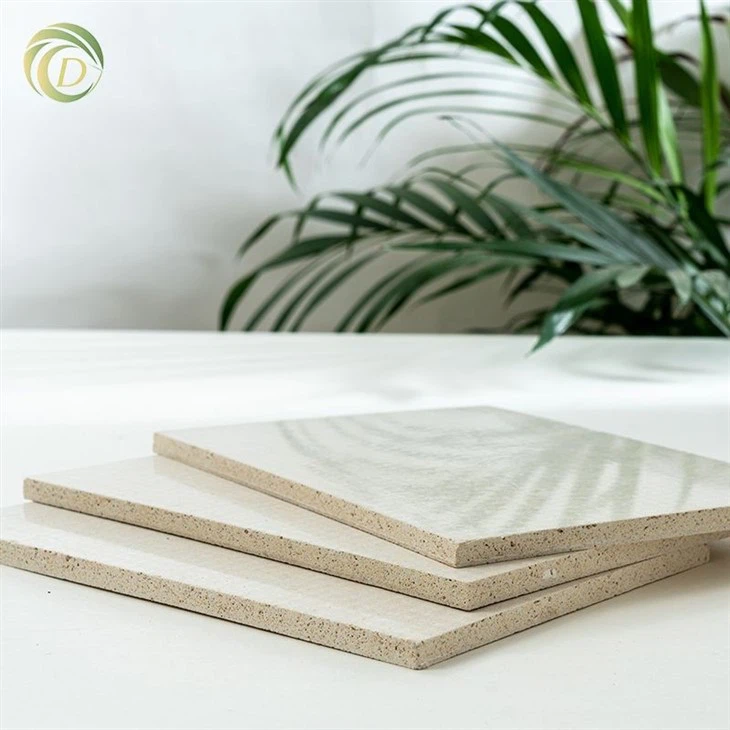
Fireproof wall board, also known as fire-resistant wall board or fire-rated wall board, is a type of building material designed to resist the spread of fire and provide some level of protection in case of a fire. It is commonly used in construction to create fire-resistant partitions, walls, and ceilings.

Magnesia boards are used in place of traditional gypsum drywall as wall and ceiling covering material and sheathing.

The non-combustible property of magnesium oxide board comes from its inorganic mineral components and stable structure.

Decorative panels, with magnesium oxide board as the base material, are widely used in interior decoration industry. These panels are extensively used in high-end residential, commercial and industrial projects for interior decoration.

As a sheathing board, magnesium oxide board has core competitiveness in non-combustibility, water and corrosion resistance, and structural stability, while also being convenient for construction and environmentally friendly.

Magnesium oxide board demonstrates good mildew-proof characteristics due to its unique advantages. Its alkaline nature resulting from the main raw materials is not conducive to the growth of mold.

As the new generation of inorganic eco-friendly building materials, MGO Exterior Deck boards have become the preferred material for outdoor walkways, scenic platforms, and other outdoor construction projects due to their lightweight strength, fire resistance, moisture protection, and weather resistance.
Prefabricated House Fireproof Magnesium Oxide MGO Sulfate Chloride Free Board
The Prefabricated House Fireproof Magnesium Oxide MGO Sulfate Chloride Free Board, also known as sulfate-based magnesium oxide board free of chloride, is a high-performance green building material tailored for prefabricated buildings. It overcomes the defects of traditional magnesium chloride-based magnesium oxide boards such as corrosion and moisture regain, and is widely used in prefabricated buildings due to its excellent fire resistance and environmental protection.
Advantages of Prefabricated House Fireproof Magnesium Oxide MGO Sulfate Chloride Free Board
1. Superior fire resistance: It reaches A1-class non-combustible standards. It can withstand high temperatures of up to 1200°C without burning, and the fire resistance limit exceeds 3 hours. During a fire, it will not generate toxic smoke or spread flames, which is of great significance for improving the fire safety of prefabricated buildings with relatively concentrated structures.
2. No corrosion and high stability: Since it does not contain chloride ions, it solves the problem that traditional magnesium oxide boards corrode steel frames and metal components. It is very suitable for prefabricated buildings with a large number of steel structures and can avoid structural damage caused by material corrosion. At the same time, it has good dimensional stability, and the dry shrinkage and wet expansion rate are both ≤0.3%.
3. Moisture-proof and mold-proof: It can maintain structural integrity in humid environments without warping, swelling, or delamination. Its inorganic material properties can also resist the growth of mold, mildew, and termites, adapting to the storage and use environment of prefabricated components in different regions.
4. Lightweight and easy to assemble: Compared with traditional cement boards and gypsum boards, it is lighter. It is convenient for transportation and on-site installation, which can effectively reduce the labor intensity and construction period of prefabricated buildings and indirectly reduce construction costs.
Prefabricated House Fireproof Magnesium Oxide MGO Sulfate Chloride Free Board


1. Basic Composition
-
Core materials: It takes high-purity magnesium oxide (MgO) as the main raw material and uses magnesium sulfate (MgSO₄) as the curing agent instead of magnesium chloride. This not only ensures the stable forming of the board but also avoids corrosion problems caused by chloride ions.
-
Reinforcing materials: High-strength glass fiber mesh is added to enhance the bending strength and impact resistance of the board, preventing cracking and deformation.
-
Filling materials: Materials such as perlite, sawdust, and non-woven fabrics are properly mixed. These materials can reduce the weight of the board while improving its thermal insulation and sound insulation performance. Moreover, the whole formula does not contain asbestos, formaldehyde, and other harmful substances.
2. Key Specifications
|
Item |
Specific Parameters |
|---|---|
|
Common sizes |
The width is usually 1220mm, the length ranges from 2440mm to 3050mm, and the thickness is 3 - 20mm. Special sizes such as 600×2700mm can be customized according to construction needs. |
|
Density |
The density is between 800 - 1400 kg/m³. Different densities can be selected according to scenarios such as walls and floors. |
|
Special indicators |
The moisture content is ≤8%, the chloride ion content is as low as 0.012%, the pH value is 8 - 10, and it meets the strict standards of chloride-free and environmentally friendly materials. |
3. Main Applications in Prefabricated Buildings
-
Wall system: It can be used as internal and external wall panels and partition walls of prefabricated houses. It can also be made into sandwich panels with EPS, rock wool, and other core materials to enhance thermal insulation effects, which is applicable to container houses, modular houses, and other prefabricated types.
-
Floor and ceiling materials: The 16 - 20mm thick boards can be processed into floor baseboards with tenon - and - mortise structures. They are also suitable for ceiling decoration. They not only ensure flatness but also play a role in sound insulation and fire prevention.
-
Auxiliary structural parts: It can be used as the backing board of prefabricated building decorative panels, the protective board of ventilation ducts, and the base material of external wall cladding. It is especially widely used in projects such as military prefabricated houses, affordable housing, and steel structure prefabricated buildings.
What are the advantages of using Prefabricated House Fireproof Magnesium Oxide MGO Sulfate Chloride Free Board?
The Prefabricated House Fireproof Magnesium Oxide (MGO) Sulfate Chloride-Free Board offers 8 core competitive advantages tailored to the unique needs of prefabricated buildings (e.g., modular houses, container homes, steel-structured prefab projects). Each advantage is backed by performance data and practical application value, making it a preferred choice for international prefab construction:
1. A1-Class Fire Resistance & Smoke-Free Safety
Meets global A1 non-combustible standards (ISO 1182, GB 8624) and withstands high temperatures up to 1200°C.
Fire resistance limit exceeds 3 hours-critical for prefabricated buildings with concentrated structures, as it prevents flame spread and blocks heat transfer.
No toxic fumes or corrosive gases during combustion, protecting occupants and reducing post-fire damage.
2. Chloride-Free Formula: No Corrosion to Steel Structures
Zero chloride ions (chloride content ≤0.012%)-eliminates the fatal flaw of traditional magnesium chloride-based MGO boards (which corrode steel frames, bolts, and metal components).
Ideal for prefab buildings relying on steel structures (e.g., light steel villas, modular cabins), ensuring long-term structural stability and avoiding maintenance costs from corrosion.
Neutral pH (8–10) prevents chemical reactions with steel, extending the building's service life to 20+ years.
3. Superior Moisture-Proof & Mold-Proof Performance
Inorganic composition (magnesium sulfate + high-purity MgO) resists water absorption-moisture content remains ≤8% even in humid environments (e.g., coastal areas, rainy regions).
No warping, swelling, or delamination when exposed to moisture; effectively inhibits mold, mildew, and termite infestation (meets ASTM G21 mold resistance standards).
Suitable for both internal/external use in prefab buildings, eliminating concerns about material degradation in harsh climates (e.g., Southeast Asia's rainy seasons, coastal salt spray).
4. Lightweight & Easy Assembly (Saves Construction Time)
Density of 800–1400 kg/m³ (20–30% lighter than cement fiberboards and gypsum boards of the same thickness).
Easy to cut, drill, and install with standard tools-reduces labor intensity and shortens prefab assembly time by 30% compared to traditional materials.
Low transportation costs (higher load capacity per container) and no heavy machinery required for on-site installation, aligning with prefab's "fast construction" core demand.
5. High Dimensional Stability & Crack Resistance
Dry shrinkage/wet expansion rate ≤0.3% (ASTM C473 standard)-no deformation or cracking even under extreme temperature changes (-40°C to 80°C).
Reinforced with high-strength glass fiber mesh, ensuring bending strength ≥12 MPa and impact resistance ≥5 kJ/m²-can withstand transportation vibrations and on-site handling without damage.
Maintains flatness for wall/ceiling applications, reducing the need for secondary finishing.
6. Eco-Friendly & Healthy (Meets Global Green Standards)
No formaldehyde, asbestos, heavy metals, or volatile organic compounds (VOCs)-complies with EU REACH, US CARB P2, and China's GB/T 18586 environmental standards.
100% recyclable and biodegradable, aligning with the global trend of "sustainable prefabrication" (e.g., green building certifications like LEED, BREEAM).
Low carbon footprint: Production requires 40% less energy than cement boards, appealing to eco-conscious projects.
7. Integrated Thermal & Sound Insulation
Natural thermal conductivity of 0.18–0.25 W/(m·K)-when used as a core layer with EPS/rock wool sandwich panels, it improves the prefab house's thermal insulation (meets ISO 6946 thermal standards).
Sound insulation performance ≥40 dB (ASTM E90)-reduces indoor/outdoor noise transmission, enhancing living comfort in modular homes or temporary prefab buildings.
8. Cost-Effective & Customizable for Prefab Scenarios
Long service life (20+ years) with minimal maintenance-avoids replacement costs from corrosion, mold, or fire damage.
Flexible customization: Available in standard sizes (1220×2440mm, 1220×3050mm) or custom dimensions/thicknesses (3–20mm) to fit prefab wall, floor, and ceiling modules.
Competitive total cost of ownership: While unit price is slightly higher than gypsum boards, it eliminates additional fireproofing, anti-corrosion, and moisture-proofing treatments, reducing overall project costs by 15–20%.
Why It Stands Out for Prefabricated Buildings
Unlike traditional materials (gypsum boards, cement boards, or chloride-based MGO boards), this product directly addresses the prefab industry's pain points: fast installation, steel structure compatibility, climate adaptability, and long-term durability. It has been widely adopted in international projects such as Korean affordable prefab housing, Algerian military modular cabins, and Southeast Asian coastal prefab resorts-proven reliable in diverse environments and meeting global construction standards.
Can the Prefabricated House Fireproof Magnesium Oxide MGO Sulfate Chloride Free Board be used in high-rise buildings?
Yes, the Prefabricated House Fireproof Magnesium Oxide (MGO) Sulfate Chloride Free Board can be used in high-rise buildings, but its application must comply with local building codes, fire safety standards, and structural design requirements for high-rises. High-rise buildings (typically defined as buildings ≥27m for residential or ≥50m for public use in most countries) have stricter demands for building materials-focusing on fire resistance, structural stability, corrosion resistance, and load-bearing compatibility. This MGO board meets these core requirements when applied correctly, making it a viable choice for specific non-load-bearing scenarios in high-rises. Below is a detailed analysis:
1. Key Reasons for Suitability in High-Rise Buildings
(1) Fire Safety Compliance (Critical for High-Rises)
High-rises face greater fire risks due to vertical evacuation challenges and rapid flame spread potential. This MGO board's fire performance directly addresses these risks:
A1-Class Non-Combustible Rating: Complies with global standards (e.g., ISO 1182, GB 8624, EN 13501-1, ASTM E136) for non-combustible materials, which is a mandatory requirement for high-rise building materials (especially for fire compartments and escape routes).
Extended Fire Resistance: Fire resistance limit exceeds 3 hours (tested per ISO 834 or GB/T 9978), meeting the fire protection requirements for high-rise partitions, stairwell enclosures, elevator shafts, and pipe shafts. It effectively blocks flame and heat transmission, slowing fire spread and providing more evacuation time.
Smoke-Free & Toxic-Free Combustion: Unlike organic materials (e.g., wood-based panels) or low-grade fire-retardant boards, it releases no toxic fumes (e.g., formaldehyde, chlorine gas) during high temperatures-critical for protecting occupants and firefighters in vertical evacuation scenarios.
(2) Structural Compatibility & Corrosion Resistance
High-rises primarily use steel structures or reinforced concrete frames, and material compatibility with these structures is non-negotiable:
Chloride-Free Formula Protects Steel: With chloride ion content ≤0.012%, it avoids corrosion of steel beams, columns, bolts, and embedded metal parts-preventing structural degradation over time (a common risk with traditional chloride-based MGO boards or low-quality cement boards). This ensures long-term structural stability, which is essential for high-rises with 50+ year service life requirements.
Excellent Dimensional Stability: Dry shrinkage/wet expansion rate ≤0.3% (ASTM C473), even under extreme temperature changes (-40°C to 80°C) or humidity fluctuations (e.g., high-rise exterior walls exposed to wind, rain, and temperature differences). It won't warp, crack, or delaminate, avoiding gaps that compromise fireproofing or structural integrity.
(3) Mechanical Performance Meets High-Rise Load Demands
High-rises require materials to withstand wind loads, seismic forces, and structural vibrations. This MGO board delivers:
High Strength-to-Weight Ratio: Bending strength ≥12 MPa and impact resistance ≥5 kJ/m² (ASTM D790/D256), sufficient to resist wind pressure and minor structural movements. Its lightweight (density 800–1400 kg/m³) also reduces the building's dead load-critical for high-rises where excessive weight can strain the main structure.
Composite Compatibility: It can be integrated with high-performance core materials (e.g., rock wool, ceramic fiber) to form composite panels, enhancing overall rigidity and load-bearing capacity. For example, MGO-rock wool composite external wall panels meet high-rises' requirements for wind resistance and thermal insulation.
(4) Compliance with Global High-Rise Building Codes
To be used in high-rises, materials must pass local regulatory certifications. This MGO board typically meets:
China: GB 50016《Code for Fire Protection Design of Buildings》(requires non-combustible materials for high-rise partitions/stairwells) and GB 50009《Load Code for the Design of Building Structures》.
Europe: EN 13501-1 (A1 class) and EN 12467 (performance for wall panels).
North America: ASTM E136 (non-combustible), ASTM E90 (sound insulation), and IBC (International Building Code) requirements for high-rises.
Green Building Certifications: Compatible with LEED, BREEAM, and China's GB/T 50378, supporting high-rises' pursuit of eco-friendly credentials.
2. Key Application Notes for High-Rise Buildings
While the board is suitable, it is not a load-bearing material-its use is limited to non-load-bearing scenarios. Below are critical considerations:
(1) Permitted Application Scenarios
Internal/External Non-Load-Bearing Walls: Used for office partitions, residential interior walls, and external curtain wall backing boards (paired with insulation layers and decorative finishes).
Fire Compartments: Stairwell enclosures, elevator shafts, pipe shafts, and firewalls (to separate floors or functional areas, preventing fire spread).
Ceilings & Suspended Floors: Ceiling panels in public areas (e.g., lobbies, corridors) and non-load-bearing suspended floor substrates (with structural reinforcement).
Fireproof Cladding: Protective cladding for steel beams/columns in high-rises (enhancing the fire resistance of steel structures, which typically have low fire resistance on their own).
(2) Prohibited Scenarios
Cannot be used as load-bearing components (e.g., structural walls, floor slabs, beams/columns) - high-rises' load-bearing systems must rely on reinforced concrete, steel frames, or composite structures.
Not suitable for extreme environments without protection (e.g., direct exposure to seawater spray in coastal high-rises-requires additional anti-corrosion finishing or waterproof layers).
(3) Installation & Construction Requirements
Seam & Joint Treatment: Use fire-resistant sealants (e.g., intumescent sealants) to seal board joints, avoiding fire penetration through gaps-critical for maintaining the integrity of fire compartments in high-rises.
Fixing Methods: Use corrosion-resistant fasteners (e.g., stainless steel screws, galvanized bolts) to prevent rust and ensure secure attachment to the main structure (wind loads in high-rises can loosen unstable fixings).
Composite System Design: When used as external wall panels, combine with water-resistant membranes, thermal insulation layers (e.g., rock wool), and exterior finishes (e.g., aluminum panels, stone veneer) to meet high-rises' requirements for waterproofing, thermal insulation, and wind pressure resistance.
(4) Local Code Verification
High-rise definitions and material requirements vary by region (e.g., some countries classify buildings ≥18m as high-rises). Confirm compliance with local building codes (e.g., EU's Construction Products Regulation (CPR), US IBC, China's GB standards) before application.
For high-rises targeting green building certifications, ensure the board's environmental indicators (formaldehyde-free, low VOCs) meet certification criteria.
3. Summary
The Prefabricated House Fireproof Magnesium Oxide MGO Sulfate Chloride Free Board is suitable for high-rise buildings when used in non-load-bearing scenarios (e.g., partitions, fire compartments, curtain wall backing boards). Its A1-class fire resistance, chloride-free corrosion protection, lightweight high-strength properties, and global code compliance directly address high-rises' core demands for safety, durability, and sustainability.
FAQ
Hot Tags: prefabricated house fireproof magnesium oxide mgo sulfate chloride free board, China prefabricated house fireproof magnesium oxide mgo sulfate chloride free board manufacturers, suppliers, factory


