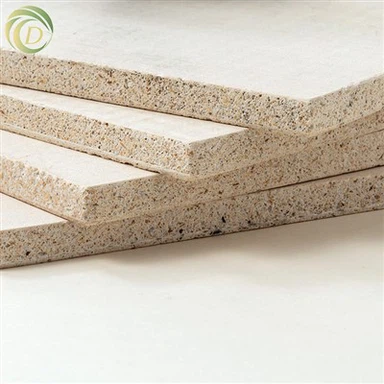
Hurricane-resistant Magnesium Board
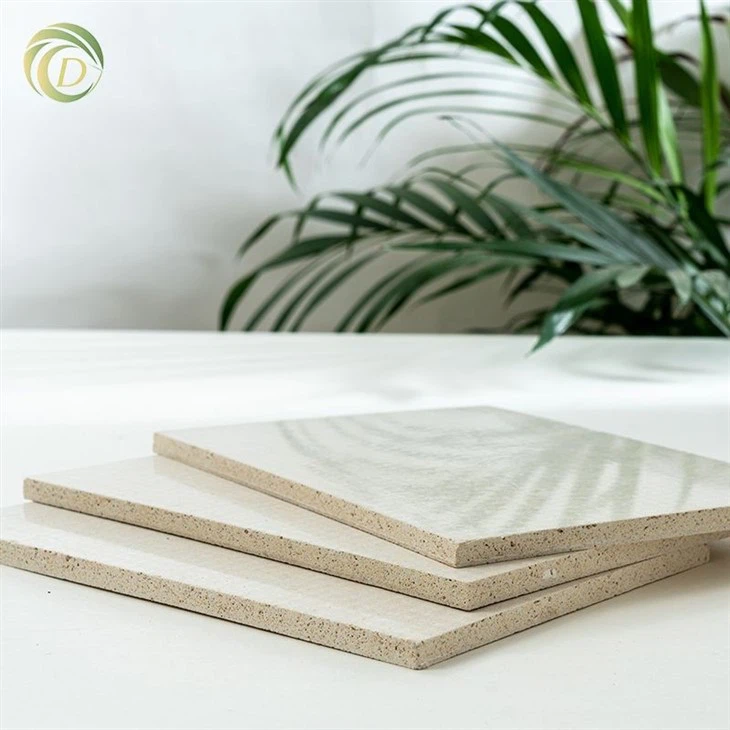
Hurricane-resistant magnesium oxide board is a new type of building board made from magnesium oxide, magnesium chloride and other main raw materials through special processes, which has the characteristics of high strength, impact resistance, wind pressure resistance and can resist strong wind disasters such as hurricanes.
- Fast Delievery
- Quality Assurance
- 24/7 Customer Service
Product Introduction
What Is Hurricane-resistant magnesium board?
Hurricane-resistant magnesium oxide board is a new type of building board made from magnesium oxide, magnesium chloride and other main raw materials through special processes, which has the characteristics of high strength, impact resistance, wind pressure resistance and can resist strong wind disasters such as hurricanes.
Advantages of Hurricane-resistant magnesium board
High Strength and Durability: MgO board possesses high strength and good toughness, enabling it to provide more reliable structural protection under extreme weather conditions such as hurricanes. Its robust nature helps resist the impact of strong winds and flying debris.
Excellent Water Resistance: Compared to traditional building materials, MgO board offers superior waterproofing and moisture resistance. This means it can effectively prevent water penetration during the heavy rains associated with hurricanes, reducing the risk of internal structural damage.
Fire Resistance and Flame Retardancy: MgO board is a non-combustible material with excellent fire-resistant properties. During natural disasters like hurricanes, which may be accompanied by fire risks, using MgO board enhances the overall safety of the building.
Good Stability: MgO board exhibits high adaptability to changes in temperature and humidity, making it less prone to deformation or damage due to environmental fluctuations. This stability is crucial for long-term resistance to harsh climatic conditions.
Ease of Installation and Maintenance: Lightweight and easy to cut, MgO board allows construction workers to readily trim and install it as needed. It also requires minimal post-installation maintenance, which is highly advantageous for rapid post-disaster reconstruction or repair.
Environmental Friendliness and Non-Toxicity: As a green and eco-friendly building material, MgO board does not release harmful substances during production or use, posing no health risks to humans and meeting modern construction requirements for environmental protection.
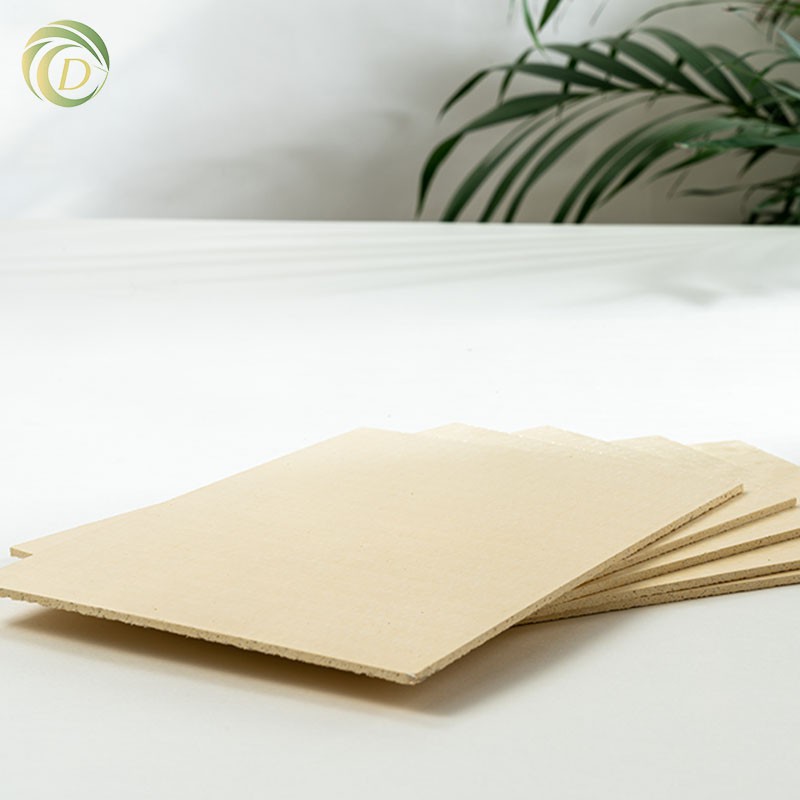


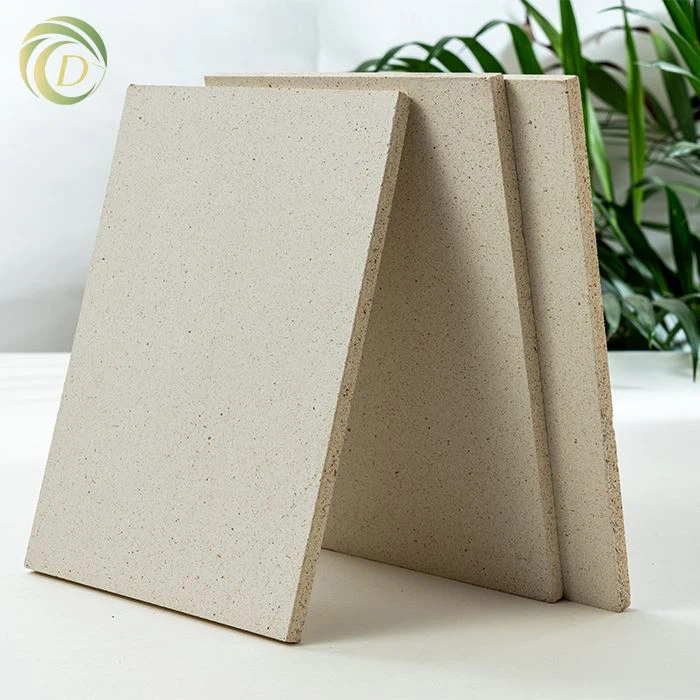
Why Choose Us
Product Quality: Stable and Reliable, Adaptable to Diverse Scenarios
We always adhere to high standards in controlling product quality. From raw material selection to production processes, every detail is strictly refined to ensure that our magnesium oxide boards possess excellent core properties such as moisture resistance, fire resistance, and weather resistance. Whether it is for humid basements, exposed exterior walls, or places with high environmental protection requirements like hospitals and schools, our products can stably adapt, providing solid material support for various projects. This allows customers to avoid worries about performance issues during use.
Supply Capacity: Flexible and Efficient, Meeting Diverse Needs
We have a mature production system and sufficient capacity reserves. We can not only efficiently undertake bulk orders for large-scale projects to ensure continuous and stable supply but also quickly respond to small-batch, multi-specification customization needs, including adjustments to details such as board thickness, size, and surface treatment, flexibly matching the design requirements of different projects. Meanwhile, through scientific inventory management, we shorten the delivery cycle, helping customers avoid delays in construction periods due to material supply issues.
Service Support: Professional and Considerate, Providing Full-Process Escort
We have a team of experienced technicians and service staff. From the initial communication, we provide targeted product selection suggestions based on the characteristics of the customer's project (such as usage environment, construction conditions, etc.). During the construction process, we can offer detailed technical guidance to help solve installation problems. The after-sales link also responds efficiently; if any issues arise, we will follow up and handle them promptly, ensuring that customers feel professional support at every stage of cooperation.
Cooperation Value: Cost-Effective, Pursuing Long-Term Win-Win
We insist on providing high-quality products at reasonable prices. By optimizing the supply chain and production efficiency, we help customers control procurement costs while ensuring quality. At the same time, we value long-term cooperation with customers, offering flexible preferential schemes based on the scale and duration of cooperation. We also take the initiative to share industry experience and assist in optimizing procurement plans, helping customers reduce overall costs and achieve a win-win situation for both parties.
What Are The Main Materials Used In Hurricane-resistant magnesium board?
The main materials used in Hurricane-resistant magnesium board are:
Gelling materials:
Magnesium oxide (MgO): As a core component, it provides the strength and stability of the board, usually produced by calcining magnesite.
Magnesium chloride (MgCl₂): Reacts with magnesium oxide to form a magnesia gel (magnesium oxychloride cement), which is crucial for the hardening of the board and is generally added in the form of an aqueous solution (brine).
Reinforcing materials:
Glass fiber cloth: Enhances the flexural strength and toughness of the board, prevents cracking, and is the most commonly used reinforcing material.
Other fibers: Such as wood fiber, bamboo fiber, etc. Some products will add them to improve mechanical properties or reduce costs.
Filling materials:
Lightweight aggregates: Such as perlite, vermiculite, etc., used to reduce the weight of the board while enhancing heat insulation and sound insulation performance.
Inorganic fillers: Such as talc powder, quartz sand, etc., which adjust the density and hardness of the board and optimize construction performance.
Modifiers:
To improve the water resistance, anti-efflorescence performance, and other properties of the board, a small amount of modifiers such as organosilicon, phosphate, etc., are added to reduce problems like moisture absorption and whitening.
How Does Hurricane-resistant magnesium board Differ From Regular Wall Boards
Compared with ordinary building boards (such as gypsum boards, plywood, ordinary fiber cement boards, etc.), anti-hurricane magnesium oxide boards have significant advantages in coping with extreme weather and building safety:
Stronger wind load resistance and impact performance
Hurricane-resistant magnesium oxide boards, through optimized material proportions (such as increasing the number of glass fiber cloth layers and improving the density of magnesia gel) and processes, have much higher flexural strength and impact resistance than ordinary boards. For example, in the face of strong wind pressure caused by hurricanes (which can reach tens or even hundreds of kilopascals) and impacts from flying objects (such as gravel and tree branches), they can effectively resist deformation or fracture, while gypsum boards are prone to fragmentation and plywood is easy to delaminate under high wind pressure.
Better weather resistance and environmental adaptability
Magnesium-based materials themselves have good water resistance and moisture resistance. After modification, they can resist heavy rain soaking accompanied by hurricanes, and are not easy to swell or mildew (which is better than the water absorption deformation of plywood and the water softening of gypsum boards).
They can adapt to extreme climates such as high temperature and high humidity, and are not easy to crack due to temperature changes when exposed to the outdoors for a long time (their stability is better than the brittle performance of ordinary fiber cement boards under temperature differences).
Higher fire resistance and safety
Magnesium oxide boards are non-combustible materials (Class A fire resistance). They will not support combustion in fires that may be caused by hurricanes, and will not release toxic gases at high temperatures; while wood-based boards such as plywood and particleboard are flammable and will produce thick smoke and harmful gases when burned.
Better structural stability and durability
The boards have high density and low shrinkage rate, and are not easy to deform or warp after long-term use, which can maintain the integrity of the building envelope (ordinary boards are prone to loosening and cracking during repeated wet-dry cycles or temperature changes).
They have strong corrosion resistance, can resist salt in the air (common in coastal hurricane-prone areas), moisture, etc. to a certain extent, and have a longer service life.
More versatile and suitable for wider scenarios
In addition to anti-hurricane performance, they also have sound insulation and heat insulation properties, which can meet the basic needs of buildings for acoustics and thermal engineering, without the need for additional laying of multiple layers of materials (some ordinary boards need to be matched with other materials to achieve similar functions).
The surface can be directly painted, decorated, etc., with convenient construction, suitable for rapid repair or emergency building scenarios.
Can Hurricane-resistant magnesium oxide boards Be Used As a Partition Wall
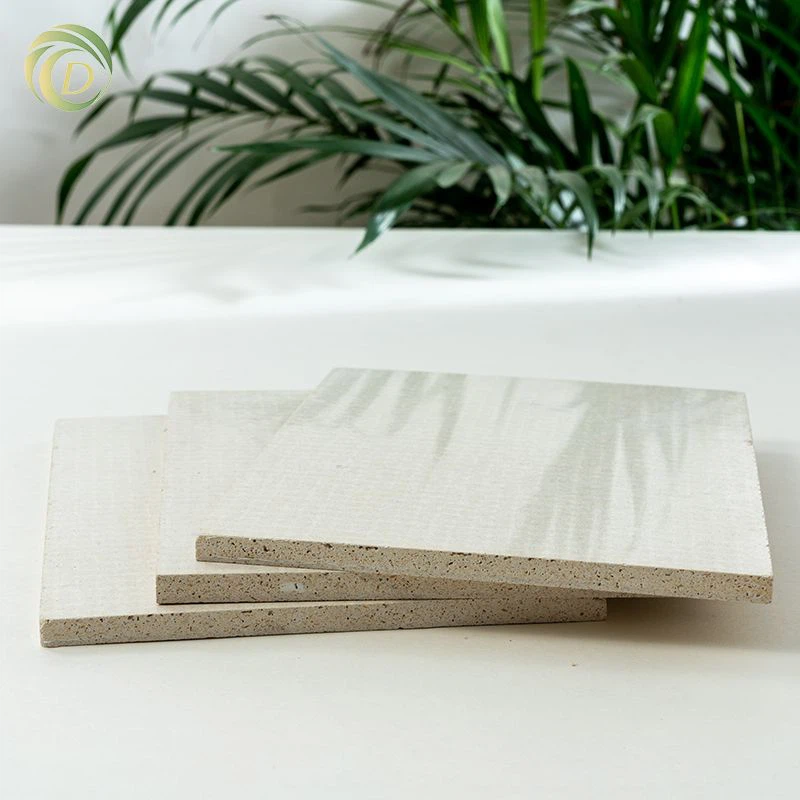


Yes, hurricane-resistant magnesium oxide boards are fully suitable for use as partition walls, with excellent performance in terms of safety and durability. They are particularly ideal for scenarios requiring high structural strength, wind resistance, and protection against extreme weather (such as coastal areas prone to hurricanes and high-rise buildings).
Compared with ordinary partition materials (such as gypsum boards and light steel keel partitions), their outstanding advantages as partition walls lie in structural stability and adaptability to extreme environments:
High Strength and Anti-deformation
The flexural strength of hurricane-resistant magnesium oxide boards (usually 10-20MPa) is much higher than that of ordinary gypsum boards (about 2-5MPa). Reinforced with multiple layers of glass fiber cloth, they have excellent toughness. When used as partition walls, they can withstand lateral wind pressure caused by hurricanes (up to hundreds of Pascals or higher), and are not prone to bending, cracking, or collapsing, ensuring the integrity of the wall.
Water-resistant and Moisture-proof, Adapting to Humid Environments
After modification, magnesium-based gelling materials have low water absorption (usually <15%) and are not easy to swell, mildew, or soften due to moisture. In the face of heavy rains accompanied by hurricanes and high humidity environments indoors and outdoors, their stability is far better than gypsum boards that are prone to collapse when exposed to water, and also better than plywood partitions that are prone to delamination when damp.
Fire prevention and safety measures
hurricane-resistant magnesium oxide boards are Class A non-combustible materials, which do not burn or release toxic gases when exposed to fire. When used as partition walls, they can not only resist strong winds but also improve the fire resistance level of buildings, making them particularly suitable for partition needs in crowded places (such as hotels and hospitals).
Strong Durability, Reducing Maintenance Costs
The material itself is corrosion-resistant (has a certain resistance to salt in the air in coastal areas) and anti-aging. It is not easy to warp or loosen due to temperature changes (thermal expansion and contraction) or dry-wet cycles after long-term use. Compared with ordinary partition materials (such as gypsum boards that need regular repair of cracks and replacement of damp parts), it has a longer service life and lower maintenance costs.
Multifunctional Integration, Simplifying Construction
In addition to wind resistance, fire resistance, and moisture resistance, hurricane-resistant magnesium oxide boards also have certain sound insulation performance (high density can block part of air-borne sound). Some products can be directly painted, tiled, or wallpapered on the surface without additional laying of a base layer, simplifying the partition wall construction process.
What Are The Installation Methods For Hurricane-resistant magnesium oxide board?
There are several installation methods for hurricane-resistant magnesium oxide board, depending on the specific product and application. Here are some common installation methods:
Direct Attachment: This method involves attaching the fireproof wallboard directly to the underlying structure using screws or nails. The wallboard is typically screwed or nailed to the studs or joists, ensuring a secure and sturdy installation.
Adhesive Application: Some hurricane-resistant magnesium oxide board can be installed using adhesive instead of screws or nails. The adhesive is applied to the back of the wallboard, which is then pressed firmly against the wall or ceiling surface. This method is often used for lightweight hurricane-resistant magnesium oxide board.
Floating Installation: In some cases, magnesium oxide board can be installed as a floating system. This method involves using a metal framework or suspended ceiling system to create a gap between the wallboard and the underlying structure. The wallboard is then attached to the framework or suspended system, allowing for additional insulation and fire protection.
Taping And Finishing: Once the magnesium oxide board is installed, it needs to be taped and finished to create a smooth and seamless surface. This involves applying joint compound to the seams between the wallboards, embedding joint tape, and smoothing the surface with a trowel. After drying, the joints can be sanded and finished with paint or other wall finishes.
Is hurricane-resistant magnesium oxide board Resistant To Chemicals And Corrosive Substances
Hurricane-resistant magnesium oxide boards have limited resistance to chemicals and corrosive substances: they have certain tolerance to neutral or weakly corrosive environments (such as humidity and mild salt spray), making them suitable for scenarios like ordinary coastal buildings. However, they cannot withstand strongly corrosive substances such as strong acids, strong alkalis, and strong oxidants. Long-term exposure will cause surface erosion and structural damage, so they are not suitable for highly corrosive environments such as chemical workshops and laboratories. If they need to be used in scenarios with certain corrosion, products that have undergone special anti-corrosion modification or surface coating treatment should be selected.
Is hurricane-resistant magnesium oxide board Compatible With Different Types Of Finishes
Hurricane-resistant magnesium oxide board is generally compatible with a variety of finishes, allowing for aesthetic flexibility while maintaining its fire-resistant properties. Here are some common finish options that can be used with fireproof wall board:
Gypsum-Based Finishes: Gypsum plasters and joint compounds are commonly used with magnesium oxide board. They provide a smooth finish that can be easily painted or papered over.
Paints: Many paints are suitable for use with fireproof wall board, but it's essential to check that the paint is not flammable and does not negatively affect the wall board's fire resistance.
Vinyl Wallcoverings: Non-flammable vinyl wallcoverings can be applied over fireproof wall board. It's important to ensure that the adhesives used are also fire-resistant.
Tiles: Ceramic, porcelain, and some types of stone tiles can be installed on magnesium oxide board. The tile adhesive and grout should be non-combustible.
Metal Panels: Metal sheets or decorative metal panels can be attached to fireproof wall board to create a durable and fire-resistant surface.
Wood Veneers: While wood veneers are combustible, they can be used in conjunction with fireproof wall board if treated with flame-retardant coatings and used sparingly.
Fabric: Fabric coverings can be applied using fire-resistant backings and adhesives. However, fabrics are generally less common for fire-rated applications due to their inherent flammability.
Can hurricane-resistant magnesium oxide board Be Combined With Other Fire Safety Measures
Yes, hurricane-resistant magnesium oxide boards can perfectly be combined with other fire safety measures, and their inherent fire-resistant properties can complement various fire-fighting methods, further enhancing the overall fire safety level of buildings. The specific combination methods are as follows:
Cooperation with active fire-extinguishing systems: As a Class A non-combustible material, anti-hurricane magnesium oxide boards do not burn when exposed to fire and do not release toxic gases. They can delay the spread of fire in the early stage, buying time for active fire-extinguishing equipment such as sprinkler systems and fire extinguishers to respond. For example, when the boards are used in walls or ceilings, even if a local fire breaks out, they will not fuel the fire, which can limit the spread range of flames and cooperate with sprinkler systems to quickly suppress the fire.
Integration with passive fire protection structures: They can be used in conjunction with fire-retardant coatings and fire-resistant sealants to strengthen fire separation. For instance, using fire-resistant sealants at the joints of the boards can prevent flames and smoke from spreading through gaps; applying fire-retardant coatings on the surface of the boards (for scenarios with sustained high temperatures) can further improve their high-temperature resistance and enhance the integrity of fire walls and fire partitions.
Synergy with evacuation systems: Using anti-hurricane magnesium oxide boards as enclosure materials in evacuation routes, safety exits and other areas, their high-temperature resistance and anti-deformation characteristics can maintain the structural stability of the routes during a fire, avoiding blockage of evacuation paths due to wall collapse. At the same time, they reduce the threat of high-temperature smoke to evacuees, working together with emergency lighting and evacuation signs to ensure evacuation safety.
In summary, the fire-resistant properties of anti-hurricane magnesium oxide boards enable them to effectively combine with various fire safety measures such as active fire extinguishing, passive fire protection, and evacuation support, forming a multi-level fire protection system. They are particularly suitable for building scenarios with high requirements for both fire protection and structural safety.
Our Factory
We are a company dedicated to magnesia cement products. Our main products are Magnesium Oxide Boards(MGO Board) for construction and laminated MgO boards with for furniture and renovation. Our mission is to provide the world's construction markets with environmentally friendly, high-performance and sustainable green materials.

FAQ
Q: What is an anti-hurricane magnesium oxide board?
Q: What is the core difference between anti-hurricane magnesium oxide boards and ordinary magnesium oxide boards?
Q: Can anti-hurricane magnesium oxide boards be used as partition walls or external walls?
Q: How does fireproof wall board work?
Q: How resistant is it to chemicals and corrosive environments?
Q: What is the service life of anti-hurricane magnesium oxide boards?
Q: What key points should be noted during construction?
Q: Which scenarios are most suitable for using anti-hurricane magnesium oxide boards?
Hot Tags: hurricane-resistant magnesium board, China hurricane-resistant magnesium board manufacturers, suppliers, factory, backing board, magnesia energy saving wall panel, magnesia low cost wall panel, thermal efficient board, wall board for durable using magnesia, wall panel in magnesia for easy to install