


Magnesium Cement Boards
Magnesium cement boards are new-type panels integrating multiple properties such as "fire resistance, waterproofness, environmental protection, and high strength." They are particularly suitable for scenarios with high requirements for safety and durability, while making up for the shortcomings of traditional gypsum boards (poor waterproofness), wood (prone to mildew), and ordinary cement boards (heavy weight).
- Fast Delievery
- Quality Assurance
- 24/7 Customer Service
Product Introduction
Magnesium Cement Boards
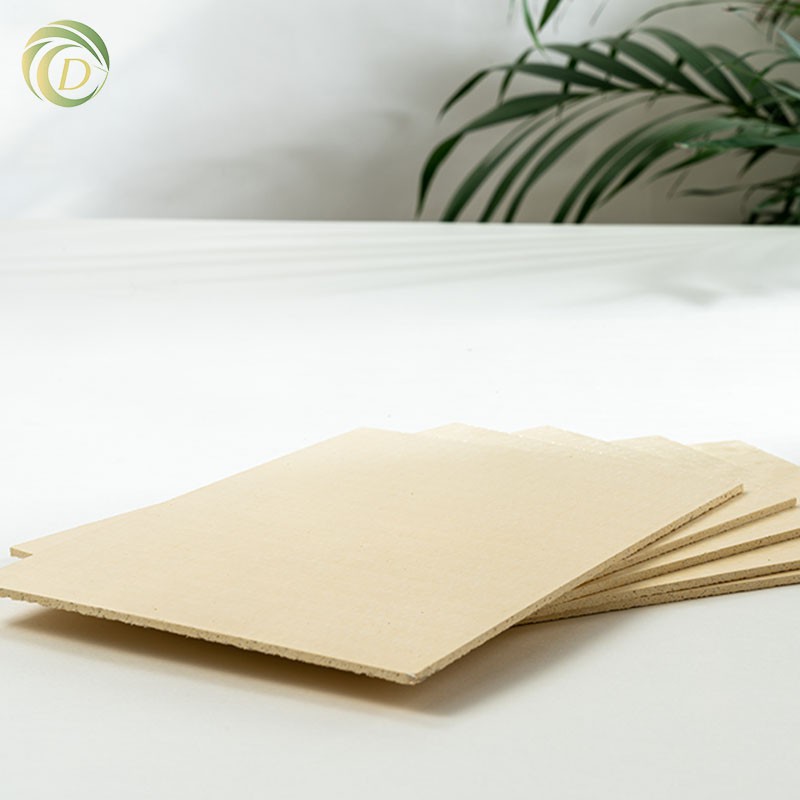
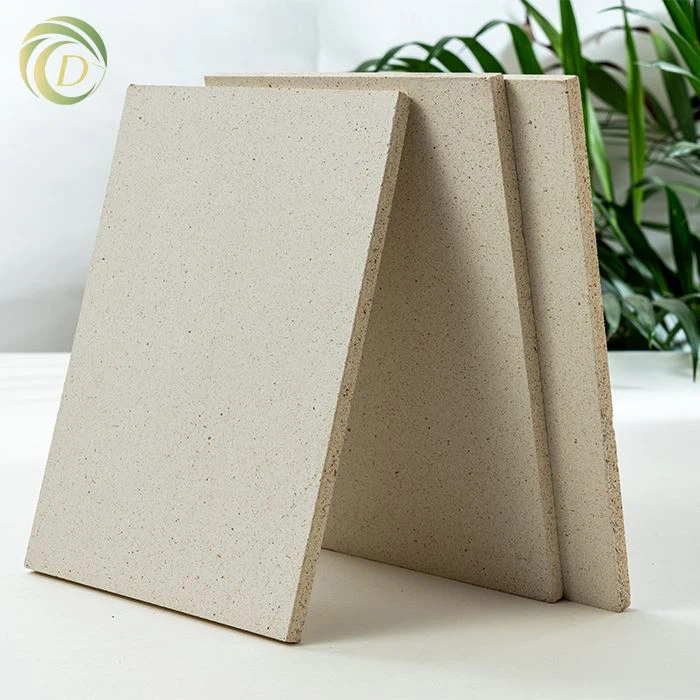
Magnesium cement board is a new-type inorganic building panel made of light-burned magnesium oxide and magnesium chloride (or magnesium sulfate) as core cementitious materials, supplemented with mineral fillers and reinforcing fibers, featuring Class A1 fire resistance, water and moisture resistance, environmental protection and durability, and is widely used in internal and external building decoration and special scenarios.
Advantages of Magnesium Cement Boards
01Mechanical Strength:
1. High flexural strength: Common 6-12mm thick boards have 8-12MPa flexural strength, much stronger than ordinary gypsum boards.
2. Good impact resistance: The fiber layer can absorb impact, so it's not easy to crack.
3. Stable load-bearing: It doesn't deform much under long-term load, suitable for ceilings, partition walls and other load-bearing parts.
02 Fire Resistance & Flame Retardancy:
1. Fire rating is Class A1 non-combustible (meets GB 8624-2012 standard), no open fire or melting drips.
2. It keeps its structure stable below 800℃ and doesn't release toxic gases.
Flame spreads slowly, and smoke density (SDR) is no more than 25.
03 Waterproof & Moisture-Resistant Performance:
1. Low water absorption: Only ≤15% in 24 hours (much lower than gypsum boards' ≥30%), no obvious expansion after soaking.
2. Stable in humid environments: No mildew, no moisture regain, no strength loss even when humidity is over 90%.
3. Better waterproof than traditional cement boards: No secondary reaction with water, so it won't crumble.
04 Dimensional Stability:
1. Small thermal expansion and contraction: The coefficient is about 1.5×10⁻⁵/℃, close to steel, much smaller than wood (10×10⁻⁵/℃).
2. Low dry-wet deformation: When moisture content changes by 5%, deformation is ≤0.1%, no warping or cracking.
3. No shrinkage after long use: No "dry shrinkage" problem (traditional cement boards are easy to shrink and crack).
05 Environmental Protection & Health:
1. Small thermal expansion and contraction: The coefficient is about 1.5×10⁻⁵/℃, close to steel, much smaller than wood (10×10⁻⁵/℃).
2. Low dry-wet deformation: When moisture content changes by 5%, deformation is ≤0.1%, no warping or cracking.
3. No shrinkage after long use: No "dry shrinkage" problem (traditional cement boards are easy to shrink and crack).
06 Sound Insulation and Thermal Insulation:
Its dense structure and micro-pores give it good sound and thermal insulation:
Sound insulation: 12mm thick boards can insulate air-borne sound up to 35dB, meeting residential partition requirements.
Thermal insulation: Thermal conductivity is about 0.15-0.20W/(m·K), better than traditional cement boards (0.30-0.40W/(m·K)), helping save energy.


Why Choose Us
Reliable Quality:
Full-process quality inspection, high-purity magnesium materials for raw materials, finished products comply with national standards and EU CE standards, with Class A1 fire resistance, water and moisture resistance guaranteed.
Stable Supply:
2 production bases + 6 automated lines, with a daily capacity of 30,000 ㎡, regular products in stock, urgent orders shipped the same day, and large orders delivered within 7 days.
Flexible Customization:
Supports 3-30mm thickness, maximum 3000×1220mm size and irregular cutting, and can customize special properties (high water resistance, high fire resistance) and appearances.
Professional Technology:
Team of 10+ senior engineers, providing installation guidelines and scenario-based solutions, with regular technical training.
High Cost-Effectiveness:
Cost reduction through large-scale procurement, regular board prices 5%-10% lower than the industry average, tiered rebates and installment payments for long-term customers.
Comprehensive After-Sales:
Lifetime after-sales service, replacement/return for quality issues within 48 hours, response to construction problems within 2 hours, and on-site engineers if necessary.
What Are The Main Materials Used In Magnesium Cement Boards
The main materials of magnesium cement boards (also known as magnesium oxide boards or magnesite cement boards) are built around a "magnesium-based cementitious system", with core components primarily being inorganic minerals, supplemented by functional additives to ensure key properties of the boards such as strength, fire resistance, and water resistance. Specifically, they can be divided into four categories: core cementitious materials, inorganic fillers, reinforcing fibers, and modifying additives. The role and common types of each material are as follows:
1. Core Cementitious Materials (Determine the Basic Properties of the Boards)
As the "bonding core" of magnesium cement boards, they form a stable crystalline structure through hydration reactions, endowing the boards with strength and weather resistance. They mainly include two key components:
Light-burned magnesium oxide (MgO) : The most core base material, produced by calcining magnesite (MgCO₃) at a high temperature of 700-850℃, with a purity requirement of ≥85% (≥92% for high-quality boards). It reacts with water and magnesium chloride to form "5·1·8 phase" (5Mg(OH)₂·MgCl₂·8H₂O) crystals, which are the main source of the board's strength and fire resistance.
Magnesium chloride (MgCl₂)/Magnesium sulfate (MgSO₄) : Acting as "setting regulators and stabilizers", they are mixed with light-burned magnesium oxide and water in specific proportions to adjust the hydration reaction rate while optimizing the density of the crystalline structure. Magnesium chloride has wider applicability (for conventional scenarios), while magnesium sulfate is more suitable for scenarios sensitive to chloride ions (e.g., coastal areas, humid environments) to avoid corrosion of metal accessories.
2. Inorganic Fillers (Optimize Density and Cost)
Their main functions are to fill volume, reduce board density (to avoid excessive weight), and improve dimensional stability. All are natural or industrial-grade inorganic minerals without organic pollution:
Quartz sand : With high hardness and strong chemical stability, it can enhance the wear resistance and impact resistance of the boards. Fine sand of 80-120 mesh is commonly used, accounting for approximately 20%-30%.
Talc powder : Fine in texture, it can improve the surface flatness of the boards, reduce the risk of cracking during production, and enhance compatibility with subsequent decoration (e.g., tile pasting, painting).
Fly ash/Granulated blast furnace slag powder : Industrial by-products (environmentally friendly), which can replace part of the quartz sand to reduce raw material costs, while using their activity to improve the later-stage strength of the boards.
3. Reinforcing Fibers (Enhance Crack Resistance and Toughness)
The magnesium cement base material itself is relatively brittle, so fibers are needed for "skeleton support" to enhance toughness and prevent the boards from cracking during transportation or construction. Common types include:
Glass fibers : The most mainstream choice. Alkali-resistant glass fibers (to avoid corrosion by the weak alkalinity of magnesium cement) made into chopped strands or mesh cloth are evenly dispersed in the boards, which can increase the flexural strength by 30%-50% and significantly improve impact resistance.
Plant fibers : Such as wood fibers and bamboo fibers (mostly used in low-cost conventional boards), which can improve the processability of the boards (easy to saw and nail). However, their weather resistance is slightly inferior to that of glass fibers, so they are not recommended for long-term humid or outdoor scenarios.
Carbon fibers : Used in high-end scenarios (e.g., fire-resistant partition walls, load-bearing base panels) due to their extremely high strength. However, their cost is relatively high, so they are only used in projects with strict performance requirements.
4. Modifying Additives (Compensate for Base Material Defects and Optimize Performance)
To address potential issues of the magnesium cement base material such as easy moisture absorption and deformation, a small amount of functional additives (usually accounting for ≤5%) need to be added:
Waterproofing agents : Such as organosilanes and calcium stearate, which form a hydrophobic film inside the boards, reduce water absorption (keeping the 24-hour water absorption rate ≤15%), and improve stability in humid environments.
Anti-efflorescence agents : Magnesium cement is prone to precipitating magnesium chloride (an "efflorescence" phenomenon, with white frost forming on the surface) in long-term humid conditions. Adding aluminum dihydrogen phosphate, oxalic acid, etc., can react with free chloride ions to inhibit efflorescence.
Retarders/Early-strength agents : Adjusted according to the production rhythm. Retarders (e.g., citric acid) extend the hydration time to avoid rapid setting during summer construction; early-strength agents (e.g., sodium sulfate) accelerate strength development in low-temperature environments in winter.
Water-reducing agents : Reduce the amount of mixing water, reduce internal pores of the boards, improve density and strength, and at the same time improve the fluidity of the slurry to facilitate casting and forming in automated production lines.
How Does Magnesium Cement Boards Differ From Regular Boards
As a new type of inorganic functional board, magnesium cement boards differ significantly from common "ordinary boards" (such as gypsum boards, calcium silicate boards, and wood-based plywood) in terms of material composition, core performance, and applicable scenarios.
1
Differences in Core Materials and Substrate Properties
|
Board Type |
Core Substrate |
Material Property |
Environmental Friendliness (Key Difference) |
|---|---|---|---|
|
Magnesium Cement Board |
Light-burned MgO, MgCl₂ (inorganic minerals) + reinforcing fibers |
Inorganic non-metallic composite |
No formaldehyde/VOC emissions, recyclable, and non-radioactive (Class A decorative material) |
|
Gypsum Board (Ordinary) |
Construction gypsum (CaSO₄·2H₂O) + paper surface layer |
Single inorganic material |
No formaldehyde, but the paper layer is prone to mildew and non-recyclable |
|
Wood-based Plywood (Ordinary) |
Solid wood veneers + urea-formaldehyde resin (organic adhesive) |
Organic-inorganic composite |
Prone to formaldehyde emissions (from adhesives) and non-degradable |
|
Calcium Silicate Board (Ordinary) |
Siliceous materials (quartz sand) + calcareous materials (cement) |
Inorganic composite |
No formaldehyde, but the raw material contains cement, resulting in high density and brittleness |
Core Difference: Magnesium cement boards are centered on a "magnesium-based inorganic cementitious system" with no organic pollutants; while ordinary boards either rely on organic adhesives (plywood) or have a single-function substrate (gypsum board), resulting in weaker environmental friendliness and stability.
2
Differences in Fire Resistance and Flame Retardancy (Key Safety Difference)
This is one of the most core differences between magnesium cement boards and ordinary boards, directly determining their applicability in scenarios with high fire protection requirements:
Magnesium Cement Board:
The substrate is an inorganic oxide (MgO) with no hydrocarbons, and its fire rating reaches Class A1 non-combustible material (GB 8624-2012). It does not burn, produce open flames, or release toxic gases at high temperatures (below 800℃), and can maintain structural integrity (e.g., no collapse in fires). It can be directly used in fire-critical areas such as shopping malls, hotels, and underground garages.
Ordinary Boards:
Gypsum Board: Fire rating is only Class B1 (flame-retardant). It will quickly dehydrate and pulverize at high temperatures (≥200℃), losing support capacity and cannot be used for fire-resistant partition walls.
Wood-based Plywood: Flammable (fire rating Class B2), releasing toxic gases such as formaldehyde and carbon monoxide when burning, posing high fire risks.
Calcium Silicate Board: Although it is Class A1 non-combustible, it is prone to cracking at high temperatures (no fiber reinforcement), resulting in weaker fire integrity than magnesium cement boards.
3
Differences in Waterproof and Moisture-Resistant Performance (Scenario Adaptation Difference)
Ordinary boards generally have the shortcoming of "being afraid of moisture", while magnesium cement boards can be directly used in humid environments:
Magnesium Cement Board:
The "5·1·8 phase" crystal structure (hydration product) is dense, with a 24-hour water absorption rate ≤15%. It shows no expansion or pulverization after immersion. It can be directly used for partition walls in dry-wet areas of bathrooms, kitchen wall substrates, and outdoor exterior wall cladding. There is no mildew or strength attenuation in long-term humid environments.
Ordinary Boards:
Gypsum Board: 24-hour water absorption rate ≥30%, softening, deforming, and mildewing when exposed to moisture. It can only be used in dry indoor areas (e.g., bedroom partition walls).
Wood-based Plywood: Mildews and is infested by insects when moisture content >15%, and rots within 3-6 months in humid environments. It cannot be used in kitchens, bathrooms, or outdoors.
Calcium Silicate Board: Better waterproof performance than gypsum boards, but still absorbs water when soaked for a long time (24-hour water absorption rate ≈20%). Additional waterproof coating is required for outdoor use.
4
Differences in Mechanical Strength and Durability
The "fiber-reinforced + magnesium crystal" structure of magnesium cement boards gives them far superior strength and service life compared to ordinary boards:
Magnesium Cement Board:
Flexural strength is 8-12MPa (for 12mm thickness), and impact resistance is 3 times that of gypsum boards. It has strong weather resistance for outdoor use (no freeze-thaw/softening at -30℃ to 60℃). Service life: ≥20 years indoors and ≥10 years outdoors, with no "dry shrinkage and cracking" issues.
Ordinary Boards:
Gypsum Board: Flexural strength is only 2-3MPa, prone to cracking when impacted, and service life ≤10 years (the paper surface layer is prone to aging).
Wood-based Plywood: Flexural strength is 5-8MPa, but moisture/insect infestation will rapidly reduce its strength. Service life: ≤8 years indoors and ≤3 years outdoors.
Calcium Silicate Board: Flexural strength is 6-8MPa, but it is highly brittle (no fiber reinforcement), prone to breaking during transportation/construction, and service life ≤15 years indoors.
5
Differences in Applicable Scenarios (Function Matching Difference)
Based on the above performance differences, the "scenario adaptability" of the two types of boards is completely different:
|
Scenario Type |
Magnesium Cement Board (Applicable) |
Ordinary Boards (Limitations) |
|---|---|---|
|
Fire-critical areas |
Fire-resistant partitions in shopping malls, underground garage ceilings |
Gypsum boards/plywood do not meet standards; calcium silicate boards are prone to cracking |
|
Humid environments (kitchens/bathrooms) |
Bathroom partitions, kitchen tile-backing substrates |
Gypsum boards/plywood are prone to mildew; calcium silicate boards require additional waterproofing |
|
Outdoor projects |
Exterior wall cladding, villa exterior walls, temporary building wall panels |
Only calcium silicate boards can be barely used (with coating); others are not weather-resistant |
|
Scenarios requiring high durability |
Partitions in schools and hospitals (20-year maintenance-free) |
Gypsum boards/plywood need replacement every about 10 years |
Can Magnesium Cement Boards Be Used As a Partition Wall
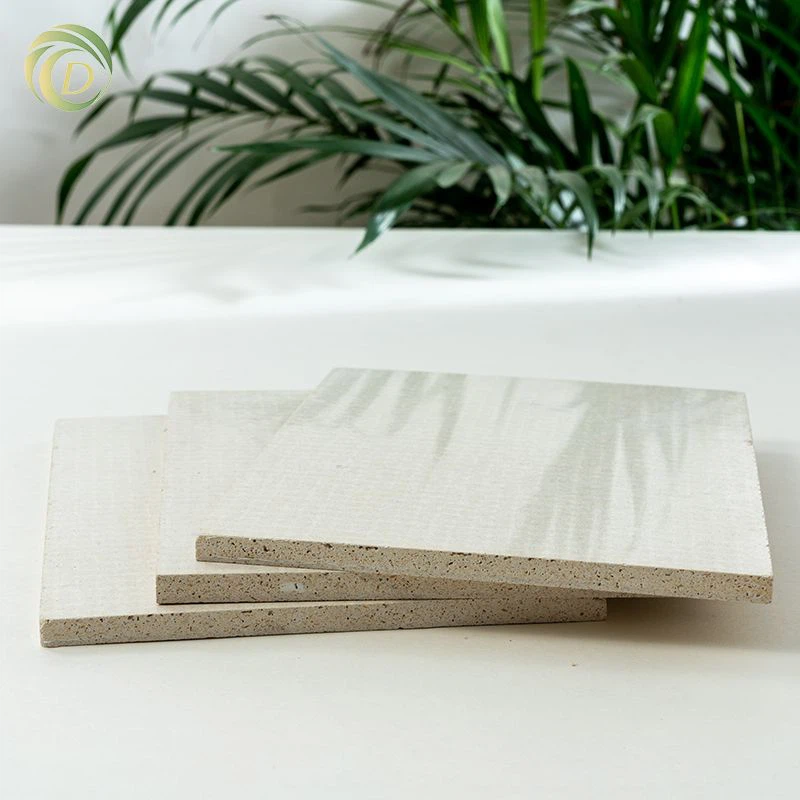

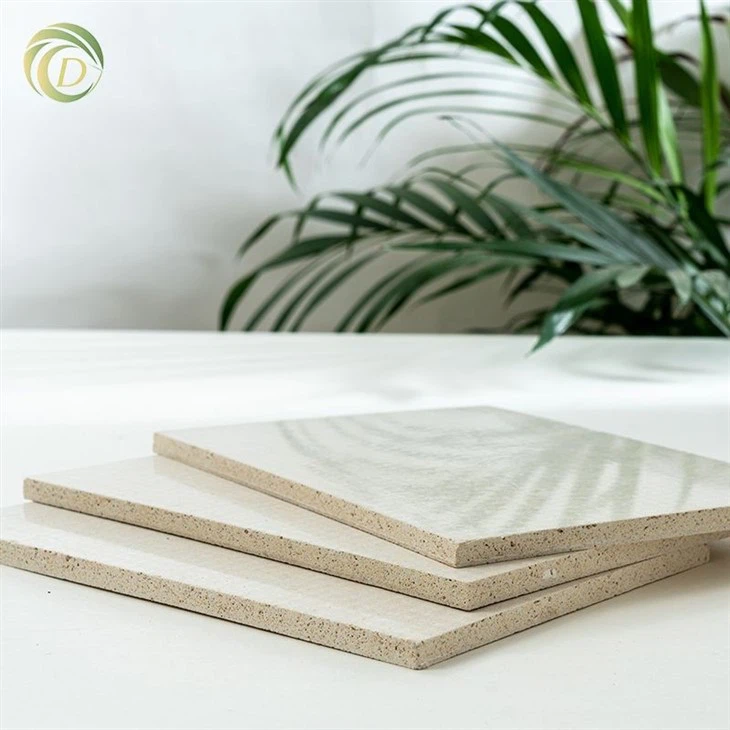

Yes, magnesium cement boards are fully suitable for partition walls. Moreover, with core advantages such as fire resistance, water resistance, and high strength, their application effect in partition walls far surpasses that of ordinary boards like gypsum boards and wood-based plywood. They are especially ideal for scenarios with high requirements for safety and durability.
1. Core Adaptability Basis for Magnesium Cement Boards as Partition Walls
Mechanical strength meets load-bearing and impact resistance needs: Magnesium cement boards have a flexural strength of 8-12MPa (for 12mm thickness), and their impact resistance is 3 times that of gypsum boards. When combined with light steel keels (commonly 75-type/100-type) to form partition walls, they can withstand daily impacts (such as furniture handling and personnel activities) without cracking or deformation, requiring no additional reinforcement.
Dimensional stability avoids post-maintenance troubles: With a linear expansion coefficient of approximately 1.5×10⁻⁵/℃ (close to that of steel) and a dry-wet deformation rate of ≤0.1%, no warping or joint cracking will occur after construction due to temperature and humidity changes (e.g., humidity in summer, dryness in winter), reducing post-maintenance costs such as gap filling and renovation.
Compliance with building codes: They reach Class A1 non-combustible standard (GB 8624-2012), meeting the mandatory requirement of "partition wall fire resistance not lower than Class B1" for public places such as shopping malls, hotels, and hospitals. Meanwhile, they release no formaldehyde or VOCs, complying with indoor environmental protection standards (GB/T 18883-2022) and suitable for sensitive scenarios like residences and schools.
2. 3 Core Advantages of Magnesium Cement Board Partition Walls (vs. Ordinary Boards)
|
Advantage Dimension |
Magnesium Cement Board Partition Walls |
Ordinary Board (Gypsum Board/Wood-based Plywood) Partition Walls |
|---|---|---|
|
Water & Moisture Resistance |
24-hour water absorption rate ≤15%, can be directly used in humid areas such as bathrooms and kitchens without mildew or softening |
Gypsum boards deform and mildew when exposed to moisture; plywood is prone to insect infestation and rot, only suitable for dry indoor areas |
|
Fire Safety |
Class A1 non-combustible, no open flame or toxic gas release in fires, maintaining structural integrity |
Gypsum boards are Class B1 flame-retardant (pulverize at high temperatures); plywood is Class B2 flammable (releases toxic gases) |
|
Durability |
Indoor service life ≥20 years, no frequent replacement needed |
Gypsum boards: ≤10 years (paper surface layer ages); plywood: ≤8 years (damaged by moisture) |
3. Typical Applicable Scenarios for Magnesium Cement Board Partition Walls
Partitions in humid environments: Dry-wet area partitions in bathrooms, partitions between kitchens and living rooms - no additional waterproof coating is required, and they remain stable and durable even with long-term exposure to moisture.
Partitions in public places: Store partitions in shopping malls, guest room partitions in hotels, ward partitions in hospitals - meeting the multiple needs of fire resistance, environmental protection, and impact resistance, and complying with public building codes.
Special-function partitions: Fire-resistant partitions in underground garages, partition walls for laboratory zoning - Class A1 fire resistance + corrosion resistance (in non-strong acid/alkali environments), suitable for scenarios with high safety requirements.
Multi-functional partitions in residences: Partitions between balconies and living rooms, partitions between studies and bedrooms - balancing environmental friendliness and sound insulation (12mm-thick boards have an airborne sound insulation capacity of 35dB), improving living comfort.
Our Factory
We are a company dedicated to magnesia cement products. Our main products are Magnesium Oxide Boards(MGO Board) for construction and laminated MgO boards for furniture and renovation. Our mission is to provide the world's construction markets with environmentally friendly, high-performance and sustainable green materials.

FAQ
Q: What are the advantages of using fireproof wall board?
A: The advantages of using fireproof wall board include enhanced fire resistance, protection of structural integrity, sound insulation, thermal insulation, durability, ease of installation, compliance with building codes, aesthetic flexibility, cost-effectiveness, and environmental impact reduction.
Q: How is fireproof wall board installed?
A: Fireproof wall board is typically installed using screws or nails, and it is important to follow the manufacturer's instructions carefully to ensure proper installation. The wall board is attached to the studs or framing, and joints are sealed with tape and compound to create a smooth surface.
Q: What is fireproof wall board?
A: Fireproof wall board is a type of building material that is designed to resist fire and prevent the spread of flames. It is typically made from gypsum, fiberglass, or other non-combustible materials and is used to protect the structural integrity of buildings in the event of a fire.
Q: How does fireproof wall board work?
A: Fireproof wall board works by creating a barrier that slows down the spread of flames and heat. It contains fire-resistant materials that help to prevent the ignition of underlying materials and keep the building structure intact during a fire.
Q: Can fireproof wall board be used in residential construction?
A: Yes, fireproof wall board can be used in residential construction to enhance fire safety and protect occupants. It is commonly used in areas such as kitchens, bathrooms, garages, and near sources of combustion.
Q: What types of fireproof wall board are available?
A: There are several types of fireproof wall board available, including Type X gypsum board, fiberglass mat gypsum board, and cementitious board. Each type has its own unique properties and is suited for different applications.
Q: What is the fire resistance rating of fireproof wall board?
A: The fire resistance rating of fireproof wall board varies depending on the type and thickness of the material. Generally, fireproof wall board can have a fire resistance rating of up to 1 hour or more.
Q: Can fireproof wall board be painted or finished?
A: Yes, fireproof wall board can be painted or finished with a variety of materials, such as paint, wallpaper, or tile. However, it is important to use fire-resistant finishes to maintain the fire resistance properties of the wall board.
Hot Tags: magnesium cement boards, China magnesium cement boards manufacturers, suppliers, factory


